
Fighting Terror Together
By Junaid Qaiser
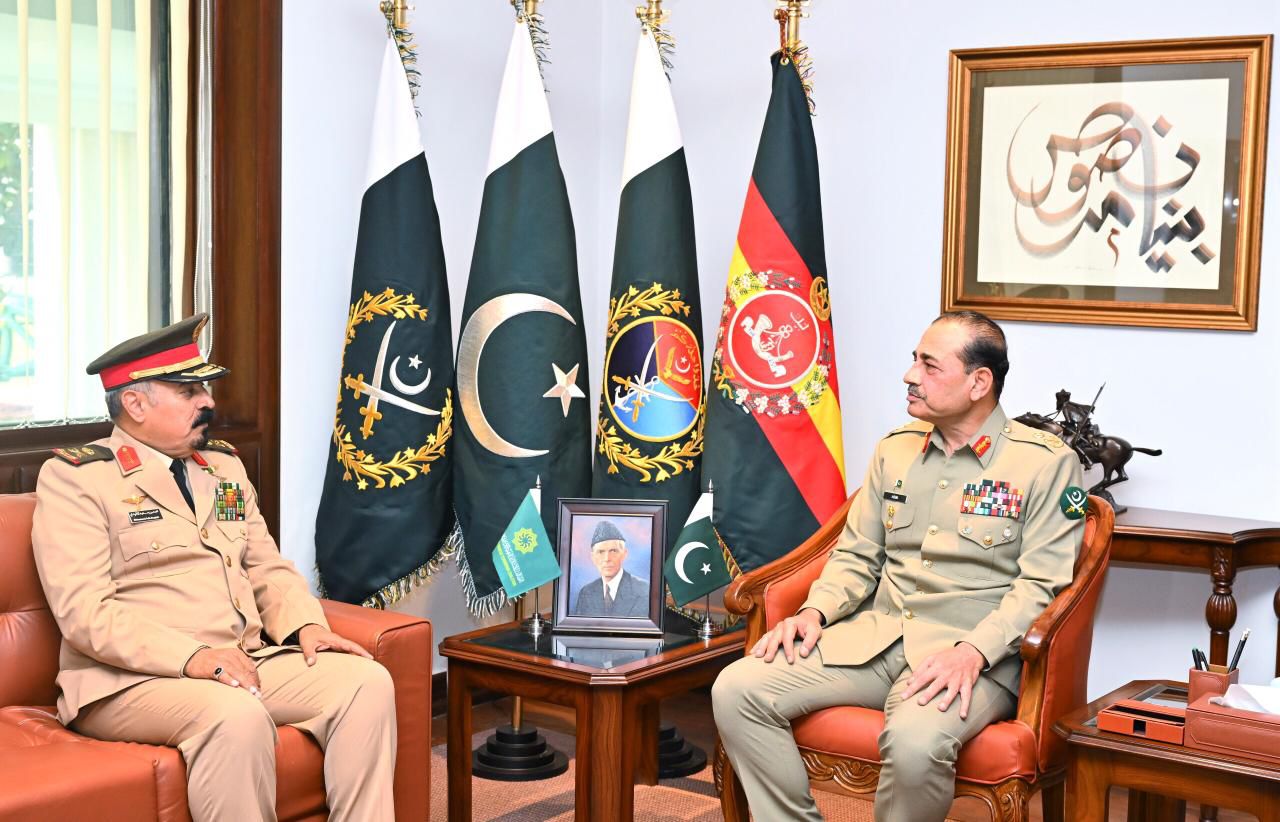
When Major General Mohammed bin Saeed Al-Moghedi, who serves as the Secretary General of the Islamic Military Counter Terrorism Coalition (IMCTC), met Field Marshal Syed Asim Munir at Pakistan’s General Headquarters in Rawalpindi, the moment was rich with meaning, not just in terms of what was discussed. In a time when security threats are becoming more global and ideological, this meeting underscored a growing realization in the Muslim world: we can’t fight terrorism in isolation anymore.
Pakistan’s own experiences lend significant weight to this understanding. Over the past two decades, the nation has endured significant human and economic costs in its struggle against militancy. These sacrifices have also led to invaluable insights—understanding how terrorist networks adapt, the importance of intelligence collaboration in saving lives, and the necessity of converting military victories into social stability. This is the expertise that Pakistan brings to the IMCTC, which is why its role in the coalition is both natural and crucial.
Formed in December 2015 on Saudi Arabia’s initiative, the IMCTC was designed to consolidate the efforts of Muslim nations against terrorism without sectarian or political discrimination. Now comprising 43 member states, its mission is not limited to battlefield coordination; it spans intelligence sharing, capacity building, counter-narratives, and financial disruption—areas where no single country can succeed alone.
The Rawalpindi discussions reflected that broad approach. Both sides emphasized regional security dynamics and the need for deeper collaboration among member states. Field Marshal Asim Munir’s appreciation of the IMCTC’s coordinating role was more than diplomatic courtesy. It aligned with Pakistan’s evolving security doctrine, which recognizes that lasting peace depends on partnerships as much as on force.
That evolution is evident in the IMCTC delegation’s week-long visit to Pakistan, including specialized training at the National University of Sciences and Technology on the reintegration and rehabilitation of extremist elements. This focus is telling. Counterterrorism today is as much about preventing relapse into violence as it is about neutralizing threats. Pakistan’s own deradicalization and rehabilitation efforts—developed through painful trial and error—offer practical lessons for other member states facing similar challenges.
The meeting also highlighted continuity in Pakistan’s engagement with the coalition. The appointment of former army chief General (retd) Raheel Sharif as IMCTC commander-in-chief in 2017 helped anchor Pakistan’s leadership role from the outset. Since then, cooperation has deepened, reflecting mutual trust and shared strategic interests. Pakistan’s close ties with Gulf Cooperation Council countries, particularly Saudi Arabia, have further reinforced this alignment, most notably through recent defense agreements that emphasize collective deterrence.
However, this “IMCTC moment” should not be romanticized. Pakistan’s zero-tolerance policy toward terrorism under Field Marshal Munir has produced measurable operational gains, but the persistence of attacks and the broader regional instability underscore how difficult the challenge remains. Military success, while essential, cannot by itself secure lasting peace. Political consensus, economic opportunity, and regional diplomacy must move in parallel if security gains are to endure.
This is where the IMCTC’s multi-domain model matters most. By addressing terrorism across military, ideological, financial, and media spheres, the coalition confronts the ecosystem that allows extremism to survive. It also helps reclaim the narrative—demonstrating that Muslim nations are not passive victims of terrorism, nor dependent on external actors to address it, but active stakeholders in global security.
International recognition of the IMCTC’s work reinforces this point. Support from major global powers and multilateral institutions reflects a growing acceptance that collective action from within the Muslim world is not only legitimate, but indispensable. Pakistan’s participation amplifies that credibility, shaped by experience rather than rhetoric.
The Rawalpindi meeting, then, was not just another entry in the diplomatic calendar. It marked a convergence of experience, leadership, and opportunity. For Pakistan, it reaffirmed a commitment to collective security that extends beyond national borders. For the IMCTC, it highlighted the value of Pakistan’s contributions at a time when unity is both most difficult—and most necessary.
No comments yet.