A Poet Questions Visa Policies That Punish Peace
By Nazir Qaiser
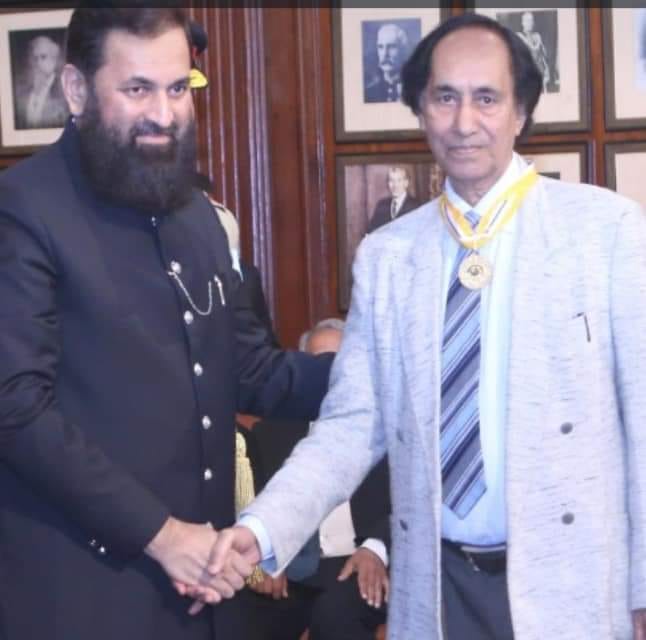
As a poet and teacher, my life’s work has revolved around language, imagination, and the fragile bridges that connect cultures. I have had the privilege of visiting the United States, lecturing at academic institutions, and engaging students and scholars who believed—as I do—that literature is one of humanity’s most effective tools against extremism and fear. In 2015, I was invited by the Harvard University South Asia Institute to participate in a scholarly program that included discussion of Pakistani poetry, humanistic traditions, and the ethical dimensions of our literary heritage. Such exchanges reaffirmed my belief in the West’s historic commitment to intellectual openness.
As a poet who has lived long enough to witness wars born of hatred and peace nurtured by dialogue, I find myself compelled to speak—not out of anger, but out of deep unease. When ideas are stopped at borders and questions replace curiosity, something fundamental has gone wrong.
When doors are closed not to violence but to thought, dialogue, and intellectual engagement, the cost is far greater than a single rejected visa. It is a cost paid by societies that claim to defend openness yet grow increasingly anxious about it.
It is from this place of reflection that I write about the recent U.S. visa refusal of my son, Junaid Qaiser—a journalist and writer whose professional life has been dedicated to religious freedom, interfaith harmony, and peaceful coexistence. What disturbed me was not merely the refusal itself, but the reasoning implied through the questioning he faced. The interview, by all accounts, drifted far from routine procedure and ventured into ideological scrutiny that should alarm anyone who values free inquiry.
Junaid was invited to attend an international summit focused on religious freedom—an arena where thoughtful voices from complex societies like Pakistan are not only relevant but necessary. His writings are public. His positions are transparent. He has consistently opposed extremism and advocated moderation, pluralism, and dialogue, often in environments where such views invite hostility rather than reward. Yet during his visa interview, he was questioned not just about travel logistics, but about his views on the Abraham Accords, hypothetical travel to Israel, and even the funding structures of an American organization operating under U.S. law.
As someone who has himself visited the United States, delivered lectures at American institutions, and experienced firsthand the intellectual openness that once defined Western academia, I find this deeply unsettling. I have taught literature, language, and aesthetics to students eager to understand cultures beyond their own. Never did I sense that my ideas were being weighed as liabilities. Today, it seems that ideas—especially those challenging entrenched hostilities—are increasingly treated with suspicion.
This raises a larger and more troubling question about Western immigration and visa policies. For decades, these policies have leaned heavily on material indicators—bank balances, travel histories, bureaucratic checklists—while paying insufficient attention to ideological alignment with democratic and humanistic values. In many authoritarian or fragile societies, radical elements often enjoy wealth, patronage, and protection. Progressive thinkers, journalists, and reformers rarely do. When wealth becomes a proxy for trust, and moderation is treated as ambiguity, the system begins to fail its own stated goals.
Western societies are already grappling with the consequences: radicalization, failed integration, and growing social fragmentation. These are not accidents of history; they are outcomes of choices. When doors close to writers, teachers, and peace advocates—and open more easily to those with resources but no commitment to pluralism—the imbalance eventually manifests within host societies themselves.
What makes this case particularly painful is its irony. A journalist advocating normalization, coexistence, and interfaith dialogue appeared to be scrutinized precisely for holding those views. If democratic societies genuinely wish to defend liberal values, consistency matters. Vetting mechanisms should identify and exclude intolerance—not quietly discourage those who challenge it.
As a poet, I have always believed that words can cross borders long before people do. Poetry survives walls, visas, and refusals. But people carry ideas into classrooms, newsrooms, and public discourse—and when they are stopped, the loss is collective.
As someone who has lectured in the United States, who has been invited by respected academic institutions, and who has experienced firsthand the openness that once defined Western intellectual life, I find this deeply unsettling. I have spoken on Urdu literature, humanism, and aesthetics in American institutions. Never did I feel that my ideas were being treated as liabilities. Today, it seems ideas themselves are under suspicion.
What troubles me most is the broader implication. Western visa and immigration policies increasingly appear to favor wealth, transactional utility, or sheer numbers over intellectual alignment with democratic values. In many authoritarian societies, radical and intolerant elements often enjoy state patronage, wealth, and social protection. These are the very individuals who can easily present strong bank statements and travel histories. Meanwhile, writers, journalists, and reformist thinkers—those who challenge extremism and advocate pluralism—are left to explain themselves endlessly, as if moderation were a risk factor.
This inversion has consequences. Western societies now openly acknowledge the challenges of radicalization, failed integration, and ideological extremism within migrant communities. Yet the response often targets symptoms rather than causes. When peaceful, progressive voices are discouraged or excluded, and when intellectual courage is met with suspicion, the vacuum is inevitably filled by louder, more dangerous narratives.
I ask this not as a complainant, but as a poet: When did peace become suspect?
When did advocating dialogue, normalization, and coexistence become grounds for doubt rather than trust?
A visa denial is a bureaucratic act. But the mindset behind it reflects something larger—a fear of ideas that do not conform to prevailing anxieties. If democratic societies wish to defend their values, they must learn to recognize their allies. Consistency matters. Vetting should protect pluralism, not penalize it.
I have spent my life believing that words can build bridges where politics fails. Poetry, after all, survives borders even when people cannot cross them. But when gates close to those who speak for peace, one must question not only the policy—but the philosophy behind it.
About the Author
Nazir Qaiser is one of Pakistan’s most respected Urdu poets and literary figures. He has been awarded the Pride of Performance by the Government of Pakistan for his contribution to literature, along with several national and international honors. Known for his humanistic and interfaith literary voice, he has taught, lectured, and represented Pakistani literature in academic institutions in Pakistan and abroad, including the United States. His work consistently advocates coexistence, cultural dialogue, and the moral power of words.
No comments yet.