
“Hum Ehd-e-Wafa Mein Zinda Hain”: A Literary Tribute to Pakistan’s Defenders
Editorial
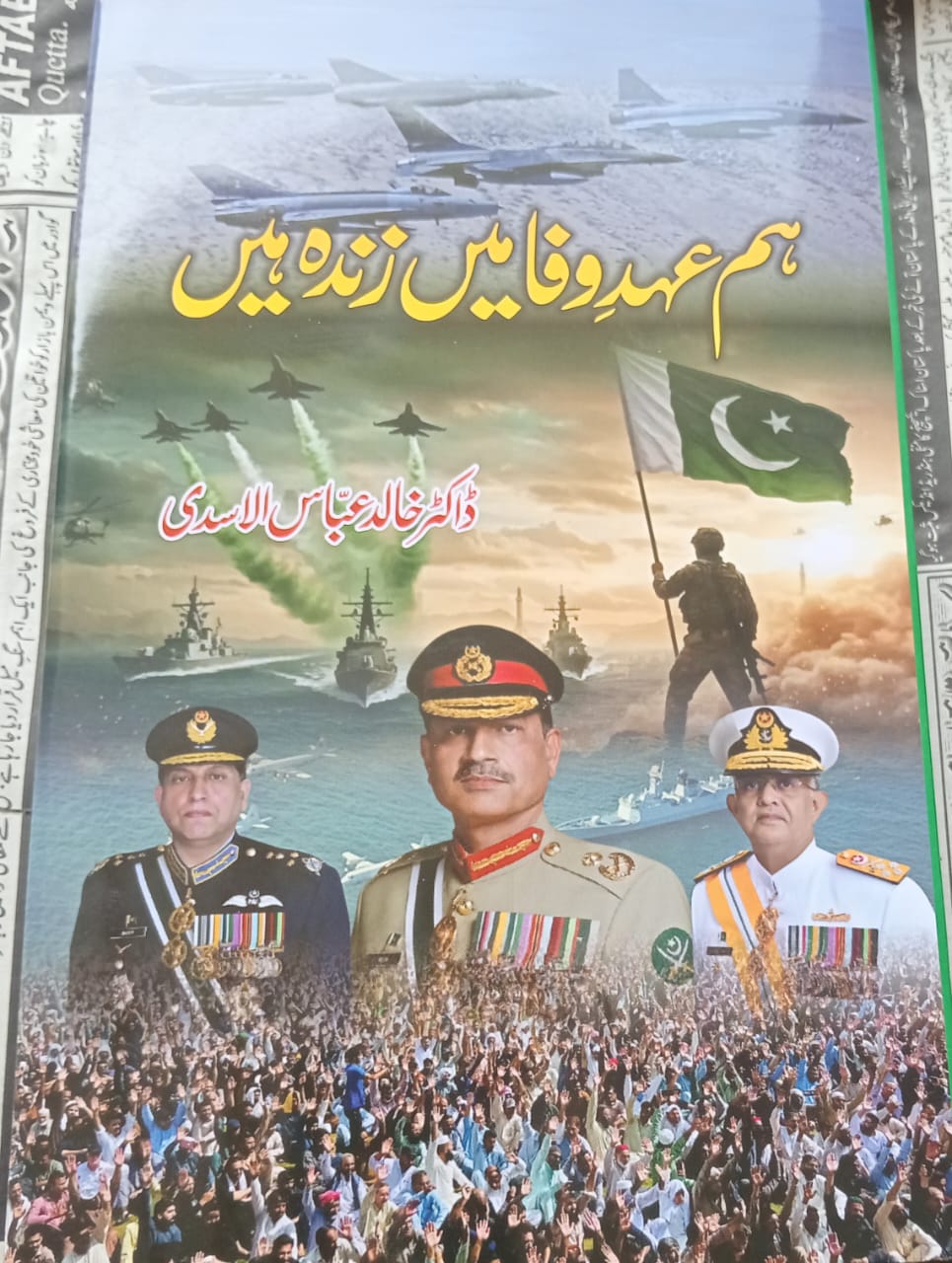
In times of national trials, nations often turn to history, memory and literature to preserve the spirit of sacrifice that defines their survival. Hum Ehd-e-Wafa Mein Zinda Hain, written by Dr. Khalid Abbas Al Asadi and published by Sheher-e-Adab (City of Literature), emerges as one such powerful literary effort that pays homage to the courage, resilience and patriotism of Pakistan’s armed forces and martyrs.
The timing of the book’s publication also carries symbolic significance. Released in the month of May — a month many Pakistanis associate with national resilience and victory following Marka-e-Haq — the book arrives at a moment charged with patriotic sentiment and renewed public confidence. In that context, the publication feels less like a routine literary release and more like a cultural reflection of a nation celebrating unity, sacrifice and strategic success.
At its core, the book is not merely a collection of patriotic reflections or poetry. It is an emotional and ideological tribute to the men and women who stood firm in defense of Pakistan during moments of immense national challenge. Through passionate language and symbolic imagery, Dr. Al Asadi attempts to preserve the spirit of sacrifice that has shaped Pakistan’s security history and national identity.
The title itself — Hum Ehd-e-Wafa Mein Zinda Hain (“We Live in the Covenant of Loyalty”) — carries a deeply emotional message. It reflects continuity between the sacrifices of the past and the determination of the present generation to uphold loyalty to the homeland. The book repeatedly emphasizes that nations survive not merely through military strength, but through collective belief, unity and unwavering commitment to national sovereignty.
One of the most striking aspects of the publication is its tribute to the martyrs of Pakistan. The book honors those soldiers and officers who gave their lives in defense of the country, portraying them not simply as fallen warriors, but as enduring symbols of national dignity. In Pakistani society, where the memory of martyrdom holds profound emotional significance, such literary works resonate deeply with readers who view sacrifice for the homeland as an act of honor and faith.
The book also celebrates Pakistan’s recent strategic and military successes, particularly in the context of Marka-e-Haq — described as a defining moment of national resolve against India. Dr. Al Asadi presents the conflict not only as a military confrontation, but as a broader struggle tied to national confidence, sovereignty and regional deterrence. His narrative frames Pakistan’s response as evidence of institutional strength, military preparedness and strategic coordination.
The significance of publishing the book in May further strengthens this narrative. For Pakistan, May has become associated with Pakistan’s demonstration of resolve, unity and deterrent capability during Marka-e-Haq. By releasing the book during this emotionally charged period, the author connects the literary tribute directly with contemporary national sentiment, reinforcing themes of patriotism and collective pride.
Another central theme running throughout the work is admiration for Pakistan’s military leadership. The book strongly praises Field Marshal and Chief of Army Staff General Asim Munir, portraying his leadership as decisive during a period of heightened regional tensions. Dr. Al Asadi’s writing reflects the growing perception among many Pakistanis that military leadership has played a stabilizing role in safeguarding national interests amid complex geopolitical pressures.
Similarly, the book acknowledges the role of the Pakistan Air Force under Air Chief Marshal Zaheer Ahmad Babar Sidhu. The imagery displayed on the book’s cover — fighter jets, naval fleets and soldiers carrying the national flag — reinforces the narrative of joint military preparedness and institutional coordination among Pakistan’s armed forces.
What makes the publication noteworthy is that it combines literature with national sentiment. The language is emotional, patriotic and symbolic, seeking to inspire readers rather than merely inform them. In South Asian literary tradition, particularly Urdu prose and poetry, patriotism has long occupied an important place. Dr. Al Asadi’s work follows that tradition by blending themes of sacrifice, loyalty, faith and national pride.
The visual presentation of the book also contributes to its message. The cover art, featuring military aircraft, naval vessels, cheering crowds and senior military leadership, projects a sense of unity between the armed forces and the public. It reflects an attempt to present national defense not as the responsibility of institutions alone, but as a collective societal commitment.
At a broader level, Hum Ehd-e-Wafa Mein Zinda Hain represents how literature continues to shape public memory in Pakistan. Books of this nature are often less about political debate and more about reinforcing emotional connection with the idea of the nation itself. They seek to preserve moments of sacrifice and transform them into lasting narratives for future generations.
In an era dominated by rapid news cycles and digital noise, such works remind readers that national stories are also carried through literature, poetry and collective remembrance. Dr. Khalid Abbas Al Asadi’s book stands as a patriotic literary tribute to Pakistan’s armed forces, its martyrs and the enduring idea of loyalty to the homeland — released at a moment when many Pakistanis believe the spirit of Marka-e-Haq continues to strengthen national confidence and unity.

No comments yet.