
When Media Fuels the Fire
By Junaid Qaiser
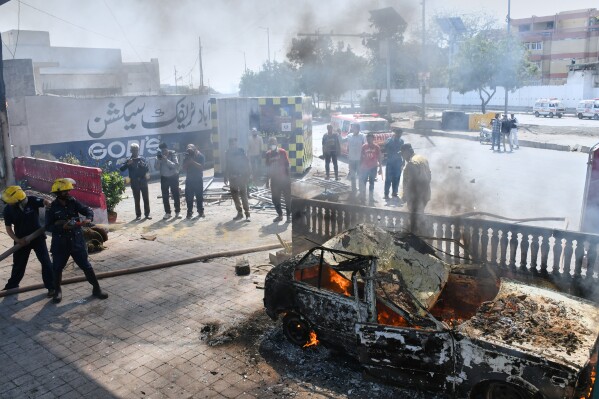
The war unfolding between the United States, Israel, and Iran has sent ripples across continents. Yet in Pakistan, those distant geopolitical tremors have manifested in a far more troubling way: violent protests, loss of innocent lives, and attacks on public property. The tragedy is not merely that anger erupted on the streets, but that much of this anger was intensified by the way information—and misinformation—circulated through sections of the media.
Protest is a legitimate democratic right. Citizens are entitled to voice their views on global developments, especially when those events involve the Muslim world and carry emotional resonance for people in Pakistan. But when protest turns into violence, when mobs attack diplomatic missions and public infrastructure, it ceases to be an expression of civic engagement. It becomes lawlessness, threatening the stability of the very state in which those freedoms exist.
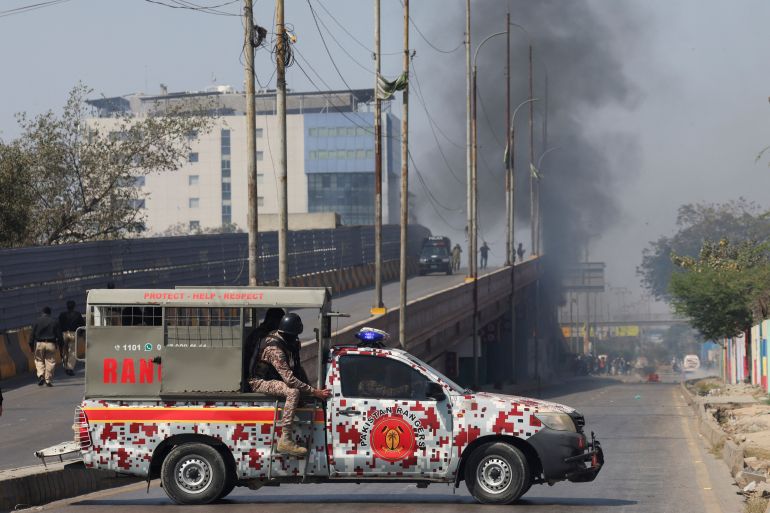
The recent attack on the U.S. Consulate in Karachi is a stark example of how quickly emotions can spiral beyond control. What began as demonstrations against developments in the Middle East ended in deadly clashes with security forces. Several people lost their lives, and the country once again found itself confronting images that travel far beyond its borders—images that raise uncomfortable questions about internal stability and responsibility.
At the heart of this escalation lies a deeper problem: the erosion of responsible communication. There is an old saying that in times of war, the first casualty is truth. In the current crisis, truth has often been overshadowed by sensational headlines, emotionally charged commentary, and speculative analysis. Instead of presenting complex geopolitical developments with context and restraint, some media platforms chose narratives that heightened public anger.
The purpose of journalism in moments of crisis is not merely to relay information but to provide clarity. Facts must come before rhetoric, and analysis should illuminate rather than inflame. Unfortunately, in many cases the opposite occurred. Dramatic framing, selective narratives, and heated debates created an atmosphere where reason struggled to compete with outrage.
The contrast with other Muslim countries is instructive. Across the Muslim world, people followed developments in the Middle East with concern and even protest. Yet Pakistan was among the few places where demonstrations escalated into deadly violence and attacks on diplomatic premises. This difference cannot be explained solely by public sentiment. It reflects how narratives are shaped, circulated, and amplified within the country’s information ecosystem.
Social media has magnified this challenge. Platforms have been flooded with AI-generated images, manipulated videos, and emotionally charged propaganda. In such an environment, misinformation spreads faster than verification. Images designed to provoke outrage are shared thousands of times before anyone questions their authenticity. Gradually, a climate emerges in which perception replaces fact and reaction replaces reflection.
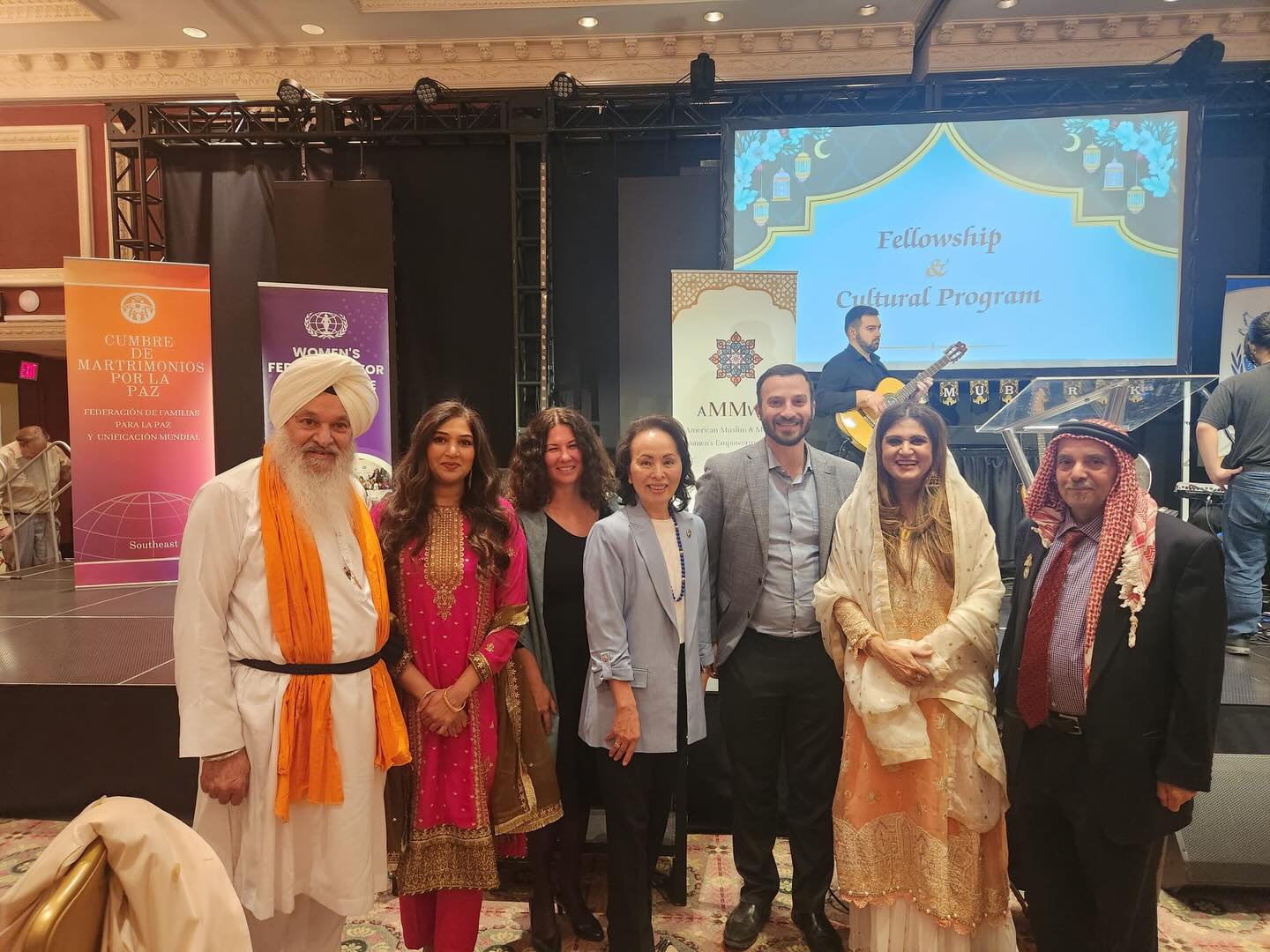
Anila Ali, President of the American Muslim Multifaith Women Empowerment Council (AMMWEC), recently wrote in international media that the Karachi consulate attack evokes painful memories of a dark chapter in Pakistan’s history—the burning of the U.S. Embassy in Islamabad in 1979. That event unfolded during the upheaval of the Iranian Revolution, when militants stormed the U.S. Embassy in Tehran and held American diplomats hostage for 444 days. The crisis reshaped U.S.–Middle East relations and demonstrated how revolutionary fervor can transform diplomatic missions into symbolic battlegrounds.
Only weeks after the Tehran hostage crisis began, an unrelated but equally tragic event took place in Pakistan. A violent mob attacked and burned the U.S. Embassy in Islamabad, killing several people and plunging the country into a diplomatic crisis. Nearly five decades later, the disturbing echoes of that moment appear once again.
Diplomatic missions are protected spaces under international law. The Vienna Convention on Diplomatic Relations obligates host states to safeguard embassies and consulates from intrusion or damage. These premises exist to ensure that dialogue continues even during moments of severe political disagreement. When mobs breach these spaces, it signals not only a lapse in security but also a breakdown in political and societal responsibility.
Embassies and consulates often become symbolic targets during geopolitical crises. For angry crowds, they appear to represent distant grievances that feel impossible to confront directly. But attacking them does nothing to resolve those grievances. Instead, it damages the host country’s credibility and undermines its diplomatic standing.
History offers sobering reminders of where such anger can lead. In 2012, militants attacked the U.S. diplomatic mission in Benghazi, killing Ambassador Christopher Stevens and three other Americans. What began as political outrage quickly evolved into a deadly assault on diplomacy itself.
Pakistan has repeatedly paid a price for similar breakdowns—through strained international relations, diminished investor confidence, and reputational damage. Yet the most immediate victims are Pakistan’s own citizens, whose lives are disrupted and whose safety is compromised.
Moments like these demand responsible leadership—not only from political figures but also from those who shape public discourse. When political leaders remain silent or ambiguous, and when media narratives emphasize confrontation rather than clarity, a vacuum emerges. Into that vacuum step rumor, speculation, and extremism.
The lesson from both Islamabad in 1979 and Karachi today is painfully clear. Foreign conflicts cannot be allowed to ignite domestic chaos. Criticism of international policies is legitimate. Advocacy for justice in global affairs is morally valid. But violence against diplomatic missions or state property serves no national interest.
If anything, it weakens Pakistan’s sovereignty and damages its credibility at a time when the country needs stability and international engagement.
The media, often called the fourth estate, carries immense influence over how societies interpret events. With that influence comes responsibility. When reporting becomes sensational, when commentary replaces careful analysis, and when facts are overshadowed by rhetoric, journalism risks becoming a catalyst for the very chaos it should help prevent.
Pakistan now faces a choice. It can allow misinformation and emotional narratives to continue shaping public reaction, or it can insist on a culture of responsible communication—one where facts guide debate and restraint tempers anger.
Because when media fuels the fire, the flames rarely remain confined to the pages of headlines or the screens of smartphones. They eventually reach the streets, where the cost is measured not in words, but in human lives.
No comments yet.