
PTI’s Waning Power of Protest
By Quraysh Khattak
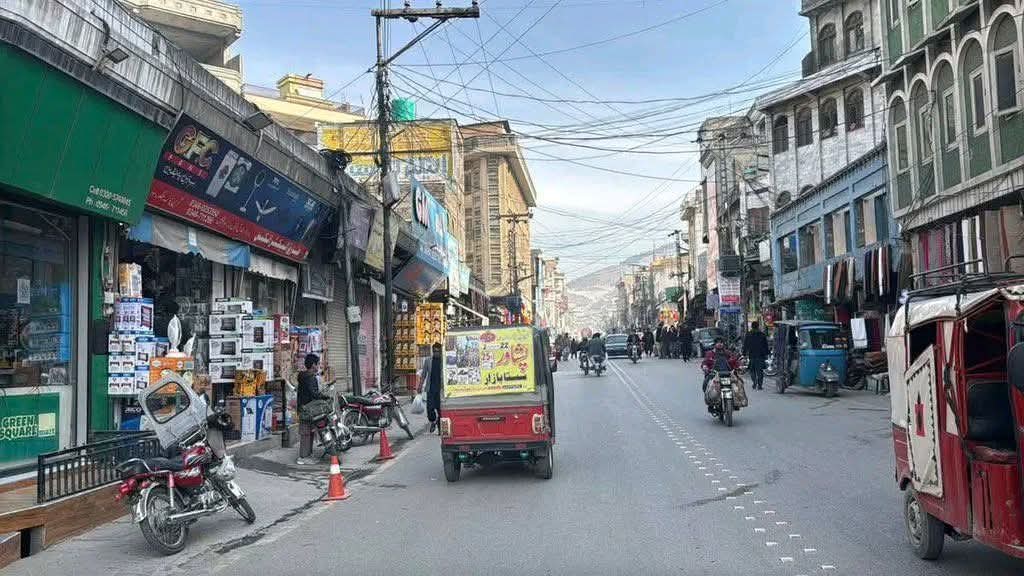
Pakistan Tehreek-e-Insaf’s call for a nationwide wheel-jam and shutter-down strike on February 8 was envisioned as a masterstroke of the country political theater. It was intended to be a demonstration of street power, a roar of popular defiance designed to paralyze the state and signal to the corridors of power that the party remains the sole arbiter of the public will. Instead, the day passed with a whisper. Markets hummed with their usual chaotic energy, transporters navigated their routes without interference, and the machinery of daily life ground forward, indifferent to the high-stakes drama emanating from the party’s digital command centers.
Most unsettling for the PTI leadership was the tepid response in Khyber Pakhtunkhwa (KP). In a province where the party has governed for over a decade, long portrayed as its ideological and political stronghold, the call for a shutdown was met with a lukewarm shrug. This was not merely a logistical failure; it was a profound political signal exposing a widening chasm between the party’s rhetorical grandiosity and the ground realities of a weary, pragmatism-driven electorate.
At the heart of this failure lies the law of diminishing returns regarding protest fatigue. For the better part of a decade, PTI has treated agitation not as a last resort, but as its primary mode of existence. From the historic sit-ins of 2014 to the repeated long marches and final calls of the post-2022 era, the party has leaned heavily on the vocabulary of protests. However, political mobilization is subject to the same exhaustion as any other human endeavor.
Protest politics depends on a sense of novelty, urgency, and the belief that a specific action will yield a tangible result. When every month brings a new “decisive moment” that fails to decide anything, the emotional currency of the movement devalues. Supporters who once flooded the streets with idealistic fervor now find themselves asking what the ultimate end is. What was once perceived as heroic resistance has gradually morphed into repetitive ritual. By turning the "final call" into a recurring seasonal event, the party has inadvertently demobilized its own base, leading to a state where silence has become the supporter's primary response to a strategy that offers no exit ramp.
Perhaps the most consequential reason for PTI’s protest failure in KP lies in the inherent contradiction of its current political positioning, one made even starker by its sweeping success in the 2024 general elections. The party frames its agitation as a struggle against “mandate theft,” yet in Khyber Pakhtunkhwa that mandate was unequivocally delivered to PTI, which secured an overwhelming majority in the Provincial Assembly and won all but seven of the province’s 45 National Assembly seats. This creates a clear logical and psychological dissonance for the average citizen: why should the people of KP paralyze their own economy and suspend their livelihoods to protest an election they, quite literally, won? When a party already holds the reins of provincial power, a call for a total shutdown appears less like a democratic struggle and more like a governing authority asking its own constituents to bear the cost of settling political scores in Islamabad.
This reality reveals a deeper contradiction. After three consecutive terms in power in KP, PTI is no longer the insurgent; it is the incumbent. The shopkeeper in Peshawar or the transporter in Mardan does not see a revolutionary when they look at the provincial machinery; they see the tax collector and the administrator. The moral force of a protest is predicated on the idea of the oppressed challenging the oppressor, but when the protester is also the provincial administrator, that moral clarity evaporates.
In a region where PTI holds the levers of power, the call for a shutdown feels hollow. For the common man, shutting down a shop for a day is an act of economic self-immolation. People only make such sacrifices when they believe the system is entirely closed to them. Because the voters in KP were successful in electing their preferred party to the provincial assembly and also winning a majority of the National Assembly seats from the province. They see no reason to set fire to their own house to prove they are the ones living in it.
This disconnect is further compounded by visible organizational decay. Years of legal crackdowns, arrests, and defections have hollowed out the party’s organizational spine. Historically, PTI’s street power relied on a sophisticated blend of charismatic appeal and electable machinery, local khans, influential traders’ associations, and transport unions who managed the logistics of turnout. Today, that machinery is conspicuously absent. Most of the second-tier leadership is either in hiding, in prison, or politically paralyzed.
Furthermore, the financiers who traditionally underwrote these massive mobilizations appear to have retreated. Without local organizers to provide transport and "paid encouragement" to protesters, a national call for a strike remains nothing more than a social media post, highlighting a profound disconnect between digital outrage and physical presence.
PTI’s dominance of the digital sphere is unquestionable, but February 8 proved that hashtags do not close markets. There is a "Digital Delusion" at play where viral clips and trending topics create an illusion of mass upheaval that does not exist in the physical world. When a party begins to believe its own social media metrics, it loses the ability to read the physical street. The internet echo chamber convinced the leadership that the country was on the verge of an uprising, but the reality on the ground was one of quiet survival.
We cannot ignore the crushing weight of Pakistan’s economic crisis in this context. With inflation reaching historic highs and unemployment looming over every household, the shutter-down has become an unaffordable luxury. For a daily wage earner or a small business owner, a day of protest is not a political statement; it is a day of hunger. The political class consistently underestimates the pragmatism of the poor, whose moral appeals lose their potency when they collide with the necessity of putting bread on the table.
The refusal to participate was not necessarily an endorsement of the current federal government; it was an assertion of necessity. The public mood has shifted from the revolutionary to the transactional. Voters are increasingly signaling that they want stability over symbolism and service delivery over slogans. This does not mean PTI has lost its voter base, voting is a low-cost act of preference, but its ability to leverage street power for political concessions is nearing exhaustion.
If the PTI wishes to remain a credible contender for power, it must transition from a permanent protest footing to a governance footing. This is especially true in KP, where the party will eventually be judged not by how many rallies it held, but by the state of the hospitals, schools, and economy in the province it has ruled for over a decade.
Street power without public conviction is merely noise. Conviction without organization is nothing more than sentiment. And protest without a clear, achievable purpose leads inevitably to fatigue. The silence of the streets on February 8 spoke louder than any speech delivered from a container. It told a story of a nation that is tired of chaos and a province, KP, that is beginning to hold its long-term rulers to account.
If the PTI fails to listen to that silence, it may find that the next time it asks for the public's support, the response isn't just a lukewarm strike, it's an empty ballot box. Politics, after all, is not only about anger; it is about trust. And trust, once exhausted, cannot be revived through repeated calls for shutdowns.
___________________________________________
About the writer: About the writer: Quraysh Khattak is a development practitioner and a former journalist. He writes on the intersections of political culture, governance, and institutional reform.
No comments yet.