When Marriage Steals Childhood
By Sohail Alam
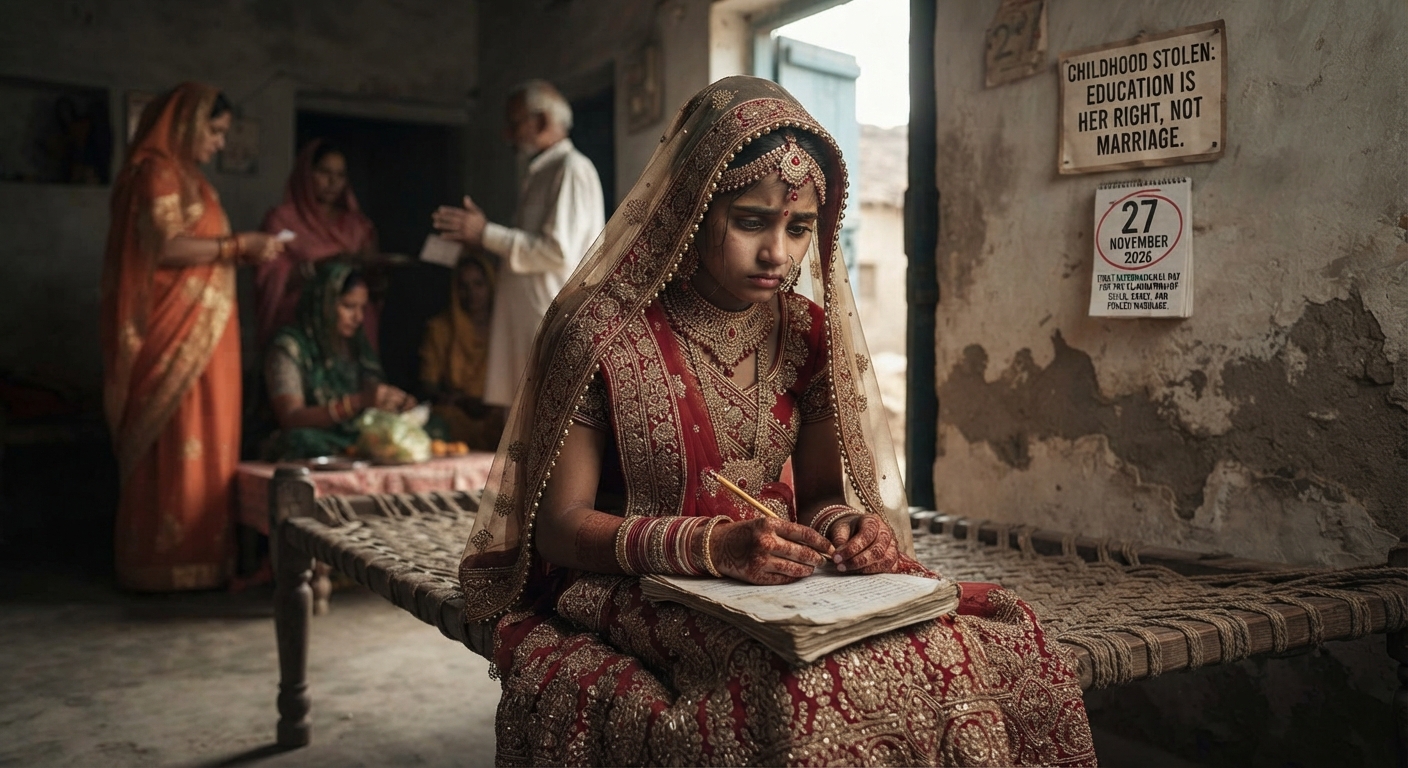
A society that deprives children of education, freedom and the chance to shape their futures cannot claim to be just, progressive or inclusive.
On 27 November 2026, the world observes the first International Day for the Elimination of Child, Early and Forced Marriage, as proclaimed by the United Nations General Assembly. This day highlights an injustice that deprives millions of girls of their childhood, dignity, education and autonomy. According to the United Nations, about 12 million girls are married before age 18 each year, underscoring the scale of a practice that undermines the rights and prospects of millions.
Each child marriage interrupts childhood, disrupts education and imposes a future determined by others. Behind every case is a child whose aspirations are set aside, often before she can understand them. Consequences include early pregnancy, health risks, economic dependence, domestic violence and lifelong limited choices.
Child marriage is not simply a matter of age or family arrangement. It violates childhood and constitutes a serious human rights issue. It denies children the time and freedom to grow, learn and develop the maturity needed for informed decisions.
In Pakistan, this challenge is particularly complex. Poverty, limited education, gender discrimination, insecurity and entrenched patriarchal attitudes sustain early marriage. Some families view it as protection or a means to preserve honour, while others see it as economic necessity. However, poverty, tradition and social pressure cannot justify denying a child her rights.
The State cannot treat early and forced marriage as a private or solely traditional matter. Protecting children is a public responsibility, and the law must take precedence over customs that threaten their safety and development.
An important development is the enactment of the Punjab Child Marriage Restraint Act 2026. Passed by the Punjab Assembly on 27 April and assented to by the Governor on 11 May 2026, the legislation establishes 18 years as the minimum legal age of marriage for both males and females. It also provides legal consequences for those who solemnise, facilitate or contract child marriages.
This is a significant step toward strengthening child protection in Punjab. By removing the gender-based distinction in minimum marriage age, the law affirms equal protection for boys and girls. However, the true test of this legislation lies not in its existence, but in the protection it delivers to the children it serves.
A law changes lives only if implemented. This requires trained law enforcement, effective child protection institutions, accessible legal aid, reliable birth registration, proper marriage documentation and accountability for violators. Public awareness must reach homes, villages and communities where decisions about children’s futures are made. Without consistent enforcement and public understanding, even the strongest laws risk becoming empty promises.
Child protection must extend equally to every religious and social community. In Pakistan, reports of abduction, forced conversion and forced marriage involving girls from minority communities have raised serious concerns among human rights organisations and civil society. These cases require impartial investigation, independent age assessment, due process and meaningful protection of the rights and safety of those involved.
The Constitution guarantees equality before the law and protects citizens' rights and freedoms, including freedom of religion. These guarantees must translate into practical protection for every child, especially those facing added vulnerabilities due to religious identity or social circumstances. Protecting minority girls from coercion and exploitation is not about special privileges; it is about upholding equal citizenship, religious freedom and the rule of law. Every allegation must be examined with credible evidence and lawful procedures. Justice must be impartial, consistent and free from discrimination.
Legal protection alone cannot address the conditions that make children vulnerable. Education is one of the strongest safeguards against early marriage. The government must intensify efforts to ensure girls’ enrolment, retention and completion of schooling, especially in rural and underserved areas. Financial assistance, safe transport, adequate school facilities and protection from harassment are essential. Families must be supported so poverty does not force them to choose between a daughter’s education and household survival.
It is equally important to help girls who have experienced early marriage rebuild their lives. Marriage should not end their education or limit their ambitions. They should have opportunities to return to school, gain professional skills and achieve economic independence. Their circumstances must not become a permanent barrier to their aspirations.
This responsibility does not rest with the government alone. Religious leaders can challenge harmful practices and promote dignity, compassion and responsibility. Teachers and educational institutions must raise awareness of children’s rights. Civil society organisations should support vulnerable families and survivors, and the media must report responsibly and protect victims' privacy. Above all, parents must understand that safeguarding their children means investing in their education, confidence and future, not making irreversible decisions for them.
A society’s progress is not measured only by economic growth, infrastructure or international standing. It must also be judged by how it treats its most vulnerable citizens and whether it protects those whose voices are often ignored. Every girl deserves the freedom to study, dream and shape her own life. Her childhood must be protected, her voice heard and her dignity never considered negotiable.
Marriage must be based on free and full consent, never imposed by pressure, poverty, coercion or fear. No child should surrender her childhood to secure her future. Protecting childhood is not a favour to our children; it is a responsibility we owe them.
No comments yet.