
Unlocking Pakistan's Mineral Wealth
By Junaid Qaiser
Pakistan's mineral resources represent one of the country's most significant but underdeveloped economic opportunities. From the copper and gold deposits of Balochistan to the diverse mineral reserves found across its provinces, the country possesses considerable natural wealth that could support industrialisation, expand exports and strengthen its position in international markets. Yet, despite this potential, the mining sector has struggled to attract investment on the scale required to transform these resources into lasting economic benefits.
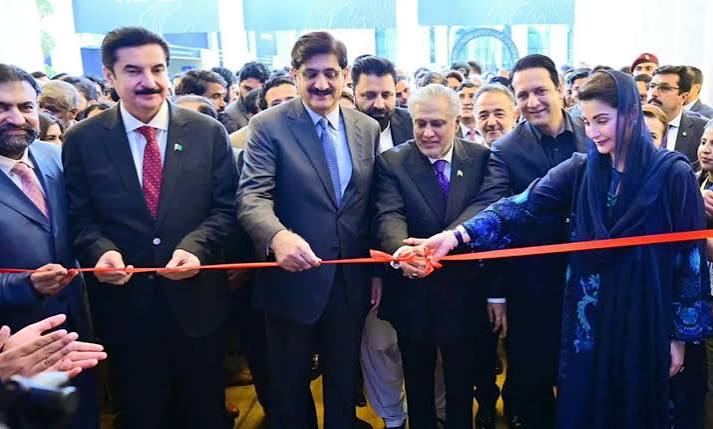
The Pakistan Minerals Investment Forum 2026, which concluded in Islamabad on November 13, has brought renewed attention to this opportunity. With 13 agreements and memorandums of understanding signed, encouraging exploration announcements and participation from international investors representing more than 60 countries, the forum has provided a platform for Pakistan to present its mineral potential to the world.
But the real significance of PMIF26 lies beyond the agreements signed or the resource estimates announced. It is about whether Pakistan can finally move from identifying its mineral wealth to developing it commercially, responsibly and sustainably. The challenge is to turn geological potential into productive industries, employment opportunities and economic prosperity.
Held on November 12–13 at the Jinnah Convention Centre, the two-day forum attracted more than 10,000 participants, including diplomats, international financial institutions, mining executives and representatives of governments and private companies. With 122 exhibitors, the event demonstrated the growing international interest in Pakistan's mining sector and its potential role in emerging global supply chains.
The participation of Prime Minister Shehbaz Sharif and Chief of Defence Forces and Chief of Army Staff Field Marshal Syed Asim Munir in the concluding sessions reflected the national importance attached to mineral development. Their joint inauguration of the National Minerals Data Centre and the Geological Survey of Pakistan GeoPortal was particularly noteworthy. These platforms are intended to improve access to geological information, support exploration and provide investors with more reliable data when evaluating opportunities.
For a sector that requires substantial capital, technical expertise and long-term planning, reliable information is essential. International investors need confidence in geological assessments, licensing arrangements and the regulatory environment before committing significant resources. Modernising the country's geological data infrastructure is therefore an important part of creating a more competitive investment climate.
The forum also highlighted the growing importance of economic diplomacy in Pakistan's development strategy. The participation of Acting Deputy Assistant Secretary of State for South and Central Asian Affairs Konstantin Dubrovsky and Chargé d’Affaires Natalie Baker brought particular attention to the prospects for stronger U.S.-Pakistan cooperation in critical minerals.
Under President Donald Trump, American commercial diplomacy has placed greater emphasis on investment, private-sector partnerships and secure supply chains. This approach offers an opportunity for Pakistan to develop a more substantive economic relationship with the United States. American financing, technology and mining expertise could complement Pakistan's mineral resources and workforce, creating opportunities that extend beyond the extraction of raw materials.
For Washington, access to reliable critical-mineral supply chains is increasingly important to advanced manufacturing, technology and industrial security. For Islamabad, international partnerships can help develop its mining infrastructure, improve technical capabilities and attract the investment needed to establish domestic processing industries. If pursued with clear commercial objectives and mutual benefits, cooperation in this sector could become an important dimension of bilateral economic relations.
Field Marshal Asim Munir's address at the forum addressed one of the principal concerns of potential investors: security. He assured participants that mines, miners, investments, industrial projects and associated personnel would receive full protection. His emphasis on securing the entire mining ecosystem reflected an understanding that investment cannot flourish without a stable and secure operating environment.
This commitment is particularly relevant to Balochistan, where substantial mineral opportunities exist alongside security and development challenges. Protecting mining operations and the people associated with them is essential, but long-term stability also requires economic participation, public confidence and visible improvements in local living conditions.
Field Marshal Munir also emphasised that Pakistan's ambition should extend beyond exporting unprocessed minerals. His call for moving from potential to production, from promises to action and from raw exports to value-added growth captured the central economic challenge facing the country.
Pakistan must avoid becoming merely an exporter of raw materials while other economies capture the greater value through refining, processing and manufacturing. The development of domestic value chains would allow the country to retain more economic benefits, create skilled employment and strengthen its industrial base. Copper and gold, for example, should be viewed not only as export commodities but also as resources that can support the development of associated industries and technical capabilities.
The exploration announcements made during PMIF26 have added substance to this ambition. The Frontier Works Organisation reported an estimated 350 million tonnes of copper in the Dasht-e-Kain area of Chagai district, based on analysis of approximately half of its drilling data. National Resources Limited announced copper-gold mineralisation across at least eight porphyry discoveries following nearly 25,000 metres of drilling and reaffirmed its commitment to invest $100 million. Mari Minerals also reported its first gold and copper reserves in Chagai and announced partnerships focused on the district.
These developments deserve attention, although further exploration and technical assessment will be necessary to establish their full commercial significance. Resource estimates and exploration discoveries are important milestones, but they are not the same as economically recoverable reserves or operational mines. Their value will ultimately depend on feasibility studies, infrastructure, financing and the ability to develop commercially viable projects.
The 13 agreements and memorandums of understanding signed at the forum provide another indication of the international interest in Pakistan's mineral sector. Partnerships involving Turkish companies Lidiya Mining and MTA, Mari Minerals, the UK's MSALABS, the Geological Survey of Pakistan and geological institutions from Türkiye, Germany and the United Kingdom reflect cooperation across exploration, research, laboratory services and advanced mining technologies. The agreement between FWO and Ivanhoe Mines also represents an opportunity to bring additional international expertise into the sector.
Such partnerships should be part of a broader national strategy. Pakistan needs to diversify its investment relationships and engage with international companies on the basis of transparent agreements, technology transfer and long-term commercial interests. Cooperation with the United States, Türkiye, the United Kingdom, Germany, China and other countries can help develop the technical and industrial foundations required for a competitive mining economy.
However, investment announcements alone will not deliver the transformation Pakistan seeks. The country must provide policy consistency, transparent licensing procedures, efficient administration and reliable infrastructure. Mining projects require substantial capital and long development periods. Investors need confidence that agreements will be honoured, regulations will remain predictable and institutional arrangements will continue beyond changes in government.
The role of local communities must also remain central to this process. Balochistan's mineral wealth should translate into tangible improvements for the people living in resource-rich districts. Employment opportunities, vocational training, schools, healthcare facilities, roads and access to basic services should form part of the development framework. Local communities should be involved in consultations and benefit-sharing arrangements from the beginning of major projects.
Responsible mining is equally important. Environmental assessments, water management, worker safety and transparent monitoring must be incorporated into project planning. The economic benefits of mineral development should not come at the expense of local livelihoods or environmental sustainability. A modern mining industry must be commercially viable while meeting appropriate environmental and social standards.
Pakistan should also invest in its human capital. The mining industry needs geologists, engineers, environmental specialists, laboratory technicians and skilled workers capable of operating modern equipment and managing complex industrial processes. Universities, technical institutions and international companies can collaborate on specialised training programmes to prepare young Pakistanis for these opportunities. Building domestic expertise will reduce dependence on imported skills and allow more economic value to remain within the country.
The broader international context makes this opportunity particularly important. Copper is essential to electricity networks, renewable energy systems, telecommunications and modern manufacturing. As global industries seek reliable sources of critical minerals, Pakistan has an opportunity to become a more significant participant in international supply chains. Its geographical position, mineral potential and growing interest from international investors could help strengthen its economic relationships with major industrial economies.
For Pakistan, the next phase must therefore focus on execution. The National Minerals Data Centre and GeoPortal need to become effective instruments for investors and researchers. Exploration projects must progress towards feasibility studies and commercial development. Agreements must translate into operational partnerships, while federal and provincial authorities must work together to remove administrative obstacles and establish a consistent regulatory environment.
PMIF26 has provided an important platform for presenting Pakistan's mineral potential and attracting international attention. The participation of senior political and military leadership, the security assurances, the exploration announcements and the international agreements have created expectations that must now be matched by practical results.
Pakistan has spent decades discussing the economic possibilities beneath its soil. The opportunity now is to build the institutions, infrastructure and partnerships necessary to realise them. Mineral wealth should not remain a collection of promising geological estimates or investment announcements. It must become a source of industrial growth, skilled employment, export earnings and improved living standards.
The real test of Pakistan's mineral strategy will be measured not by the number of agreements signed at investment forums, but by the mines that become operational, the industries that emerge, the jobs that are created and the communities whose lives improve.
Pakistan has the mineral resources. The task ahead is to turn potential into production and production into lasting national prosperity.
No comments yet.