
Silent Battles Behind Closed Doors
By Junaid Qaiser
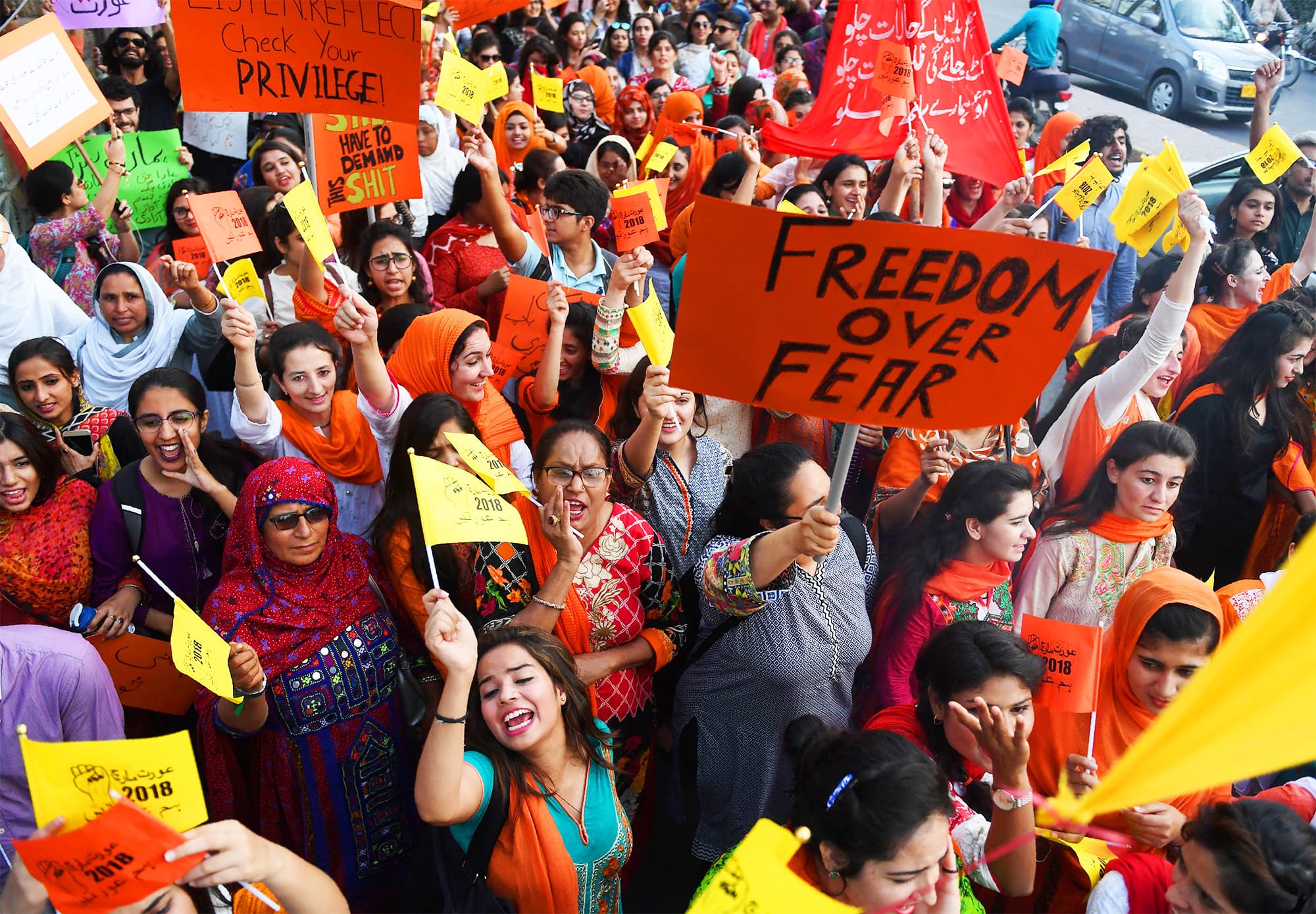
Behind the closed doors of many homes in Pakistan, women are fighting battles that rarely become part of public conversation. These are not always battles against physical violence or visible injustice. Often, they are struggles for respect, recognition, equality and the simple right to be heard. A woman may be admired for her sacrifices, praised for her patience and celebrated as the foundation of her family, yet still be denied an equal voice in decisions that shape her own life.
This is one of the painful contradictions of our patriarchal society. We speak endlessly about honouring women as mothers, daughters, sisters and wives, but too often forget that they are individuals with their own identities, ambitions, emotions and rights. Respect for women should not depend on their relationships with men. It should come from recognising their equal humanity.
For countless Pakistani women, the struggle for dignity begins at home. A woman may be educated, professionally accomplished and financially independent, yet find herself expected to remain silent when important family decisions are made. She may contribute to the household, raise children, care for elderly relatives and carry enormous emotional responsibilities, but her opinions are not always given the same weight as those of the men around her.
Women are not asking for privileges. They are fighting for equal rights, equal status, an equal say in decisions and dignity in their homes and communities. These are basic human rights, not favours to be granted or withdrawn.
The recent controversy surrounding remarks by retired Captain Muhammad Safdar has brought these questions into sharp focus. Speaking at a religious gathering in Chiniot, Safdar criticised the slogan Mera Jism, Meri Marzi and questioned why women who advocate bodily autonomy seek prayers from religious scholars when suffering from serious illnesses such as cancer.
The remarks attracted widespread criticism, and understandably so. Cancer is a devastating illness that brings fear, pain and uncertainty into the lives of patients and their families. Turning that suffering into an argument against women's autonomy shows a troubling lack of sensitivity. Such remarks deserve condemnation, regardless of who makes them.
There is no contradiction between faith and personal dignity. A woman can believe in God, seek prayers during illness and still demand the right to make decisions about her own body and future. Seeking spiritual comfort does not mean surrendering personal freedom. Faith should encourage compassion for those who suffer, not provide an excuse to ridicule them.
Punjab Chief Minister Maryam Nawaz Sharif responded to the controversy with an emotional message that resonated beyond the immediate political debate.
"Heartbreaking," she wrote on X, reflecting on the silent battles a woman and a wife fights behind closed doors, the strength she must find even when she feels close to breaking, and the wounds that remain invisible to others.
Her words captured a reality that many women know intimately. Behind the appearance of a stable marriage or a respectable household, there may be a woman carrying emotional wounds that nobody sees. She may be struggling with humiliation, loneliness, disappointment or the constant expectation that she must compromise to preserve family harmony.
Sometimes the deepest wounds are inflicted not by strangers but by those from whom love, understanding and protection are expected.
A woman may remain silent because she fears the consequences of speaking. She may tolerate disrespect because she worries about her children, her family's reputation or her financial security. Society often praises such endurance as patience and sacrifice, without considering the emotional cost.
But silence is not always acceptance. Sometimes it is simply the only option a woman believes she has.
We have normalised the idea that a good woman must always adjust. She must understand everyone else's difficulties, forgive hurtful words, sacrifice personal ambitions and keep the family together, even when the burden falls disproportionately on her shoulders. Meanwhile, the same expectations are not always placed upon men.
This imbalance is at the heart of patriarchy. It is not merely about who holds political office or controls financial resources. It is also about whose voice matters at the dinner table, whose dreams are encouraged, whose sacrifices are recognised and whose dignity is protected when disagreements arise.
A husband does not lose his authority as a partner by respecting his wife's independence. A family does not become weaker when women participate equally in decisions. On the contrary, relationships built on mutual respect, trust and shared responsibility are healthier than those sustained by fear or silence.
Women's struggle for equality should never be misunderstood as a struggle against men. It is a struggle against attitudes that treat women as subordinate, question their choices and expect obedience in place of partnership.
The controversy surrounding Safdar's speech also extended to his reported remarks about the late human rights lawyer Asma Jahangir. The Pakistan Bar Council and the Supreme Court Bar Association strongly condemned the disparaging language directed at her, calling for dignity and restraint in public discourse.
Asma Jahangir spent decades defending constitutional freedoms, human rights and people who often had little influence or protection. Her opinions were sometimes controversial, and disagreement with her views is entirely legitimate. But personal attacks, particularly those involving religious identity or directed at someone no longer alive to respond, cannot be justified as political or ideological criticism.
The lawyers' bodies also condemned the remarks concerning women and cancer, reminding public figures of their responsibility to speak with sensitivity and respect.
These incidents raise a larger question about how women are treated when they challenge established attitudes. Too often, a woman who expresses an independent opinion becomes the target of personal criticism rather than reasoned disagreement. Her character, beliefs or private life are questioned, while the substance of her argument is ignored.
Such attitudes discourage women from participating openly in public life and reinforce the culture of silence that has limited their opportunities for generations.
Pakistan has no shortage of capable and courageous women. They are leading institutions, serving in hospitals, teaching in schools, working in fields and factories, running businesses and raising families under difficult circumstances. Their contributions are essential to the country's social and economic life.
Yet professional achievement does not automatically translate into equality at home. Even women who hold positions of influence may confront expectations rooted in traditional gender roles. For those without financial independence or family support, challenging unfair treatment can be far more difficult.
This is why women's empowerment cannot be measured only by the number of women entering politics, universities or workplaces. It must also be measured by the freedom and dignity they experience in their everyday lives.
Can a woman disagree with her husband without fear of humiliation? Can a daughter make decisions about her education and career? Can a wife participate equally in financial matters? Can a woman seek justice when her rights are violated without facing social condemnation?
These questions reveal how far we still have to travel.
Maryam Nawaz's reflection on women's invisible wounds should encourage more than expressions of sympathy. As Punjab's first woman chief minister, she has an opportunity to help turn this conversation into meaningful action through stronger protection against domestic violence, effective enforcement of women's rights, improved access to justice and greater opportunities for economic independence.
But government action alone cannot change deeply rooted social attitudes. Reform must also begin within families.
Fathers must teach their sons that respecting women is a responsibility, not an act of generosity. Husbands must recognise their wives as equal partners. Families must encourage daughters to pursue their ambitions with the same confidence and freedom given to sons. Religious and community leaders must promote compassion, fairness and mutual respect rather than reinforce harmful stereotypes.
Above all, we must stop romanticising women's suffering.
A woman's strength should not be measured by how much humiliation she can endure. Her loyalty should not be judged by how often she sacrifices her own happiness. And her worth should never depend on her willingness to remain silent when she is treated unfairly.
We frequently describe women as the backbone of society, yet fail to recognise the weight they carry. They are expected to be strong for their children, supportive of their husbands, attentive to their parents and responsible for maintaining family relationships. But who listens when they are exhausted? Who stands beside them when they are hurt? Who protects their dignity when the people closest to them fail to do so?
These are questions every family and every community should confront.
The struggle for women's dignity is ultimately a struggle for a more humane and equitable society. It is about creating homes where women are heard, marriages where partners respect one another and communities where women can express their opinions without fear of ridicule or humiliation.
No woman should have to choose between preserving her family and preserving her self-respect. No woman should be made to feel that demanding equality makes her less deserving of love, faith or belonging.
More power to every woman fighting for equal rights, equal status, equal weight in decisions and equal dignity, both within her home and in society. More power to those who speak out against injustice, and to those who continue their struggles quietly, hoping that the next generation will not have to endure the same pain.
Their voices matter. Their choices matter. Their dignity matters.
A truly progressive society will not be defined merely by how loudly it praises women, but by how consistently it respects them, particularly behind closed doors, where there are no cameras, no public applause and no audience to witness their struggles.
Because dignity should never be something a woman has to fight for in her own home.
No comments yet.