
Malakand's Descent into Lawlessness
By Quraysh Khattak
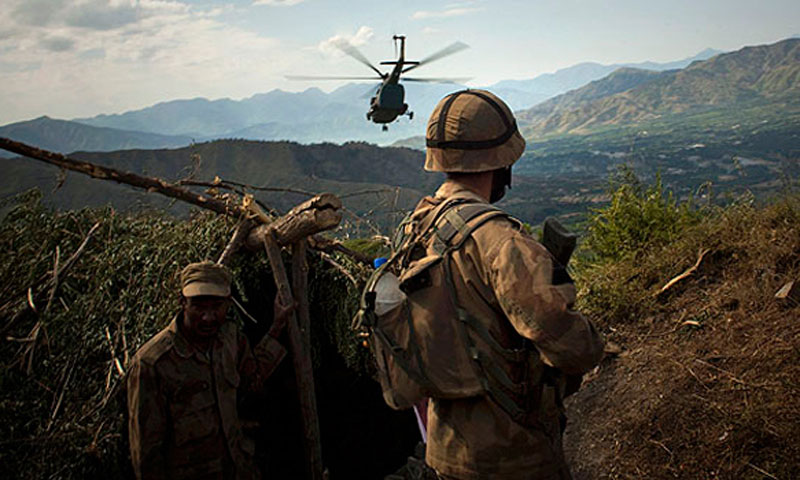
On a scorching afternoon along the dusty roads of Malakand, an old man walked out of a courtroom with a folder of legal documents tucked beneath his arm and the weight of two murdered sons resting heavily on his shoulders. For three agonizing years, seventy-year-old Mir Hassan had walked this solitary path, refusing the seductive pull of tribal blood feuds, declining the primitive urge for personal vengeance, and placing his unwavering faith in the majesty of the law. His reward for believing in the state came on July 27, 2026. He was gunned down in broad daylight, murdered on his way back from a court hearing, becoming the third member of his immediate family to be slaughtered by the same criminal gang.
The murder of Mir Hassan is not merely a tragedy for one family; it represents a structural collapse. It is a chilling and unambiguous declaration that in the hills and plains of Malakand, the state has abdicated its most fundamental responsibility: the protection of human life. His death stands as a grotesque monument to a systemic regional failure, exposing a horrifying truth that ordinary citizens have whispered for years: that the Malakand Levies, the local law enforcement institution, have become a hollow shell, while armed criminal networks operate with near-absolute impunity. There are widespread concerns that the Levies Force has even been infiltrated by informants and sympathizers of these criminal networks.
The sheer magnitude of this systemic failure becomes undeniable through Mir Hassan’s story. After his first son was murdered, his second son was hunted and killed by the same gang from Ghari Usmani Khel. Rather than taking up arms, Hassan formally nominated the perpetrators in FIRs and sought justice through legal channels. He knocked on every door, from the Levies posts to courts, relentlessly identifying the killers and attending court hearings despite a constant barrage of death threats and intimidation.
His extraordinary courage should have triggered every alarm bell within the regional administration. A man who had lost two sons to a known criminal gang was living under an extraordinary and predictable threat. Yet, as Mir Hassan navigated the corridors of justice, the district administration and Levies officials looked on with bureaucratic indifference. Was a threat assessment ever conducted? Were protective measures ever offered? Was any monitoring placed on the accused perpetrators who walked the streets with terrifying freedom? The answer lies in Hassan’s blood spilled on the road as he returned from court. The state did not just fail to protect Mir Hassan; it allowed him to walk into a death trap carved out by its negligence.
This tragic murder did not occur in a vacuum. It is the culmination of a broader, systemic descent into lawlessness that has quietly engulfed Malakand in recent years. Historically, even during periods of intense political turmoil and tribal friction, the social fabric of the region was preserved by an unwritten cultural code. Certain boundaries were considered inviolable. Women, children, and grieving elders were regarded as being beyond the realm of violence and intimidation.
Today, those traditional restraints have largely disintegrated, replaced by a ruthless and unbridled criminality that spares no one. Across areas such as Ghari Usmani Khel, a dark social shift is underway. Reports of armed criminals harassing, threatening, and intimidating women and young girl students have escalated into unthinkable horrors. Recently, a young girl was murdered on her way home from school, while a husband and wife were gunned down in broad daylight on a busy public road.
These are not isolated tragedies; they are calculated assertions of power. Paralyzed by fear and devoid of faith in local law enforcement, traumatized families increasingly choose agonizing silence over formal reporting, well aware that seeking help often invites swift retaliation. What renders this modern brand of lawlessness particularly insidious is its brazen, performative nature. Where criminals once operated from the shadows to evade the law, today’s syndicates in Malakand actively seek the spotlight. On platforms like TikTok and Facebook, gang members routinely flaunt high-powered automatic weapons, issue explicit death threats to rivals, and broadcast their dominance over local communities. These digital displays serve as psychological warfare, designed to silence witnesses, recruit impressionable youth, and project a chilling message that the state is utterly powerless.
If locals, particularly teenagers, can easily watch these digital displays of violence, why are the Levies Force and regional security agencies seemingly unable to act? Is it a matter of technological incompetence, or a troubling lack of institutional will? When criminal networks use social media to project invincibility while the state remains a passive spectator, the public naturally draws its own terrifying conclusion: authority no longer belongs to the law and the state, but to whoever wields the deadliest gun.
This crisis of governance extends far beyond physical violence; it has infected the very soil of Malakand through the systematic plunder of Shamilaat, communal lands that historically belong collectively to local communities. These lands, intended to serve as collective resources for public development and future generations, are being seized by armed criminals through force and intimidation. They are then illegally subdivided and sold, generating millions in illicit profits.
Land grabbing is not merely a property dispute; it is the financial engine of regional crime. The unchecked revenue generated from stolen communal land directly funds the purchase of sophisticated weapons, pays off informants, and secures political protection. Worse still, persistent local accounts suggest a troubling nexus between some criminal gangs and terrorist cells operating in the rugged mountainous areas of the district.
The common thread binding every element of Malakand’s crisis, from the broad-daylight murder of Mir Hassan and others to the harassment and killings of young girls and women, digital intimidation, and the theft of communal property, is impunity. Crime flourishes in direct proportion to a perpetrator’s belief that they will never face consequences. Every unprosecuted murder and every ignored digital threat sends a clear and lethal signal: the law is a myth, and violence pays.
While ordinary citizens live at the mercy of armed gangs, the office of the Deputy Commissioner of Malakand, which combines administrative authority with direct command of the Levies Force, has increasingly come to be viewed as a coveted assignment. Rather than using this authority to enforce the law and safeguard citizens, successive officeholders have frequently faced allegations of prioritizing personal interests over public responsibility.
The consequences of this institutional collapse are devastating. Economic activity declines, investment retreats, and young people lose faith in legitimate civic and justice structures. When the formal justice system appears to offer danger rather than protection for victims, and shelter rather than accountability for perpetrators, citizens are pushed toward personal weapons, tribal patronage, or self-help mechanisms simply to survive.
The people of Malakand can no more be placated with empty statements or superficial condolences. The crisis demands immediate, decisive, and structural intervention. First, a high-level, independent judicial inquiry must be launched into the murder of Mir Hassan, investigating not only the gunmen but also the facilitators, financiers, and institutional failures that left him vulnerable despite the obvious threats to his life. Second, specialized cybercrime units should be deployed to identify, monitor, and prosecute individuals who use social media platforms to glorify violence, issue death threats, intimidate citizens, and recruit impressionable youth into criminal networks. Third, the long-approved transition of the Levies Force into a regular police structure must be expedited without further delay, beginning with the immediate appointment of a District Police Officer (DPO). Finally, a coordinated operation involving revenue authorities, law enforcement agencies, and the district administration must be launched to recover illegally occupied Shamilaat lands, particularly in Ghari Usmani Khel, where more than 50 people, mostly innocent, have fallen victim to the greed of criminal gangs in disputes linked to communal property. Reclaiming these lands is not merely a matter of enforcing property rights; it is essential to dismantling the economic foundations of organized crime and restoring the state's writ in the region.
A government’s ultimate legitimacy does not rest on its rhetoric, but on its ability to protect its most vulnerable citizens. If a seventy-year-old father can bury his two sons, walk into a court of law seeking justice, and then be murdered on an open road without intervention from the state, governance in Malakand has suffered a profound moral and operational failure.
Mir Hassan’s blood must not be allowed to disappear quietly into the dust of official indifference. His death must serve as a final wake-up call. The state must now demonstrate whether it possesses the resolve to restore the rule of law or whether it has effectively surrendered Malakand to the rule of the gun.



No comments yet.