
Pakistan's Resurgence
How diplomacy is once more an invaluable strategic asset.
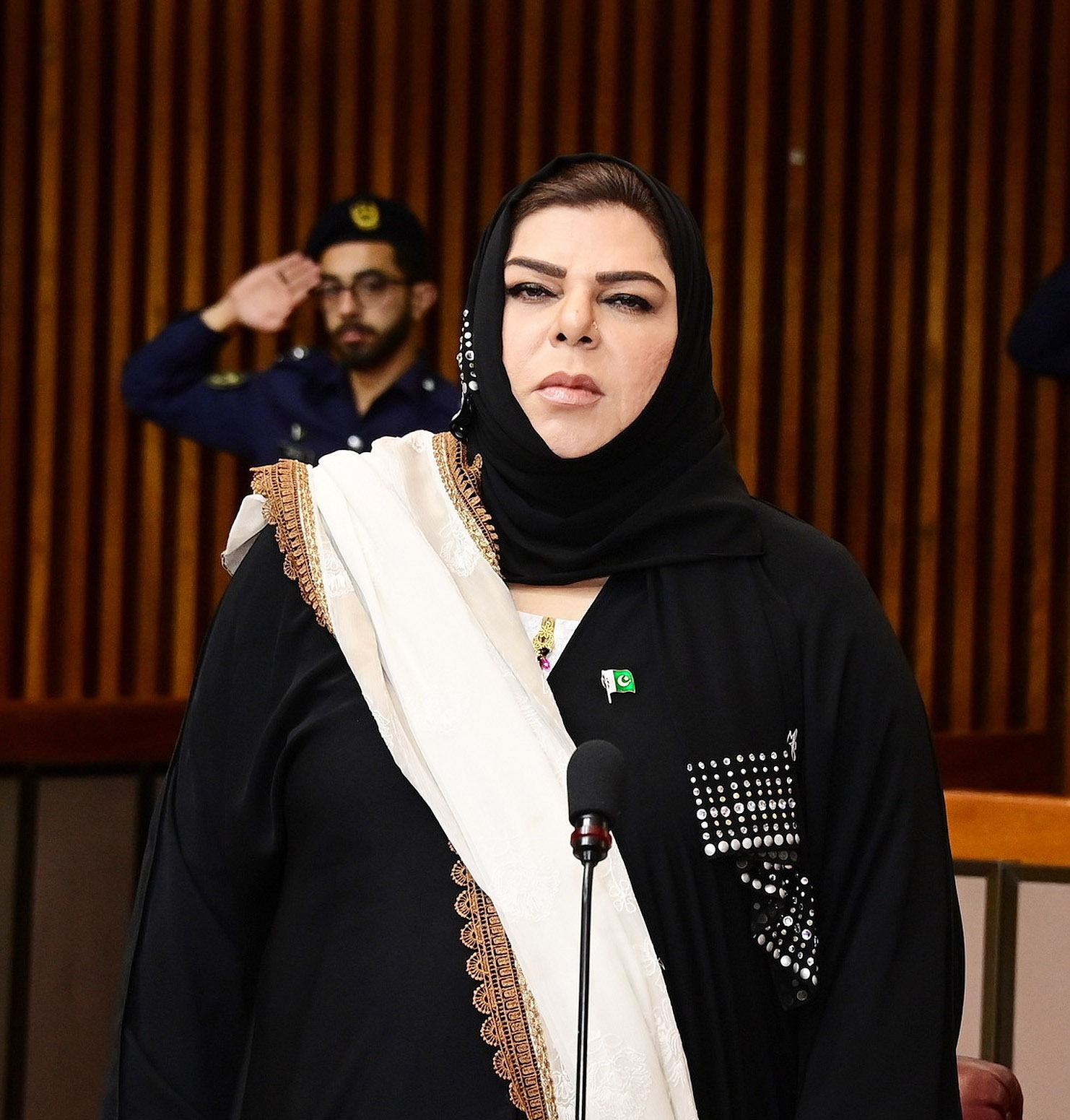
By Sehar Kamran
“We believe in the principle of honesty and fair play in national and international dealings and are prepared to make our utmost contribution to the promotion of peace and prosperity among the nations of the world.”
Quaid-e-Azam Muhammad Ali Jinnah, Broadcast to the People of the United States, February 1948
For much of the past two decades, Pakistan's place in the world was defined by crisis management: a frontline state in the war on terror, a nuclear-armed neighbour locked in recurrent friction along its borders, and an economy perennially one bailout away from collapse. Our foreign policy, more often than not, was reactive. Yet the events of 2026 have compelled a reassessment. From shuttle diplomacy between Washington and Tehran to the hosting of the Islamabad Talks, Pakistan has re-emerged as something it has not convincingly been in years: a middle power whose diplomatic heft exceeds its economic or military mass.
Middle powers are not defined by size alone, but by function. Scholars of international relations typically identify a cluster of traits: sufficient regional significance to matter to great powers without being one itself; a preference for multilateralism, coalition-building and a rules-based order over unilateral force; the capacity and credibility to act as an honest broker or bridge between rival blocs; and a foreign policy driven by pragmatism rather than ideology. Middle powers punch above their formal weight precisely because they are useful—they offer channels of communication that larger, more entangled powers cannot.
Pakistan possesses several of the structural preconditions for this role, even if it has not always exercised them well. It sits at the crossroads of South Asia, Central Asia and the Middle East, sharing borders and deep historical ties with Iran, Afghanistan and China, while maintaining a decades-old security relationship with Saudi Arabia and the Gulf states. It is a nuclear power, a leading troop contributor to UN peacekeeping, and a member of forums ranging from the OIC to the SCO. Crucially, it is trusted—however unevenly—by actors who do not trust each other: Washington and Tehran, Riyadh and Tehran, and the Gulf monarchies among themselves.
None of this is entirely new. Pakistan has played the interlocutor before on several occasions. It was Islamabad that quietly arranged Henry Kissinger's secret 1971 visit to Beijing, using its ties to both Washington and China to engineer one of the Cold War's most consequential diplomatic openings. Decades later, Pakistan's leverage over the Taliban leadership—much of it historically based on Pakistani soil—made it central to facilitating the talks that led to the 2020 Doha Agreement between the United States and the Taliban. As a founding member of the Organisation of Islamic Cooperation and a nuclear power with long-standing Western alliance ties, it has repeatedly cast itself as a bridge between the Islamic world and the West. It has remained one of the largest and most consistent troop contributors to UN peacekeeping missions for decades. Seen against this record, 2026 is less a sudden transformation than the most successful expression yet of a role Pakistan has intermittently occupied for half a century.
This latent capacity has become infinitely more visible in 2026. As the war between Iran, Israel and the United States escalated following strikes in late February, Pakistan resisted pressure to take sides militarily, even as it voiced solidarity with Saudi Arabia and continued engaging Tehran—a calculated balancing act that kept Islamabad diplomatically active without drawing it into the fighting itself. Rather than retreat into passive neutrality, Islamabad converted its position into leverage by engaging its neutrality much more actively. In convening the foreign ministers of Saudi Arabia, Turkey and Egypt, it coordinated a joint diplomatic push, using alliance politics to rebuild regional consensus around de-escalation. Pakistan went on to broker a ceasefire, later extended, and then hosted the first round of what became known as the Islamabad Talks, bringing a US delegation and Iranian officials to the same table on Pakistani soil.
This was middle-power diplomacy by the textbook: not the exercise of hard power, but the provision of a neutral venue, a credible interlocutor and a face-saving off-ramp for parties too entrenched in their own positions to negotiate directly. It succeeded where larger powers—bound by their own alliances and histories—could not easily have succeeded themselves.
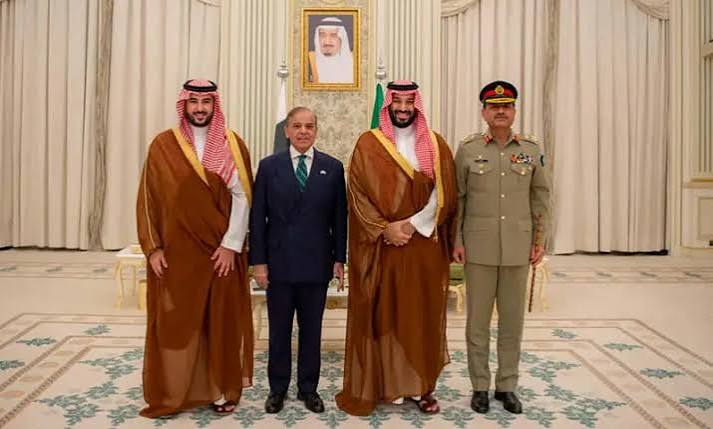
This diplomatic activity alone would have made little impact without the credibility lent to it by the Pakistani military and its long-standing reputation as a historically dependable security partner. Field Marshal Asim Munir's parallel engagement alongside the civilian government signalled to all parties that Pakistan's commitments were backed by institutional continuity and strategic seriousness, not just political rhetoric. This was reinforced concretely: under Pakistan's Strategic Mutual Defence Pact with Saudi Arabia, Islamabad deployed fighter jets, air defence systems, UAVs and thousands of troops to the Kingdom once a ceasefire took hold—honouring a security commitment that reassured Riyadh even as Pakistan kept diplomatic channels to Tehran open. It is this dual posture—visible and precedential military reliability paired with diplomatic even-handedness—that gave Pakistan standing as an interlocutor.
Gulf states could trust that Pakistan would not abandon them militarily; Iran could trust that Pakistan was not simply acting as a mouthpiece for its rivals. The armed forces, in effect, underwrote the credibility that made the civilian-led mediation believable. Without that backing, Pakistan's offers to host talks or shuttle messages between capitals would have carried far less significance, since middle-power diplomacy ultimately rests on a state's demonstrated ability to honour its commitments, not merely to articulate them.
The test now is whether this diplomatic capital can be converted into durable strategic and economic gains, rather than dissipating once the immediate crisis recedes. Pakistan's own analysts have been candid that mediation is not an end in itself: it does not resolve the structural weaknesses of an economy still dependent on external financing, nor does it substitute for hard power. The opportunity lies in translating goodwill into investment, trade and long-term institutional relationships. Saudi and Gulf capital has shown renewed willingness to follow through on pledges as Pakistan has demonstrated relative political stability and reliability as a security partner.
To build on this moment, Pakistan needs to formally institutionalise the mechanisms behind such efforts. That means investing in sustained professional diplomatic backchannels beyond any single crisis; deepening multilateral coordination with partner states rather than relying on ad hoc summits; and using its position as a rare trusted channel between Washington and Tehran to secure concrete economic dividends. It also means resisting the temptation to overextend—middle powers retain their value precisely because they are seen as honest brokers, a status that erodes quickly if a country is perceived to have taken sides.
Pakistan's resurgence as a middle power is neither accidental nor guaranteed to last. It is the product of geography, timing and a rare moment of coordination between its civilian and military leadership. Whether 2026 marks the beginning of a structural shift in how the world sees Pakistan—or simply a well-timed diplomatic interlude—will depend on whether Islamabad can now build durable institutions and economic partnerships upon the credibility it has just earned. Diplomacy, it turns out, remains one of Pakistan's most underused strategic assets. The question is whether it will finally be treated as one.
Sehar Kamran
The writer is a Central Leader of Pakistan Peoples Party, a Member of the National Assembly of Pakistan for the term 2024-2029, and a Patron in Chief of a non-partisan think tank; the Centre for Pakistan and Gulf Studies (CPGS).
Twitter @SeharKamran
Sehar Kamran
Comments
Most Read
Pakistan’s Red Line
Sohail Alam congratulates General Aamer Raza on his promotion and expresses appreciation for PAF
Defending the Red Sea’s Lifeline
Pakistan’s Role as a Sincere Mediator
CBF Pakistan Signs MoU with Superior University to Promote Education and Leadership Development
Standing Firm with Saudi Arabia
Pakistan's Resurgence
No comments yet.