
An ‘All-Time High’ in Pakistan-US Relations
By Junaid Qaiser
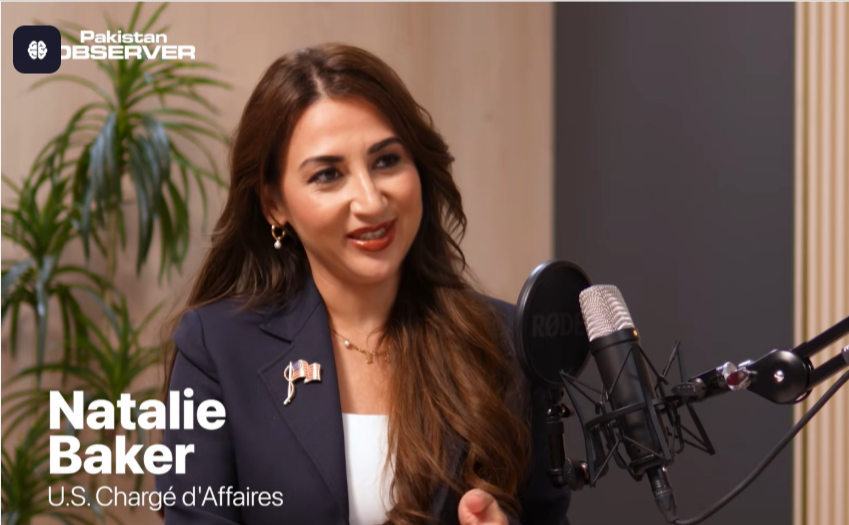
Diplomacy usually speaks in careful, polished language, so when a senior envoy uses words like “stronger than ever,” people tend to pay attention. That was exactly the case when United States Chargé d’Affaires Natalie Baker recently described Pakistan-United States relations as being stronger than they have ever been.
In her first-ever podcast appearance, Baker described Pakistan-United States relations as being "stronger than it’s ever been in the history of our nations." For observers of a relationship that has experienced dramatic highs and lows over nearly eight decades, the statement was striking.
Pakistan and the United States have often found themselves bound together by strategic necessity. At different points, the relationship has been shaped by Cold War politics, regional conflicts, the war on terror, and shifting geopolitical realities. Cooperation has frequently alternated with periods of mistrust. Yet today, there appears to be a growing consensus in both Islamabad and Washington that the partnership is entering a different phase—one driven less by crisis management and more by long-term cooperation.
Baker's remarks come at a particularly significant moment. While headlines in recent years have often focused on political tensions and regional security concerns, a quieter transformation has been taking place beneath the surface. Economic engagement is expanding, educational exchanges are deepening, diplomatic coordination is increasing, and people-to-people connections continue to strengthen.
Perhaps the clearest evidence of this new momentum can be seen in the ongoing negotiations between Pakistan and the United States on a reciprocal trade agreement. According to Pakistan's Foreign Office, negotiators in Washington recently made substantial progress after two days of discussions, narrowing differences and building consensus toward an early conclusion of the agreement.
Trade may not generate the same headlines as military cooperation or diplomatic summits, but it often provides the strongest foundation for sustainable partnerships. Economic relationships create stakeholders on both sides who benefit from stability, growth, and cooperation. They produce jobs, encourage investment, and build confidence between nations.
The United States remains Pakistan's largest single-country export market, and both governments recognize the untapped potential that exists within the economic relationship. Pakistani exporters see opportunities to expand access for textiles, apparel, surgical instruments, sports goods, and information technology services. American businesses, meanwhile, increasingly view Pakistan as a market of more than 240 million people and a gateway to broader regional opportunities.
Baker herself highlighted economic cooperation as one of the pillars of the relationship. She pointed to a future that includes greater investment, stronger commercial partnerships, energy cooperation, and collaboration in critical minerals development. Such priorities reflect a partnership looking beyond short-term calculations and focusing instead on long-term mutual interests.
Yet economics is only part of the story.
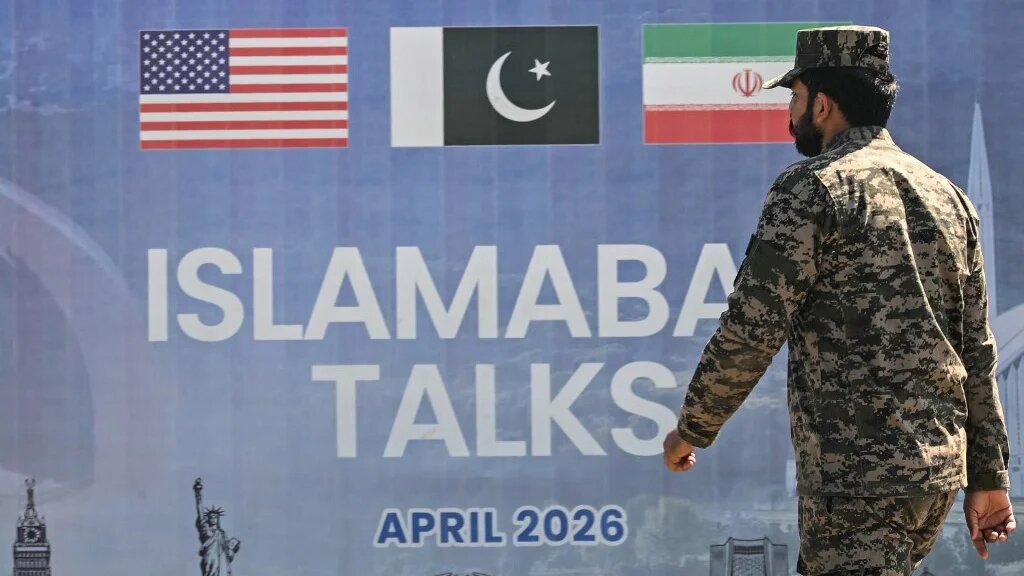
One of the most notable aspects of Baker's conversation was her acknowledgment of Pakistan's growing diplomatic role. In particular, she praised Pakistan's contribution to facilitating dialogue between the United States and Iran, describing it as a historic achievement.
For Pakistan, this recognition carries considerable significance. For years, Pakistani policymakers have argued that the country possesses the capacity to serve as a bridge between competing regional interests. Situated at the crossroads of South Asia, Central Asia, and the Middle East, Pakistan occupies a unique geopolitical position. Its leaders have often emphasized diplomacy, dialogue, and engagement as tools for promoting regional stability.
The public acknowledgment from a senior American diplomat suggests that Washington increasingly sees value in Pakistan's ability to facilitate communication and help reduce tensions in a volatile region.
Equally noteworthy was Baker's reference to the close diplomatic engagement between Vice President JD Vance and Field Marshal Asim Munir. Such interactions reflect a level of trust and communication that has become increasingly important in a rapidly changing international environment.
Strong relationships between nations are ultimately built on strong relationships between people. Governments may negotiate agreements, but trust is developed through sustained engagement and mutual understanding. The current trajectory suggests that such trust is steadily growing.
Baker's comments also highlighted an often-overlooked dimension of the bilateral relationship: cultural affinity.
Having served in Pakistan before, she spoke warmly about the country's hospitality, diversity, and traditions. Her reflections may seem personal, but they point to a broader truth. The relationship between Pakistan and the United States extends far beyond official meetings and diplomatic communiqués. It is reinforced every day by students, entrepreneurs, educators, professionals, and families whose lives connect the two societies.
The educational relationship is particularly significant. Tens of thousands of Pakistanis have participated in American educational and exchange programs over the years. Many have returned to become leaders in government, business, academia, and civil society. These alumni networks represent one of the most durable foundations of bilateral engagement.
Likewise, the presence of major American companies in Pakistan continues to create economic opportunities while fostering closer commercial ties. From technology firms to consumer brands, American investment has long been part of Pakistan's economic landscape. As both countries seek to expand trade and investment, these connections are likely to become even more important.
Another encouraging sign is the growing emphasis on cultural cooperation. The recent return of hundreds of historical artifacts from the United States to Pakistan, coupled with agreements aimed at preserving cultural heritage, demonstrates that the relationship is broadening in ways that transcend politics.
Such initiatives matter because they create goodwill. They remind both societies that diplomacy is not merely about interests; it is also about respect, understanding, and shared appreciation for history and culture.
Looking ahead, perhaps the greatest opportunity lies in Pakistan's youth. With one of the world's youngest populations, Pakistan possesses enormous human potential. Millions of young Pakistanis will enter the workforce over the coming decade. Their success will depend on education, innovation, entrepreneurship, and access to global opportunities.
This is an area where cooperation with the United States can have a transformative impact. Educational exchanges, technology partnerships, investment in skills development, and collaboration in emerging industries can help unlock opportunities for an entire generation.
Of course, challenges remain. No bilateral relationship is free from disagreements or competing priorities. Differences will inevitably arise, and expectations must be managed realistically. But the measure of a mature partnership is not the absence of challenges; it is the ability to navigate them constructively.
That is why Baker's description of the relationship as being at an "all-time high" is significant. It reflects more than diplomatic optimism. It reflects a growing recognition that Pakistan and the United States have developed a broader, more resilient relationship than many imagined possible just a few years ago.
As both countries approach eight decades of diplomatic ties, they have an opportunity to build a partnership rooted not only in strategic necessity but also in economic growth, educational exchange, cultural understanding, and regional cooperation.
The phrase Baker borrowed from Prime Minister Shehbaz Sharif—"the sky is the limit"—may sound ambitious. Yet when one considers the progress already being made in trade, diplomacy, education, and investment, it no longer seems unrealistic.
For Pakistan and the United States, the challenge now is simple: transform today's momentum into lasting progress. If that happens, future historians may well conclude that this period marked the beginning of one of the most productive chapters in the history of bilateral relations.
No comments yet.