
Buried by Negligence
By Junaid Qaiser
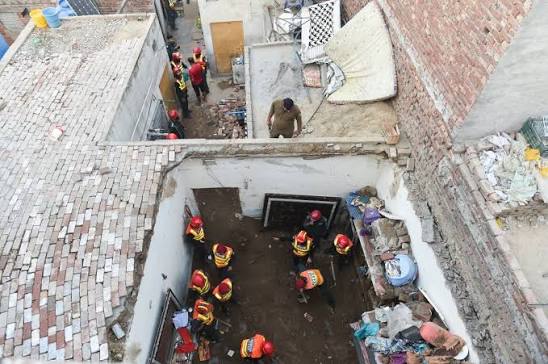
Fourteen children left their homes in Lahore’s Kahna area carrying books, notebooks, and dreams of a better future. By the end of the day, they were being carried to their graves.
The collapse of a roof at a private tuition centre, which claimed the lives of fourteen children and injured several others, has been described as a tragedy. It certainly is. But it is also something more disturbing: a preventable disaster. These children were not victims of fate. They were victims of negligence.
According to police investigations and eyewitness accounts, the building where the tuition centre operated was already in poor condition. Residents say its deteriorating state was widely known in the neighbourhood. The FIR alleges that individuals were placing soil on the roof of the structure while classes were taking place inside. The additional weight reportedly proved too much for the weakened building, causing the roof to collapse on the children below.
If these findings are confirmed, then this was not an unavoidable accident. It was the result of reckless decisions and a complete disregard for safety.
What makes the tragedy even more painful is that warning signs appear to have existed long before the collapse. Residents have spoken openly about concerns regarding the building’s condition. Yet parents continued sending their children there because they had few alternatives. Like countless families across Pakistan, they believed education offered the best chance for a better life.
Instead, their pursuit of opportunity ended in unimaginable grief.
The immediate arrest of the property owner and contractor is a necessary step, but it cannot be the final step. Pakistan has witnessed too many disasters where public outrage fades, investigations lose momentum, and accountability remains incomplete. The children of Kahna deserve more than symbolic action. Their families deserve answers.
Responsibility does not rest solely with those directly operating the tuition centre. Serious questions must also be asked of the authorities responsible for enforcing building regulations and ensuring public safety. How was a tuition centre allowed to function in a building reportedly known to be structurally unsafe? Were inspections ever conducted? Did any government department verify that the premises met minimum safety standards?
These questions are essential because tragedies of this scale rarely result from a single failure. They occur when multiple layers of negligence overlap. One person ignores a risk. Another cuts corners. Authorities fail to inspect. Regulations go unenforced. Eventually, innocent people pay the price.
In this case, the victims were children.
The incident is particularly alarming because it is not an isolated one. Less than two months ago, four children were killed when a classroom roof collapsed in Dera Ghazi Khan. Investigators later found that construction materials had been placed on the roof, contributing to the collapse. The similarities between the two incidents are impossible to ignore.
Different locations, different institutions, but the same deadly disregard for safety.
At some point, repeated incidents stop being accidents and start becoming evidence of a systemic problem.
Across Pakistan, thousands of children study in private schools, tuition academies, and learning centres operating from converted homes and ageing buildings. Many parents naturally assume that if an educational institution is allowed to operate, basic safety checks have already been carried out. The Kahna tragedy has exposed how dangerous that assumption can be.
The responsibility of government extends beyond offering condolences after a disaster. Its foremost duty is prevention. Structural inspections should not begin after lives have been lost. Buildings used for educational purposes should be regularly assessed to ensure they are safe for students and staff alike.
Punjab Chief Minister Maryam Nawaz has promised that every individual found responsible will face the full force of the law. Those words are welcome, but they must now be matched by action. Accountability should not stop with a few arrests. If regulatory failures contributed to this tragedy, those responsible must also be identified and held accountable.
Transparency is equally important. The findings of the investigation should be made public. Families who lost their children deserve to know exactly what happened and why. The public deserves assurance that lessons will be learned and reforms implemented.
The financial assistance announced for the victims’ families is necessary and compassionate. However, no amount of compensation can replace a child. No cheque can answer the questions that grieving parents will carry for the rest of their lives.
Why was a dangerous building being used as a classroom?
Why were children inside while work was taking place on the roof?
Why did nobody intervene before disaster struck?
These questions cannot simply be forgotten once public attention shifts elsewhere.
The tragedy should serve as a wake-up call for authorities across Pakistan. Comprehensive inspections of schools, tuition centres, and other educational facilities should be conducted without delay. Buildings found to be unsafe should be closed until necessary repairs are completed. Such measures may cause inconvenience, but inconvenience is a small price to pay for protecting children’s lives.
Ultimately, the collapse in Kahna is about more than one building. It reflects a broader culture in which safety regulations are often treated as optional, inspections become paperwork exercises, and accountability frequently arrives only after irreversible damage has been done.
The fourteen children who died that day were not statistics. They were sons and daughters, brothers and sisters, students with hopes and ambitions. They entered a classroom expecting to learn. Instead, they became victims of failures entirely beyond their control.
Their deaths must become a turning point rather than another forgotten headline.
If this investigation results only in temporary outrage and a handful of arrests, then nothing meaningful will have changed. But if it leads to genuine accountability, stronger enforcement of safety standards, and serious reforms in how educational institutions are regulated, then perhaps some good can emerge from this heartbreaking loss.
The children of Kahna were buried beneath a collapsing roof. They must not also be buried beneath bureaucracy, excuses, and collective amnesia.
Justice for them requires more than sympathy. It requires accountability, reform, and a commitment that no child in Pakistan will ever again lose their life simply for seeking an education.

No comments yet.