
Two and a Half Centuries of Freedom
By Muhammad Kashif Mirza
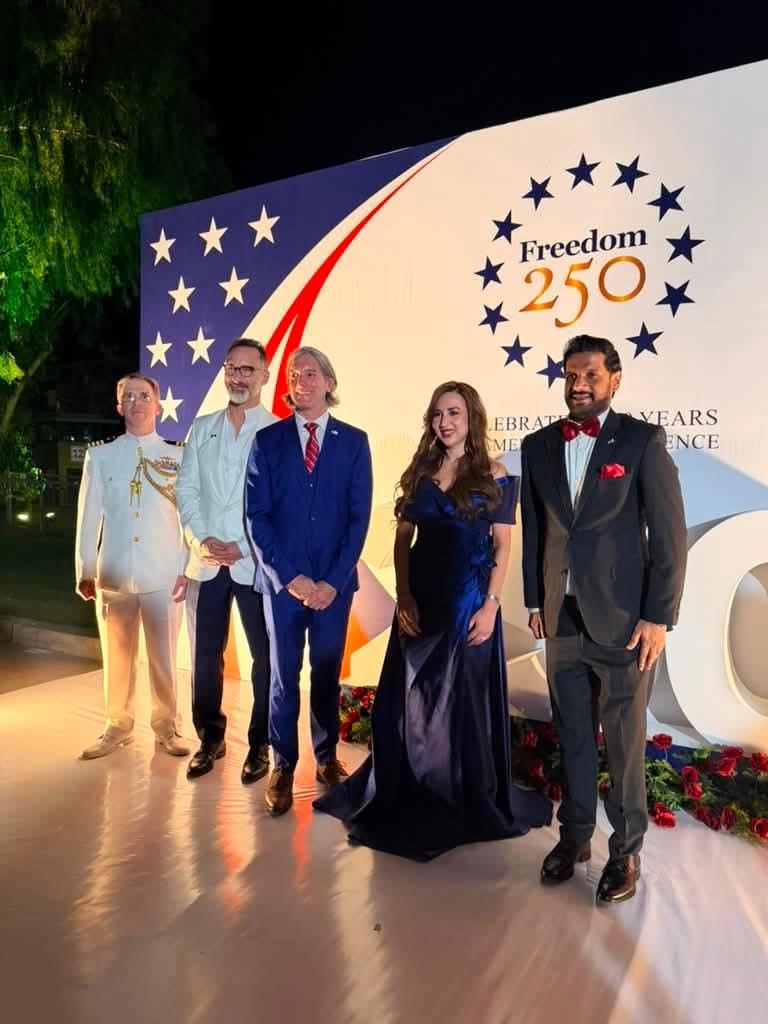
I have attended many diplomatic receptions in Islamabad over the years. Most are professionally managed. Some are memorable. Very few leave the impression that they have become part of the city's diplomatic history.
The U.S. Embassy's Freedom 250 celebration on June 6 was one of those rare occasions.
The event marked 250 years of American freedom and brought together an unusually diverse gathering at the Diplomatic Enclave. Senior government officials, diplomats, parliamentarians, business leaders, civil society representatives, academics, media personalities, religious leaders, and cultural figures all shared the same space. That alone was noteworthy. The scale of the gathering made it clear that this was intended to be far more than a routine national day celebration.
The evening had originally been planned differently. Earlier engagements had taken place on June 4, but rain disrupted the schedule and required adjustments. Large international events are often tested by circumstances beyond anyone's control. What impressed me was how effectively the U.S. Embassy team adapted. By the time guests arrived on June 6, there was little indication that the weather had forced significant changes to the original plans.
Credit for that success belongs, above all, to Chargé d'Affaires Natalie A. Baker and her team.
Throughout the evening, Baker's presence was unmistakable. She was not simply delivering a speech or fulfilling a diplomatic obligation. She was hosting. She greeted guests, engaged with attendees from different sectors, and maintained a visible presence across the event. The result was an atmosphere that felt welcoming rather than ceremonial.
Diplomatic events can sometimes appear distant from the people attending them. This one did not.
What stood out most was the attention to detail. The guest management was smooth. The programme moved on schedule. Security was visible but unobtrusive. Hospitality arrangements were efficient. Every component appeared carefully coordinated. Large events often reveal weaknesses in organisation. Here, the opposite occurred. The organisation itself became one of the evening's defining features.
The formal programme reflected both tradition and partnership. The presentation of Colours by the U.S. Marine Corps Color Guard brought a sense of occasion. The national anthems of Pakistan and the United States were performed with dignity and respect. Musical performances added energy to the evening without overwhelming its diplomatic purpose. Guests moved comfortably between formal proceedings and informal conversations, creating an environment that encouraged engagement across sectors and backgrounds.
The entertainment programme was equally effective. Performances by the U.S. Air Force Central Command Band and Pakistani artist Bilal Saeed were warmly received. They helped create a setting that was both official and accessible. That balance is difficult to achieve.
The event's visual presentation also deserves mention. The grounds were meticulously prepared. Lighting, staging, hospitality areas, and guest facilities reflected extensive planning. Large diplomatic receptions require hundreds of decisions that guests never see. The success of the evening suggested that those decisions had been made carefully and executed professionally.
Yet the person who gave the evening its defining character was Natalie Baker.
Her keynote remarks were measured, confident, and inclusive. Importantly, she acknowledged the disruption caused by the weather and recognised the patience of guests who had travelled from other cities and adjusted their schedules because of the postponement. It was a small gesture, but an important one. It demonstrated awareness of the people who had made the effort to attend.
Her central message focused not only on America's past but also on the future of the relationship between Pakistan and the United States.
As she noted, "Tonight, we celebrate 250 years of American freedom, nearly 80 years of friendship between our two peoples, and everything we are going to build together in the years ahead. The best is not behind us. It is in front of us, and we are going to get there together."
Many diplomatic speeches contain carefully crafted language. This one resonated because it connected history with future possibilities. It recognised achievements without becoming self-congratulatory. It acknowledged partnership rather than hierarchy.
I found myself observing not only the speech but also the audience's reaction to it. Business leaders, diplomats, policymakers, and civil society representatives appeared equally engaged. That is not always the case at events of this nature.
Another noteworthy feature of the evening was the display of Liberty Bell replicas painted by Pakistani artists and students. The exhibition added a local dimension to a celebration rooted in American history. It was a reminder that ideas such as freedom, opportunity, and civic participation are interpreted differently across societies yet continue to hold universal relevance.
As someone who works on child rights and minority rights issues, I inevitably viewed parts of the evening through a different lens. Celebrations of freedom always prompt reflection. Like who remain excluded from its full promise e.g. the vulnerable children unfortunately this is more on us than the Americans.
But that observation did not diminish the significance of the event. If anything, it reinforced the value of the principles being discussed. Freedom is not merely something to commemorate. It is something societies must continuously work to expand.
What made the evening remarkable was not only its scale. It was the standard it established.
In recent years, Islamabad has hosted many diplomatic functions. Few have combined organisational excellence, broad participation, cultural engagement, and diplomatic messaging as effectively as this one. The event reflected months of preparation, disciplined execution, and strong leadership.
For that reason, the evening will be remembered not simply as a celebration of America's 250th year of freedom. It will be remembered as a benchmark for diplomatic hospitality in Pakistan.
The fireworks that concluded the programme drew sustained applause from the crowd. They illuminated the Islamabad sky for only a few minutes. The impression left by the evening, however, is likely to last considerably longer.
Large events are rarely the work of a single individual. They require dedicated teams, careful planning, and institutional commitment. Yet leadership matters. On this occasion, Natalie Baker provided that leadership. Her team delivered on it. Together they hosted an event that many attendees will remember as one of the most significant diplomatic gatherings held in Islamabad in recent years.
No comments yet.