
Pakistan and Canada: Islamabad’s Diplomacy Gains Global Acknowledgment
By Junaid Qaiser
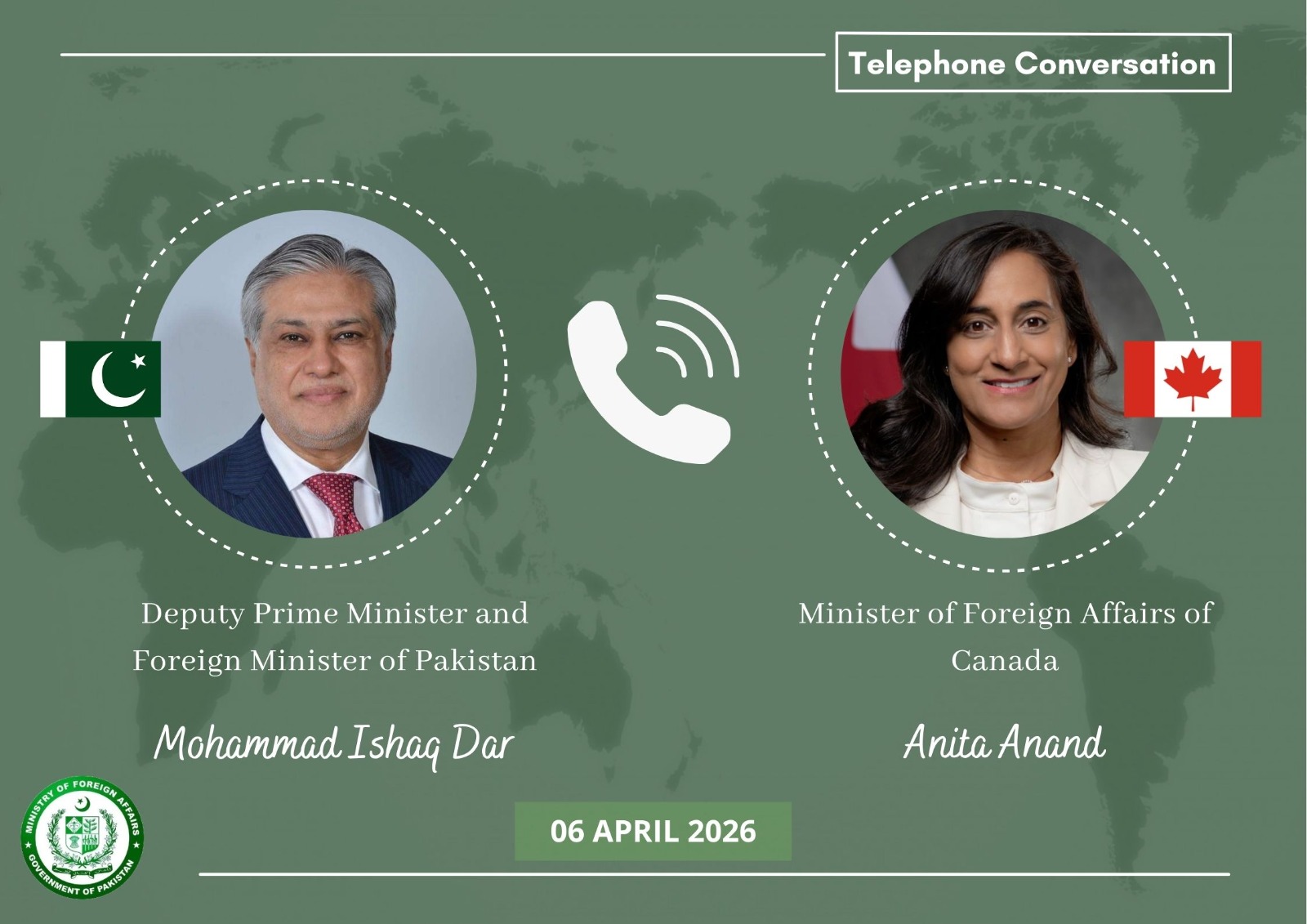
In times of escalating conflict, recognition in diplomacy often comes not through grand declarations but through measured acknowledgment from credible partners. The recent exchange between Pakistan’s Deputy Prime Minister and Foreign Minister, Senator Mohammad Ishaq Dar, and Canada’s Foreign Minister Anita Anand is a case in point. What may appear as a routine diplomatic engagement carries deeper significance: it reflects the growing validation of Pakistan’s role as a constructive actor in efforts to defuse tensions in the Middle East. Islamabad’s consistent emphasis on dialogue, restraint, and backchannel engagement is beginning to resonate beyond its immediate neighborhood.
Anita Anand’s comments after the call provide an insightful look into this acknowledgment. She described the conversation as productive, emphasizing the discussions around the changing situation in the Middle East and pointing out signs of progress in ceasefire talks—an evaluation that subtly aligns with Pakistan’s ongoing diplomatic efforts. More importantly, she highlighted Canada’s commitment to ongoing dialogue and the safeguarding of civilian lives and infrastructure, while also expressing gratitude to Pakistan for its role in pushing the discussions forward at such a crucial time.
Her reaffirmation of the importance Canada places on its relationship with Pakistan, along with a mutual dedication to economic cooperation and fostering people-to-people connections, takes this interaction beyond mere crisis management and into the territory of lasting bilateral partnership. She acknowledged progress in ceasefire negotiations and explicitly appreciated Pakistan’s efforts in advancing discussions during a critical phase. It signals that Islamabad’s outreach—often conducted quietly and away from public view—is registering in key international capitals.
Canada’s position, shaped by Anand’s recent meetings in Riyadh, reflects a wider strategic approach: supporting regional allies, particularly in the Gulf, while consistently urging restraint. Her discussions with Gulf Cooperation Council leaders and senior Saudi officials occurred against a backdrop of rising tensions following Iranian actions. The message was straightforward—condemn destabilizing actions, uphold international law, and prevent further escalation—while also emphasizing the importance of dialogue and protecting civilian lives.
Within this framework, Pakistan’s diplomatic stance is particularly noteworthy for its balance. Unlike those firmly rooted in one camp, Islamabad maintains open communication with a variety of stakeholders. This ability to engage across divides—whether with Washington, Tehran, or Gulf capitals—positions Pakistan as a pragmatic mediator. It’s this flexibility that allows it to contribute effectively to backchannel efforts aimed at reducing tensions.
The bond between Pakistan and Canada is far from coincidental or superficial. It reflects a shared awareness that escalating tensions can lead to consequences that go well beyond the immediate conflict zone. Both nations seem to agree that, whether it’s about securing energy corridors like the Strait of Hormuz or dealing with the broader risks of regional fallout, diplomacy—no matter how slow it may be—is the most promising way forward.
Just as important is the reaffirmation of their bilateral relationship. Beyond crisis management, both countries underscored the need for ongoing engagement—be it through economic cooperation, high-level exchanges, or connections between their people. With a thriving Pakistani diaspora in Canada and expanding opportunities for collaboration in trade, education, and technology, this relationship is built on more than just strategic interests.
Anand’s expanding diplomatic outreach reveals a new trend among middle powers: they’re willing to step into roles that have typically been filled by larger nations, not through force but by engaging in dialogue and collaboration. Whether it’s in G7 meetings or discussions in the Gulf, there’s a noticeable effort to create coalitions that aim for stability without deepening existing divides.
That said, there’s no guarantee of success. The path of the current crisis will ultimately be shaped by the decisions made in the capitals at the heart of the conflict. However, diplomacy is just as much about opening up possibilities as it is about achieving concrete outcomes. By keeping the conversation going, encouraging restraint, and ensuring communication remains open, countries like Pakistan and Canada are working hard to make sure those possibilities don’t fade away.
In this context, Islamabad's ongoing efforts are finally starting to receive the recognition that has often been lacking in recent times. It's a subtle form of validation, but one that carries weight—indicating that in a region marked by instability, even steady and thoughtful diplomacy can capture global attention.
No comments yet.