
Firepower and Fear in Khyber Pakhtunkhwa
By Quraysh Khattak
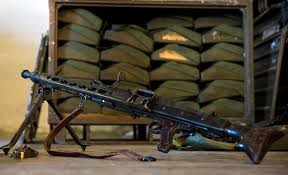
For decades, the people of Khyber Pakhtunkhwa have lived with the crackle of gunfire as the ambient soundtrack to daily life. In bustling bazaars and quiet hujras, from remote mountain hamlets to sprawling urban centres, weapons are rarely just instruments of war. They are symbols of status, tools for settling scores and, far too often, architects of tragedy. This saturation of arms has created a lethal intersection of culture, crime and militancy, one that is steadily eroding public safety and social cohesion.
The roots of this proliferation run deep. Historically, firearms were framed as tools of tribal tradition and self-defence in a frontier where state authority was thin. Over time, however, what was once defended as cultural symbolism morphed into an unchecked and increasingly industrialised market. The name Dara Adam Khel still evokes images of master craftsmen replicating sophisticated weaponry with uncanny precision. Yet, despite repeated promises of crackdowns, illicit networks have proven remarkably resilient, adapting to bans and enforcement operations with practiced ease.
The evolution of this trade warrants closer scrutiny. For years, cottage-style workshops in the former tribal districts produced artisanal pistols and shotguns. Today, the scale and sophistication have shifted. With the introduction of modern CNC (Computer Numerical Control) machinery, parts of Peshawar’s outskirts now house small factories capable of producing high-quality replicas of almost any firearm. What began as small-scale craftsmanship has matured into a parallel industry supplying buyers across the country. Periodic state interventions have disrupted operations, but the markets inevitably resurface, buoyed by deep economic entrenchment and the absence of viable alternative livelihoods.
Firepower today is disturbingly accessible. From standard pistols to Kalashnikovs and even modern automatic weapons, firearms circulate through porous borders and weakly enforced licensing systems. In some districts, a pistol costs less than a ceiling fan. Ammunition is equally easy to procure. This ready availability ensures that minor disputes, once settled through heated argument or community mediation, now frequently end in fatal shootings.
My understanding of this transformation is not merely analytical; it is painfully personal. Having lived outside the province for over thirty years for education and work, my visits home were once brief and nostalgic. That changed in August 2025, following the murder of my brother. During the six months I spent back in my village, I witnessed the alarming penetration of arms into the fabric of everyday life. I saw how the visible presence of a weapon alters human behaviour: conversations grew sharper, tempers shorter and every disagreement carried an unspoken threat. A holstered pistol subtly redefined notions of honour and power. It felt as though the gun itself had become the final arbiter of truth.
The broader consequences are equally stark. According to the CRSS Annual Security Report 2025, Khyber Pakhtunkhwa remains the epicenter of violence in Pakistan, accounting for the majority of violence-linked fatalities in the country last year. In urban centres like Peshawar, armed robbery and targeted killings have become distressingly common. In rural districts, land disputes are increasingly “settled” through bursts of automatic fire rather than through jirgas or courts of law.
Most troubling is the synergy between criminal violence and organised militancy. The resurgence of groups such as the Tehrik-e-Taliban Pakistan (TTP) thrives on this surplus of weaponry. Attacks in districts like Bannu, Lakki Marwat and Bajaur illustrate a grim reality: when guns are plentiful and cheap, insurgency becomes easier to sustain.
Law-enforcement agencies face a formidable challenge. The KP Police, frequent targets themselves, conduct regular search-and-strike operations and recover caches of illegal arms. Yet they are often addressing the symptom rather than the disease. Policing alone cannot reverse a culture in which carrying a weapon is seen as both a right and a necessity. The state bears significant responsibility for inconsistent enforcement, opaque licensing systems and the failure to provide economic alternatives for those dependent on the arms trade.
The way forward requires more than episodic crackdowns. Arms regulation must be enforced uniformly and transparently. Communities dependent on illegal manufacturing must be offered viable economic pathways. Civil society, elders and religious leaders must help dismantle the glamour attached to the gun.
Beyond regulation lies the harder task of deweaponisation. This is not merely a logistical exercise of recovering hardware; it is a psychological and social transformation. The state must reassert its monopoly over the legitimate use of force, removing the firearm from its role as a perceived household necessity. When a society becomes saturated with weapons, a security dilemma emerges, one person’s decision to arm for protection compels the neighbour to do the same, creating a cycle of mutual suspicion and escalating threat. Breaking this cycle is essential to lowering the temperature of public life and preventing the lethal escalation of ordinary disputes.
Most importantly, faith in the justice system must be restored. When courts are slow and governance weak, individuals resort to self-help. Strengthening the rule of law is the only sustainable way to reduce the perceived need for private arsenals.
The people of Khyber Pakhtunkhwa have endured decades of conflict with remarkable resilience and quiet dignity. They deserve more than survival; they deserve peace of mind. They deserve neighbourhoods where children can walk to school without fear, where shopkeepers close their shutters at night without anxiety, and where disagreements end in dialogue rather than gunfire. They deserve a future in which security is a reliable promise of the state, not a burden carried on individual shoulders, and where honour is defined by integrity and contribution to welfare of society, not by firepower. Addressing the unchecked proliferation of weapons is not merely a policy imperative; it is a state obligation owed to the families who long for safety, stability and the simple comfort of living without fear.
--------------
About the writer: Quraysh Khattak is a development practitioner and a former journalist. He writes on the intersections of political culture, governance, and institutional reform.
No comments yet.