
Interfaith Harmony and Pakistan’s Pluralistic Promise
By Junaid Qaiser
Every year, the first week of February passes with little noise but deep meaning. World Interfaith Harmony Week, observed from February 1 to 7, is not about ceremonial speeches or symbolic gestures alone. It is a reminder—quiet but urgent—that peaceful coexistence among faiths is not a luxury. It is a necessity for societies struggling with division, fear, and mistrust.
The initiative, adopted unanimously by the United Nations in 2010 after a proposal by King Abdullah II of Jordan, rests on a simple truth: dialogue works where confrontation fails. Drawing inspiration from The Common Word initiative, which highlighted shared values such as love of God and love of one’s neighbor, World Interfaith Harmony Week encourages people to focus on what unites them rather than what sets them apart. Over the years, it has grown into a global movement involving governments, civil society, educators, and faith leaders across continents.
For Pakistan, the message of interfaith harmony carries particular significance. Ours is a country shaped by religious, cultural, and ethnic diversity. The Constitution guarantees freedom of religion and equal citizenship, reflecting the vision of Quaid-e-Azam Muhammad Ali Jinnah, who repeatedly stressed tolerance and unity as the foundations of the new state. Interfaith harmony is therefore not an imported concept—it is embedded in Pakistan’s original promise.
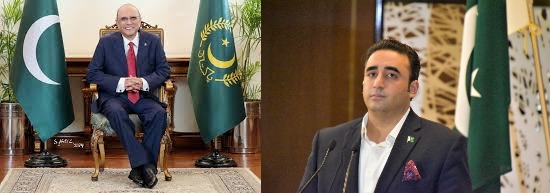
President Asif Ali Zardari, in his message on World Interfaith Harmony Week 2026, captured this reality by linking harmony directly to everyday life. Where mutual respect exists, children go to school without fear, places of worship remain safe, and communities function with trust. Where intolerance takes root, social life fractures, livelihoods suffer, and insecurity becomes a shared burden. Interfaith understanding, in this sense, is not an abstract moral ideal but a practical requirement for social stability and well-being.
This understanding is echoed by Pakistan Peoples Party Chairman Bilawal Bhutto Zardari, who has described harmony between faiths as the “language of humanity.” At a time of rising intolerance and hostility toward religious minorities in different parts of the world, his call to reaffirm compassion and peaceful coexistence carries weight. Pakistan’s pluralistic heritage, he reminds us, is not a slogan but a lived history—one shaped by shared culture, struggle, and hope. The democratic legacy of leaders like Shaheed Zulfikar Ali Bhutto and Shaheed Mohtarma Benazir Bhutto consistently upheld equality of citizens and respect for all religions as essential to a just society.
Globally, World Interfaith Harmony Week has shown that dialogue does not have to remain confined to conference halls. Across countries, it is marked by community service projects, interfaith discussions, educational programs, and cultural exchanges that bring people together around common causes. These efforts align closely with the United Nations’ broader goals for peace, justice, and strong institutions, recognizing that sustainable development is impossible without social cohesion.
Islam, like all major faiths, places a strong emphasis on justice, compassion, and respect for human dignity. These values are not unique to one religion; they echo across belief systems. When faith is used to promote empathy rather than exclusion, it becomes a powerful force for reconciliation. Extremism, by contrast, thrives where dialogue is silenced and ignorance is allowed to spread.
World Interfaith Harmony Week offers Pakistan an opportunity not only to reaffirm its ideals but to practice them more deliberately. Protecting minority rights, encouraging respectful dialogue, and rejecting hatred in all its forms are ongoing responsibilities. Harmony cannot be declared; it must be built patiently through laws, education, and everyday conduct.
Pakistan’s pluralistic promise remains one of its greatest strengths. Honoring that promise requires more than remembrance—it demands action. In choosing dialogue over division and respect over resentment, Pakistan can continue to present a model of coexistence that speaks not just to its own citizens, but to a world in search of peace.
No comments yet.