
President Zardari Advances Pakistan–UAE Ties
By Junaid Qaiser
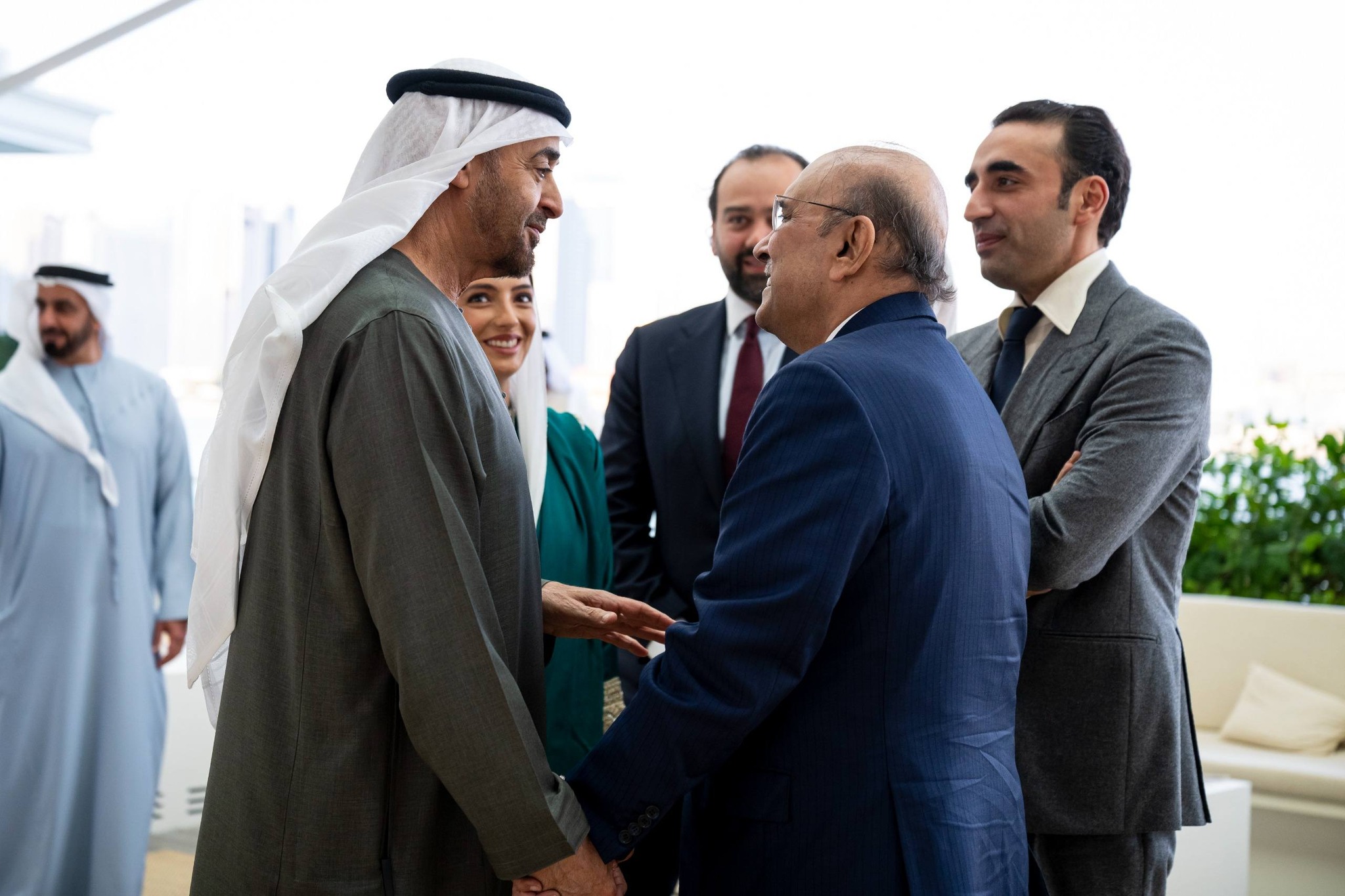
President Asif Ali Zardari’s visit to the United Arab Emirates is a significant step in strengthening Pakistan’s ties with one of its most dependable partners. The engagements clearly show a commitment to enhancing cooperation, unlocking economic opportunities, and reinforcing the shared values that have long defined the Pakistan-UAE relationship.
During his meeting with UAE President Sheikh Mohamed bin Zayed Al Nahyan in Abu Dhabi, President Zardari emphasized the need to evolve their historically “brotherly” relationship into a more modern, strategic partnership. Their discussions spanned a wide range of topics—trade, investment, energy, infrastructure, technology, and cultural exchanges—showing just how much potential remains to be explored between the two nations. This broad agenda reflects a proactive mindset, focusing on tangible results rather than just diplomatic gestures. President Zardari also expressed gratitude for Sheikh Mohamed bin Zayed’s recent visit to Pakistan, setting a tone of mutual respect and continuity. The ongoing high-level interactions between the two leaders have become a hallmark of Pakistan-UAE relations, ensuring that their cooperation adapts to the changing regional and global landscape. In a time marked by economic uncertainty and geopolitical shifts, this consistent diplomatic engagement is more important than ever.
It’s crucial to recognize the shared dedication from both sides towards peace, stability, and sustainable development. Pakistan and the UAE have always championed moderation and dialogue in both regional and global matters. The reaffirmation of these principles during the visit underscores their commitment as responsible players in a region that often faces turmoil.
A notable dimension of President Zardari’s visit was his meeting with Sheikh Nahyan bin Mubarak Al Nahyan, UAE Minister of Tolerance and Coexistence. The emphasis on dialogue, inclusivity, and peaceful coexistence resonated strongly in today’s polarized global environment. President Zardari’s tribute to the UAE’s leadership for promoting tolerance and human fraternity was not merely diplomatic courtesy; it reflected genuine recognition of a model that has enabled more than 200 nationalities to live and work together in harmony.
By drawing connections between the UAE’s vision and Pakistan’s own constitutional commitment to interfaith harmony and social inclusion, President Zardari showcased a shared moral foundation. This alignment of values not only strengthens the ties between the two nations but also makes the relationship more resilient and centered around the people, rather than just the governments.

The presence of First Lady Bibi Aseefa Bhutto-Zardari, PPP Chairman Bilawal Bhutto-Zardari, Interior Minister Mohsin Naqvi, and Pakistan’s Ambassador to the UAE really highlighted how important this visit is for the nation. Their involvement showed a sense of continuity across different institutions and generations, sending a clear message that Pakistan sees its relationship with the UAE as a long-term strategic priority. Economic cooperation was a key focus of the visit, especially during President Zardari’s discussions with AD Ports Group Managing Director and CEO Captain Mohamed Juma Al Shamisi. The President recognized the group’s significant investments in Pakistan’s maritime and logistics sector, particularly at Karachi Port, emphasizing how vital infrastructure development is for driving economic growth. Upgraded ports, better efficiency, and increased regional competitiveness are essential for Pakistan’s trade goals, and the investment from the UAE is crucial in this journey.
The establishment of AD Ports Group’s representative office in Islamabad and collaboration on digital and customs facilitation initiatives further demonstrate a shift toward institutionalized, technology-driven cooperation. Such initiatives are essential for improving trade flows, reducing bottlenecks, and integrating Pakistan more effectively into global supply chains.
President Zardari’s meetings with senior officials in the UAE, including the Minister of Justice, added depth to his visit by enhancing discussions around governance and institutional matters. These interactions not only bolster economic cooperation but also pave the way for a more well-rounded and balanced partnership.
Overall, Zardari’s trip to the UAE signals a clear diplomatic goal: to elevate Pakistan-UAE relations from mere goodwill to structured, mutually beneficial actions. While the spirit of brotherhood is still vital, it’s now paired with tangible plans for investment, infrastructure growth, social harmony, and strategic collaboration.
In advancing Pakistan-UAE ties, President Zardari has nurtured a relationship that intertwines shared values with common interests. At a time when many international partnerships face challenges from short-term pressures, this visit serves as a powerful reminder that trust, consistency, and vision can still forge lasting and forward-thinking alliances.
No comments yet.