
A Unified Front for Internal Security
By Junaid Qaiser
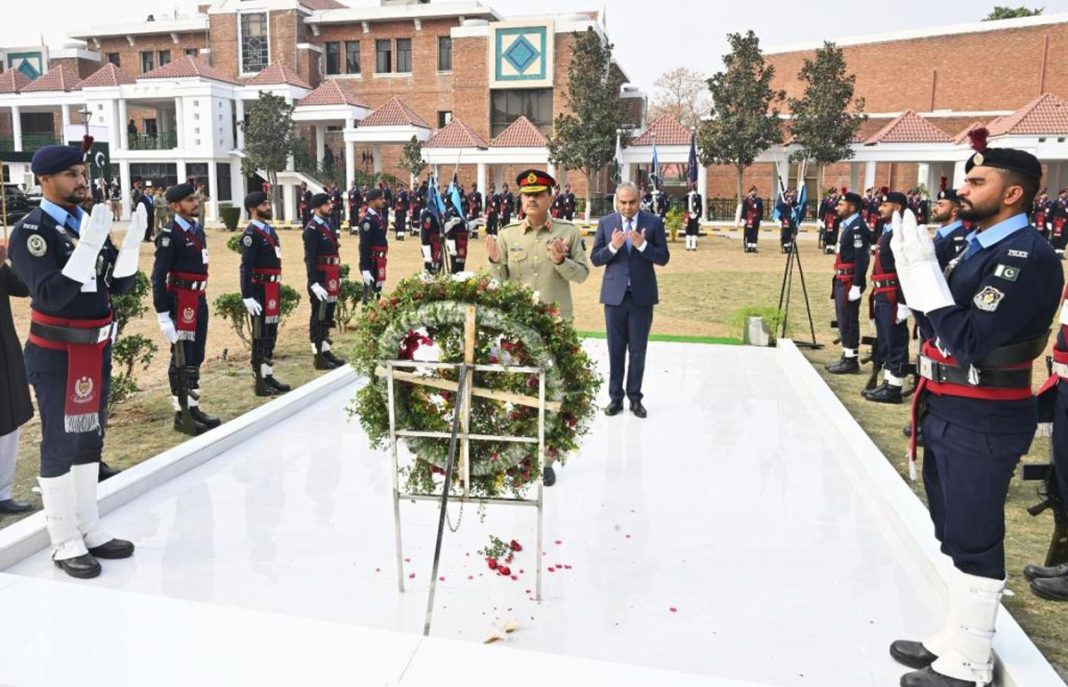
Pakistan’s internal security isn’t anchored in just one institution. It flourishes through collaboration, shared responsibilities, and mutual respect among those dedicated to protecting the state and its citizens. Field Marshal Syed Asim Munir’s visit to the National Police Academy in Islamabad was a timely reminder of this fact and a clear indication of where national security truly begins.
By honoring the police martyrs who sacrificed their lives in the line of duty, the Field Marshal put the sacrifices of law enforcement personnel front and center in the national security conversation. The police have shouldered a significant burden in Pakistan’s battle against terrorism, crime, and internal unrest. Their losses have been immense, their responsibilities unyielding, and their role absolutely vital. Acknowledging this openly from the highest military ranks sends a strong message of unity and shared commitment.
Equally crucial was the focus on enhancing the police force to be more professional, modern, and community-oriented. By emphasizing the police as the first line of defense for the safety, property, and dignity of citizens, Field Marshal Asim Munir underscored a truth that often gets overlooked in security discussions: lasting peace relies on public trust. Without confidence in law enforcement, no security system can truly last.
The Field Marshal’s conversation with cadet Assistant Superintendents of Police was particularly meaningful. By speaking directly to these young officers who are shaping the future of policing, he emphasized the heavy moral responsibilities they carry. In his view, law enforcement isn’t just about control or enforcement; it’s about serving the community, upholding integrity, and fulfilling constitutional duties.
This kind of clarity early in their leadership journey helps to strengthen institutions for the long haul. His discussions with senior police leaders also showed a keen awareness of today’s security challenges. He highlighted the importance of inter-agency collaboration and the need to embrace modern policing techniques, making it clear that cooperation is key, rather than working in silos. The threats we face today require sharing information, working together seamlessly, and having unified command structures—principles that can only thrive when institutions collaborate instead of operating in isolation.
The emphasis on training and capacity building, including updates on initiatives like the School for High-Impact Elite Law Enforcement Development (SHIELD), showcased a proactive mindset. Investing in skills, technology, and professionalism is crucial for the police to tackle evolving internal threats while also maintaining public trust and respect for the rule of law.
The most reassuring takeaway from the visit was the Field Marshal’s strong assurance that the armed forces are completely aligned with Pakistan’s police. This wasn’t just a supportive statement; it was a commitment to shared responsibility. Internal security is a team effort, and achieving success relies on the partnership between civil and military institutions.
Field Marshal Syed Asim Munir highlighted that enforcing law and order is a sacred trust, placing ethical responsibility at the forefront of our security policies. His message resonated far beyond the walls of the National Police Academy: a stable Pakistan needs strong institutions, unified leadership, and a security framework that emphasizes public service over brute force.
In these times of internal challenges that call for clarity and determination, this visit reflected a leadership style that values unity over division and cooperation over command. A united front for internal security is more than just a slogan—it’s a necessity. It’s through this kind of institutional alignment that Pakistan can build a stronger foundation for peace, order, and national stability.

No comments yet.