
Inside Pakistan–US Security Collaboration
By Junaid Qaiser
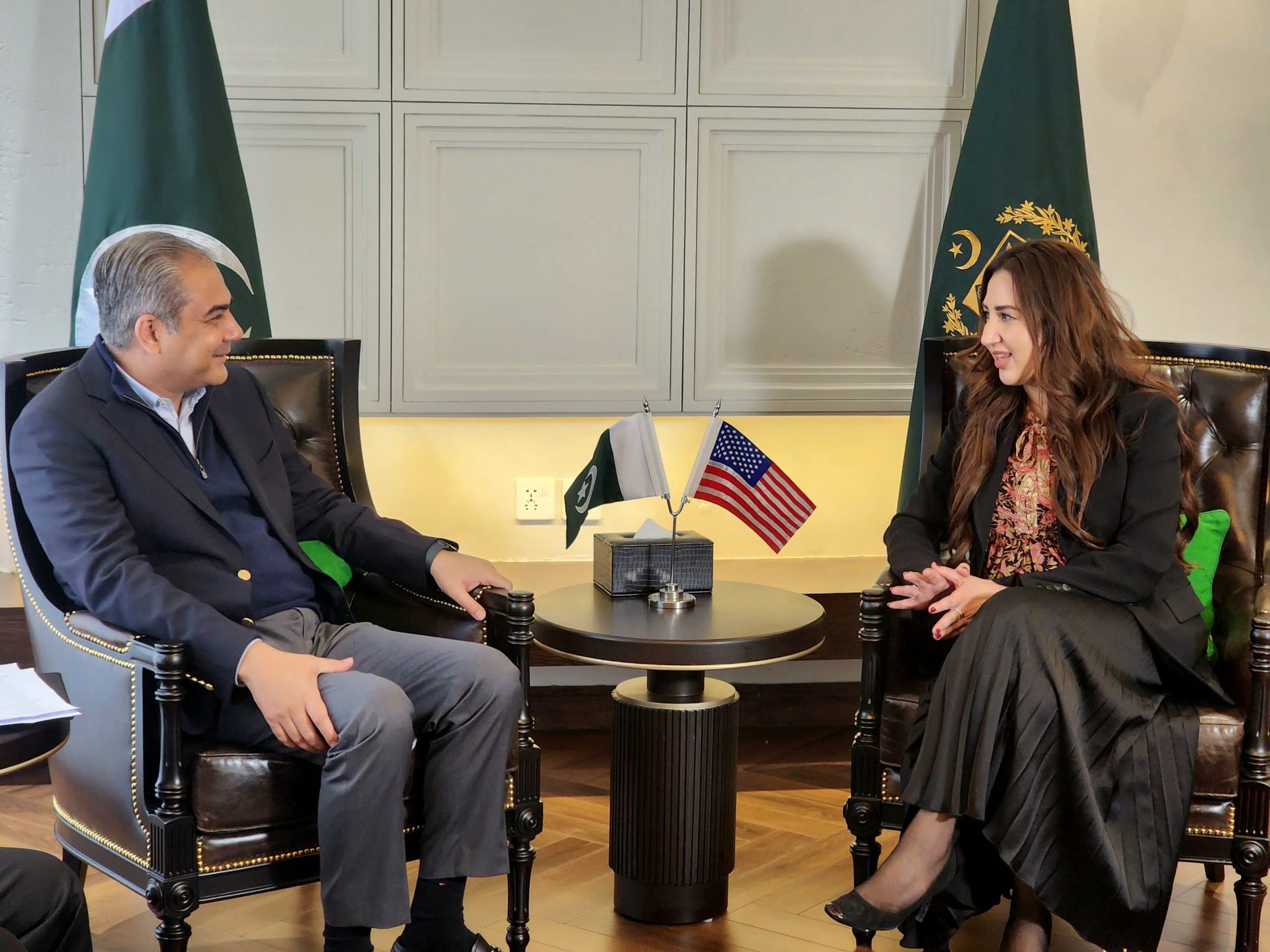
When it comes to Pakistan–US relations, real progress often isn’t about flashy announcements; it’s about the subtle developments that happen behind the scenes. Take, for instance, the recent meeting between Interior Minister Mohsin Naqvi and a high-ranking US delegation in Islamabad. This encounter is a prime example of that. Rather than being a diplomatic spectacle, it signals a growing phase of cooperation—one that prioritizes action over mere words, focusing on operational capabilities, institutional reforms, and tangible results.
Led by US Chargé d’Affaires Natalie Baker, the discussions with Pakistan’s interior leadership highlighted a mutual recognition: today’s security challenges are intricate, cross-border, and increasingly driven by technology. Tackling these issues calls for ongoing collaboration instead of sporadic coordination. The involvement of senior officials from the Federal Investigation Agency (FIA), National Cyber Crimes Investigation Agency (NCCIA), and Federal Constabulary (FC) emphasized the practical nature of these talks.
At the heart of the discussions was the expansion of training programs for FIA, FC, and NCCIA officers, backed by US support. This kind of capacity building often flies under the radar, but it’s crucial for effective law enforcement. By enhancing skills, introducing modern investigative techniques, and aligning with international best practices, we can strengthen institutions in ways that simply providing equipment cannot achieve.
That being said, technology played a significant role in the discussions. Both parties were on the same page about equipping border security agencies, coast guards, and other institutions with modern gear supplied by the US. In a region grappling with issues like cross-border militancy, trafficking, and irregular migration, enhancing border and coastal surveillance is a common goal. Minister Naqvi’s focus on modern technology shows an understanding that today’s security is just as much about data and systems as it is about having personnel on the ground.
The proposed creation of a Centre for Transformation Crime and a dedicated academy within the FIA, backed by the US, holds long-term importance. If these initiatives are executed well, they could lead to meaningful reforms, professionalize investigative work, and bridge the gap between federal and provincial efforts. A particularly noteworthy aspect is the plan to activate the FIA’s Counter-Terrorism Wing as a fully operational federal unit with effective coordination at the provincial level—something Pakistan has struggled with for a long time. Cybercrime and financial fraud also emerged as key areas of concern.
Pakistan’s ongoing efforts to crack down on illegal call centers have revealed the extent and sophistication of digital fraud networks operating both domestically and internationally. As Minister Naqvi pointed out, advanced software and analytical tools are crucial for preventing financial fraud and disrupting terror financing. The collaboration between the US and the NCCIA in this area highlights a mutual concern about the global impact of cyber-enabled crime.
From Washington’s viewpoint, this partnership fits neatly into larger goals that are being pursued through initiatives like the US Anti-Terrorism Assistance Programme and the Bureau of International Narcotics and Law Enforcement Affairs. These frameworks focus on building institutions, enforcing rules, and ensuring sustainability—an approach that goes beyond just reacting to crises. Chargé d’Affaires Natalie Baker’s recognition of ongoing collaboration at various levels, along with her commitment to maintaining this partnership, indicates that this cooperation runs deep within both systems. The US delegation’s gratitude for Pakistan’s efforts to bolster security ties also points to a level of trust that is crucial for effective law enforcement and counterterrorism collaboration.
The importance of this engagement really lies in its practical approach. While training officers, reorganizing forces, upgrading technology, and enhancing coordination might not grab headlines, these actions tackle the weaknesses that criminals, extremists, and cyber networks take advantage of. They also show a shift from just talking to actually getting things done—where agreements are meant to lead to real, measurable improvements on the ground.
The true challenge, though, will be in the execution. Training needs to be ongoing, technology should be rolled out openly, and institutional reforms must be shielded from political upheaval. If Pakistan can keep its focus and if US support stays steady and responsive, this phase of collaboration could lead to lasting benefits. In a time when internal security, cyber threats, and border management are all intertwined with national and regional stability, the meeting in Islamabad marks a significant step forward. It indicates that Pakistan and the United States are not just working together, but also building capabilities—and that’s where true security starts.
No comments yet.