
Bridges Over Barricades: Pakistan’s Civil Society Takes Center Stage at Global Religious Freedom Forum
By: Pastor Kashan CHAUDHRY
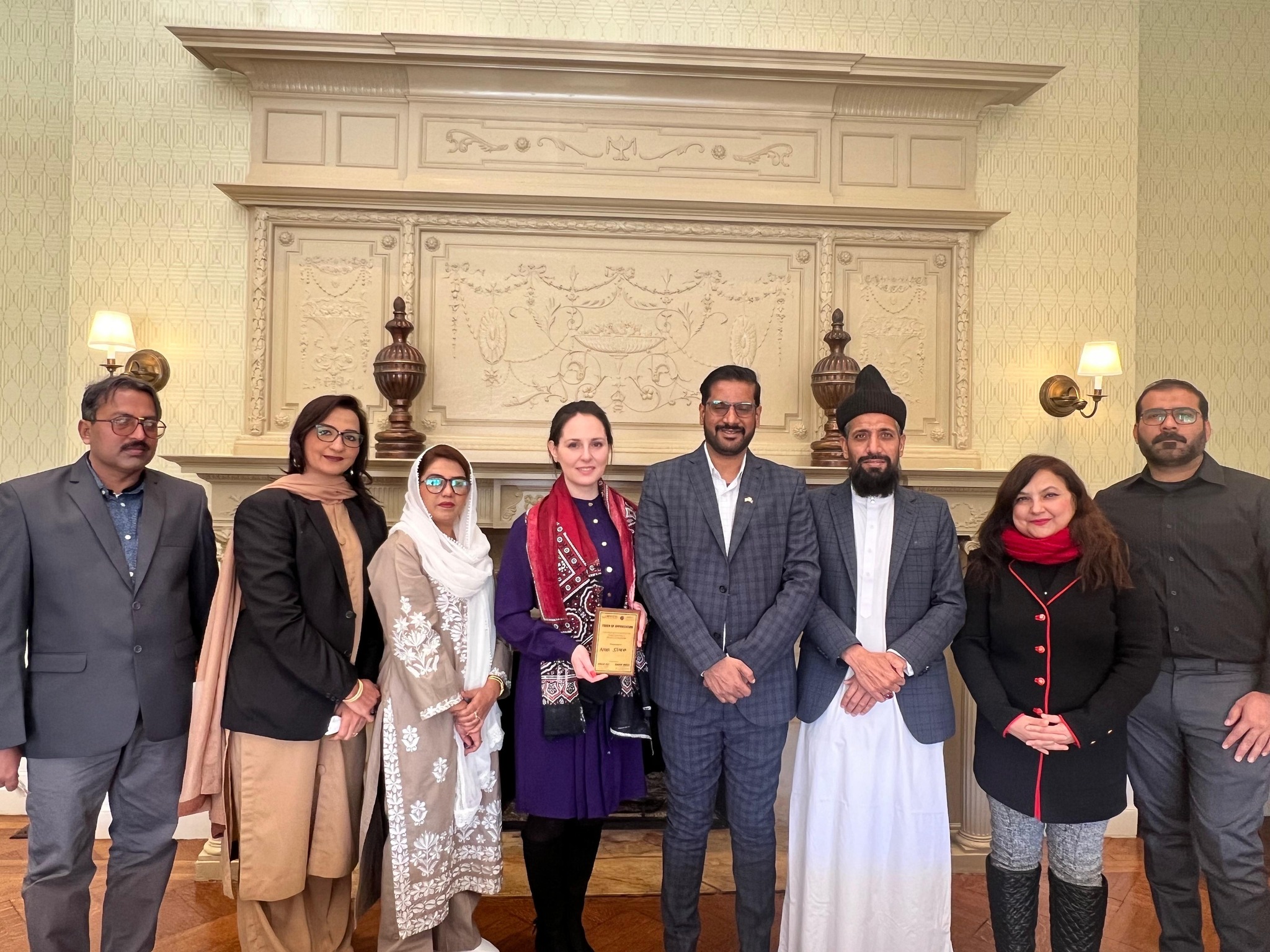
On a Human Rights Day marked by intensifying global scrutiny of religious liberties, the diplomatic corridor between Islamabad and Washington D.C. has evolved into an unexpected, yet vital, lifeline for minority protections in South Asia. While Pakistan continues to navigate the complex geopolitical ramifications of its designation as a “Country of Particular Concern” (CPC) by the U.S. State Department, a quiet but determined cadre of civil society leaders is fundamentally reshaping the narrative. Moving beyond the traditional rhetoric of victimhood, these actors are establishing a framework of persistent, professional engagement.
At the forefront of this strategic shift is Muhammad Kashif Mirza, a development sector veteran who has emerged as a central figure in the international interfaith dialogue. As the International Religious Freedom (IRF) Summit prepares for its next annual convening in Washington, Mirza stands as a testament to the power of consistent, high-level advocacy. Having participated in three consecutive summits, a distinctive achievement for a grassroots Pakistani activist, Mirza’s trajectory highlights the growing operational capacity and sophistication of the IRF Roundtable network within Pakistan.
“The conversation has moved beyond simply listing grievances to the international community,” Mirza said in an interview with this agency on Tuesday. “We are now at the table where policy is crafted, ensuring that the voices of Pakistan’s religious minorities are not just heard as victims, but recognized as essential partners in the country’s democratic development.”
The Global IRF Summit as a Catalyst
The IRF Summit, co-chaired by former U.S. Ambassador-at-Large for International Religious Freedom Sam Brownback and Dr. Katrina Lantos Swett, has firmly established itself as the world’s premier civil society gathering focused on freedom of religion or belief (FoRB). Held annually in the U.S. capital, the summit is not merely a conference; it is a high-stakes convergence of parliamentarians, survivors of persecution, and human rights advocates from over 80 nations.
For activists operating in volatile regions like South Asia, the summit serves as a critical mechanism for legitimacy and leverage. The 2025 summit, held earlier this year in February, underscored the necessity of multi-faith alliances in combating authoritarian restrictions on worship and the rise of transnational repression. It is within this ecosystem that the Pakistan delegation has found its footing.
“Participation in the IRF Summit is not about photo opportunities or diplomatic tourism,” Mirza noted, emphasizing the rigorous nature of the proceedings. “It is about connecting local realities with global mechanisms. When we engage with leaders like Ambassador Brownback, the IRF Secretariat, or the USCIRF commissioners, we are translating the visceral struggles of our local communities, Christian, Hindu, Sikh, and Ahmadi, into actionable policy recommendations that Washington can understand and act upon.”
A "Hat-Trick" of Engagement and Recognition
Mirza’s involvement with the global IRF apparatus has been methodical and increasingly influential. His participation in the 2023 and 2024 summits laid the essential groundwork for a more robust leadership role in 2025. This sustained presence has allowed the Pakistan delegation to move past the initial hurdles of visa diplomacy and into substantive working groups that tackle specific legislative issues, such as the misuse of blasphemy laws and the protection of minority worship sites.
This continuity was formally recognized by the international community in August 2025, when Mirza was honored with the International Award for Interfaith and Religious Freedom at a ceremony in Washington D.C. The event, attended by key figures such as Greg Mitchell, the Co-Founder and Co-Chair of the IRF Roundtable, cited Mirza’s relentless efforts in coordinating roundtables across Pakistan and navigating the complex legislative environment surrounding minority rights.
“Kashif Mirza’s consistent presence, his third consecutive cycle of high-level engagement, signals to the international community that there is a stable, professional civil society infrastructure in Pakistan ready to do the hard work,” said an observer familiar with the summit’s proceedings. “He has effectively bridged the gap between the streets of Karachi and the corridors of Capitol Hill.”
The Network Effect: Institutionalizing the IRF Roundtable
The engine driving this advocacy is the IRF Roundtable, a global network that operates on a model of multi-faith collaboration and citizen-led diplomacy. In Pakistan, the IRF roundtable is spearheaded by prominent human and woman rights activist Anila Ali as co-chair, a prominent Pakistani-American civic leader and President of the American Muslim & Multifaith Women’s Empowerment Council (AMMWEC).
Under the leadership of Ali and the strategic coordination of Mirza, the Pakistan chapter has successfully localized the international model. The roundtable facilitates direct, often difficult, dialogue between minority leaders, Islamic clerics, and government officials, frequently in the presence of international observers to ensure accountability.
“The success of the IRF Roundtable lies in its interconnected leadership structure,” Mirza explained. “With Nadine Maenza, President of the IRF Secretariat, providing global strategic direction, and Aneel Ali driving the Pakistan-specific agenda, we have created a safe space for dialogue in a polarized environment. We don’t just talk about problems; we draft letters, we propose legislative amendments, and we hold the state accountable to its constitutional promises.”
This structure was evident during the 2025 cycle, where the Pakistan delegation engaged directly with the U.S. Commission on International Religious Freedom (USCIRF). These engagements are critical, as USCIRF recommendations often inform the U.S. State Department’s CPC designations, a label that carries potential sanctions and significant diplomatic weight for Islamabad.
From Development Sector to Rights Advocacy
What distinguishes Mirza’s approach from traditional agitation is his background in the development sector. Rather than relying solely on protest, he employs the tools of development professionals: capacity building, stakeholder mapping, and institutional partnership. This methodology frames religious freedom not just as a legal right, but as a development imperative.
“Human rights advocacy in Pakistan requires a development lens to be truly effective,” Mirza argued. “You cannot separate the economic marginalization of sanitation workers, who are disproportionately Christian, from their religious freedom. You cannot separate the forced conversion of young girls in rural Sindh from the lack of educational infrastructure and poverty. My work with the IRF is to bridge these gaps, showing that religious freedom is a prerequisite for economic prosperity and social stability.”
His engagement with the U.S. Embassy in Islamabad further bolsters this capacity. By participating in exchange programs and high-level policy briefings, Pakistani activists gain the technical skills needed to document human rights abuses in a manner that holds up to international scrutiny. This partnership ensures that local advocacy is backed by international standards of verification and reporting.
The Road Ahead: Resilience Amidst Challenges
As the sun sets on Human Rights Day 2025, the challenges remain formidable. Reports of blasphemy accusations, mob violence, and systemic discrimination continue to surface, and the legislative landscape remains fraught with pitfalls for minorities. However, the mood within the IRF Pakistan network is one of cautious, calculated optimism.
The institutionalization of the IRF Roundtable in Pakistan means that advocacy is no longer dependent on sporadic outbursts of outrage after a tragedy but is now a continuous, organized process. The network is proactively working to prevent violence through interfaith liaisons and rapid-response mechanisms.
“We are building a machine for peace,” Mirza said, looking ahead to the 2026 summit. “Every year we return to Washington, we bring more data, more success stories of interfaith harmony, and a stronger resolve. We are proving that Pakistan’s civil society is resilient, capable, and an indispensable partner in the global fight for human dignity.”
For the international community, the message from Islamabad is clear: the most effective way to protect religious freedom in Pakistan is to support the local builders like Kashif Mirza who are laying the bricks of coexistence, one roundtable at a time.

Pastor Kashan CHAUDHRY
The author is a minority rights activist and Pastor at Trust in God ministry (Lahore). At reach out at trustingodministries@yahoo.com
No comments yet.