
When Community Land Becomes a Killing Field
By Quraysh Khattak
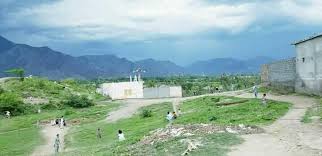
Community land, commonly known as Shamilaat, was historically intended to serve the collective needs of rural and tribal societies. These lands provided grazing grounds for livestock, forests for fuel and timber, and open spaces that sustained livelihoods and social cohesion. In principle, Shamilaat represents shared ownership, mutual responsibility, and collective benefit. In Ghari Usmani Khel area of District Malakand, however, this ideal has collapsed. Over the past three decades, community land has become a persistent source of conflict, bloodshed, and insecurity, claiming lives and eroding the social fabric of the area. It has also become a key funding source of crimes and criminal networks in the area.
Since the early 1990s, disputes over Shamilaat in Ghari Usmani Khel have repeatedly escalated into deadly confrontations. Several lives have been lost, and many more have been scarred by cycles of fear, retaliation, and unresolved grievance. The conflict primarily involves three historically resident tribes, Khattak, Swati, and Bajazai, whose competing claims over community land remain unsettled. What might have been manageable disagreements in a functional governance system have hardened into entrenched tribal disputes due to decades of administrative neglect.
At the heart of the problem lies ambiguity. Community land in Ghari Usmani Khel is neither clearly demarcated nor transparently recorded. Revenue records are outdated, incomplete, or disputed. Boundaries are poorly defined, and customary arrangements have been allowed to erode without being replaced by credible legal frameworks. In this environment, claims are asserted not through law or documentation, but through power, influence, and, ultimately, force. When land becomes a zero-sum contest, violence becomes not an aberration but a recurring outcome.
The situation has become even more complex in recent years with the settlement of individuals from the Uthman Khel tribe of Bajaur. Migration and resettlement are natural social processes, but when new populations enter areas where land rights are already contested and poorly regulated, the absence of clear legal guidelines becomes dangerous. Without transparent rules governing access, use, and ownership of Shamilaat, the inclusion of new stakeholders has widened the circle of dispute and deepened existing tensions.
A particularly alarming dimension of the Ghari Usmani Khel conflict is the illegal occupation and exploitation of forested areas located on community land. Large tracts of forest over Shamilaat have been unlawfully seized, sold, and commercially utilized by powerful individuals. Timber extraction and land sales, carried out with impunity, have stripped the land of its environmental value while generating significant illicit profits. Crucially, these proceeds do not benefit the community. Instead, they are widely believed to finance criminal networks and unlawful activities, further entrenching violence and insecurity in the area.
This criminalization of community land has created a perverse incentive structure. Forests are no longer treated as shared ecological assets but as commodities to be seized and monetized. Those who profit from this illegal economy have a vested interest in perpetuating disorder, resisting regulation, and obstructing transparent land settlement. As a result, environmental degradation, land disputes, narcotics sale, and criminal activity reinforce one another in a destructive cycle, one that, over the past three decades, has claimed many precious lives.
The failure of the state to intervene decisively has been a central factor in the persistence of this crisis. Despite a long history of disputes and repeated incidents of violence, Shamilaat in Ghari Usmani Khel remains inadequately surveyed and poorly governed. Administrative responses have been episodic and reactive, rather than systematic and preventive. Compounding this vacuum is the reliance on a poorly trained, under-resourced, and ill-suited Levies force, which lacks both the mandate and capacity to manage complex land disputes or deter organized violence. Local dispute-resolution mechanisms, whether traditional or informal, have proven incapable of delivering lasting peace, while formal legal processes remain slow due to inefficiency and poor investigation by the Levies force, are also expensive, and often inaccessible to ordinary citizens.
The human cost of this failure is immense. Families have lost fathers, sons, and brothers to disputes that should never have escalated beyond administrative resolution. Entire communities live under constant tension, where a minor disagreement can quickly spiral into armed confrontation. Children grow up witnessing conflict as a routine feature of life, inheriting feuds they did not create and resentments they did not choose. Instead of serving as a shared inheritance, Shamilaat becomes a burden passed down through generations.
This is not merely a tribal issue, nor can it be dismissed as an inevitable feature of rural society. Where community land has been fairly distributed, properly documented, and collectively managed, disputes rarely escalate into violence. Across the country - and even within Malakand, such as in Hero Shah - there are clear examples where transparent governance of communal resources has strengthened social cohesion rather than undermined it. Ghari Usmani Khel stands out not because conflict is unavoidable, but because prolonged neglect has been allowed to persist. Local elders and politicians have exploited this issue for narrow, short-term gains, and as a result, both their own families and ordinary citizens are now bearing the consequences of lawlessness arising primarily from unresolved disputes over the management and distribution of Shamilaat.
To begin resolving this issue, it is essential to establish a credible and impartial mechanism to adjudicate competing claims over Shamilaat. Such a mechanism must be insulated from local power dynamics and political pressure in order to earn public trust and ensure a durable resolution. A feasible and immediate option would be to place this land under the supervision of the Military Lands and Cantonments Department, or any other lawful authority deemed appropriate by the government, until a transparent and widely accepted arrangement is established for the distribution and management of Shamilaat, including its forests and other untapped mineral resources. This step would decisively curtail a major source of funding and territorial control for criminal networks, while laying a solid foundation for lasting peace and equitable resource management.
In the long run, addressing the crisis in Ghari Usmani Khel requires decisive action on multiple fronts. A comprehensive, neutral land survey must be conducted to clearly demarcate community land and distinguish it from private holdings. Records should be digitized and publicly accessible to eliminate ambiguity and manipulation. Illegal occupation, forest exploitation, and unauthorized land sales must be strictly enforced against, with penalties that are credible and timely. Perhaps most importantly, an impartial and effective adjudication mechanism must be empowered to resolve disputes once and for all.
Shamilaat was intended to be the bedrock of community cohesion, not a catalyst for its destruction. In Ghari Usmani Khel, however, decades of systemic neglect, administrative paralysis, and criminal exploitation have turned this communal land into a deadly fault line. The time for half-measures, hollow inquiries, and temporary fixes has passed. Decisive government action is now a necessity.
Resolution requires a comprehensive, transparent land survey and the transfer of management to a credible, neutral authority, such as the Military Lands and Cantonments Department. Furthermore, there is an urgent need for the state to strictly enforce laws against illegal occupation of Shamilaat and forest exploitation while empowering an impartial mechanism to resolve disputes with finality. Anything less is a concession to bloodshed. The lives lost over the last thirty years demand more than sympathy. This primary source of conflict in the area necessitate firm, immediate, and irreversible action from both the KP Provincial and Federal governments.
No comments yet.