
A Necessary Strike: Trump’s Stand Against a Narco-State
By Junaid Qaiser
The global reaction to the United States’ operation in Venezuela has once again exposed a familiar flaw in international discourse: outrage that is selective, ideological, and often detached from facts. President Donald Trump’s decision to authorize a targeted mission leading to the arrest of Nicolás Maduro has been widely condemned as illegal and reckless. Yet this criticism ignores both the long history behind the decision and the grim reality of Maduro’s rule.
This operation did not emerge overnight. As Anila Ali, President and CEO of the American Muslim & Multifaith Women’s Empowerment Council (AMMWEC), has pointed out, the groundwork was laid years ago. From President Trump’s first term, sanctions were imposed on Venezuela, negotiations were attempted, and regional partners in South America were quietly engaged. Diplomatic channels were explored extensively, but Maduro consistently refused to cooperate or reform.
Ali notes that President Trump was equally clear during his re-election campaign: international drug networks and violent cartels exporting narcotics and instability into the United States and beyond would no longer be tolerated. Warnings were issued. Maduro was repeatedly identified not merely as an authoritarian leader, but as the head of an organized criminal enterprise. The operation that followed was the culmination of sustained pressure, not a sudden act of impulse.
What distinguishes this action from traditional military interventions is its precision. Venezuelan security forces did not resist. No lives were lost. There was no bombing campaign, no occupation, and no attempt to reshape Venezuela through force. Much like the Abbottabad operation in 2011, this was an intelligence-driven mission targeting an individual accused of grave crimes, not a country or its people.
The moral case against Maduro is overwhelming. United Nations investigations have documented years of torture, arbitrary arrests, extrajudicial killings, and sexual violence carried out by his regime. Under his leadership, Venezuela collapsed into economic ruin, forcing nearly eight million people to flee—one of the largest mass displacements in recent history. Ali has underscored that journalists themselves witnessed police killings in broad daylight, with fear so pervasive that even bystanders dared not react. Criminal gangs operated openly, often with the protection of the state.
Despite this record, critics have rushed to invoke international law. Yet these same voices were noticeably silent when Russia invaded Ukraine, an act that devastated cities, displaced millions, and cost countless lives. Some even celebrated it. This double standard reveals that much of the outrage directed at Washington today is not rooted in principle, but in habitual anti-Americanism.
Russia and China’s condemnation of the U.S. move is equally predictable. Both have strategic interests in preserving authoritarian allies and limiting American influence, particularly in regions tied to energy and security. Their objections are geopolitical calculations, not moral judgments.
The New York Times editorial board argues that President Trump should have sought congressional approval. In theory, this is a reasonable position. In practice, presidents of both parties have repeatedly exercised executive authority in urgent national security matters. As Ali has emphasized, Maduro was not apprehended as a legitimate head of state, but as the leader of a narco-cartel accused of fueling violence, drug trafficking, and human suffering far beyond Venezuela’s borders. That legal distinction is central to understanding the action.
Claims that the operation was motivated by oil or competition with China also fail to address the broader issue. President Trump himself framed the matter as one of hemispheric security. When a government becomes inseparable from criminal gangs and transnational drug networks, it ceases to be merely a sovereign state and becomes a regional threat.
The silence on Venezuelan streets following the operation has been misread by some as disapproval. In reality, societies traumatized by years of repression do not erupt into celebration overnight. Silence can reflect shock, fear, and cautious hope—the first pause after decades of brutality.
Even criticism from within Trump’s own political camp does not alter the fundamental truth. Leadership is rarely comfortable, and decisive action often invites backlash. As Anila Ali observed, the success of the operation itself—carried out with secrecy, speed, and without bloodshed—demonstrated both strategic planning and restraint.
Selective outrage may dominate headlines, but hard truths endure. Nicolás Maduro devastated his country, brutalized his people, and presided over a criminal regime that destabilized an entire region. President Trump chose action over paralysis and accountability over empty condemnation. History is likely to judge this moment with greater clarity than today’s critics—and far less hypocrisy.
Confronting a Hemispheric Threat: Trump’s Venezuela Decision Explained
By Junaid Qaiser
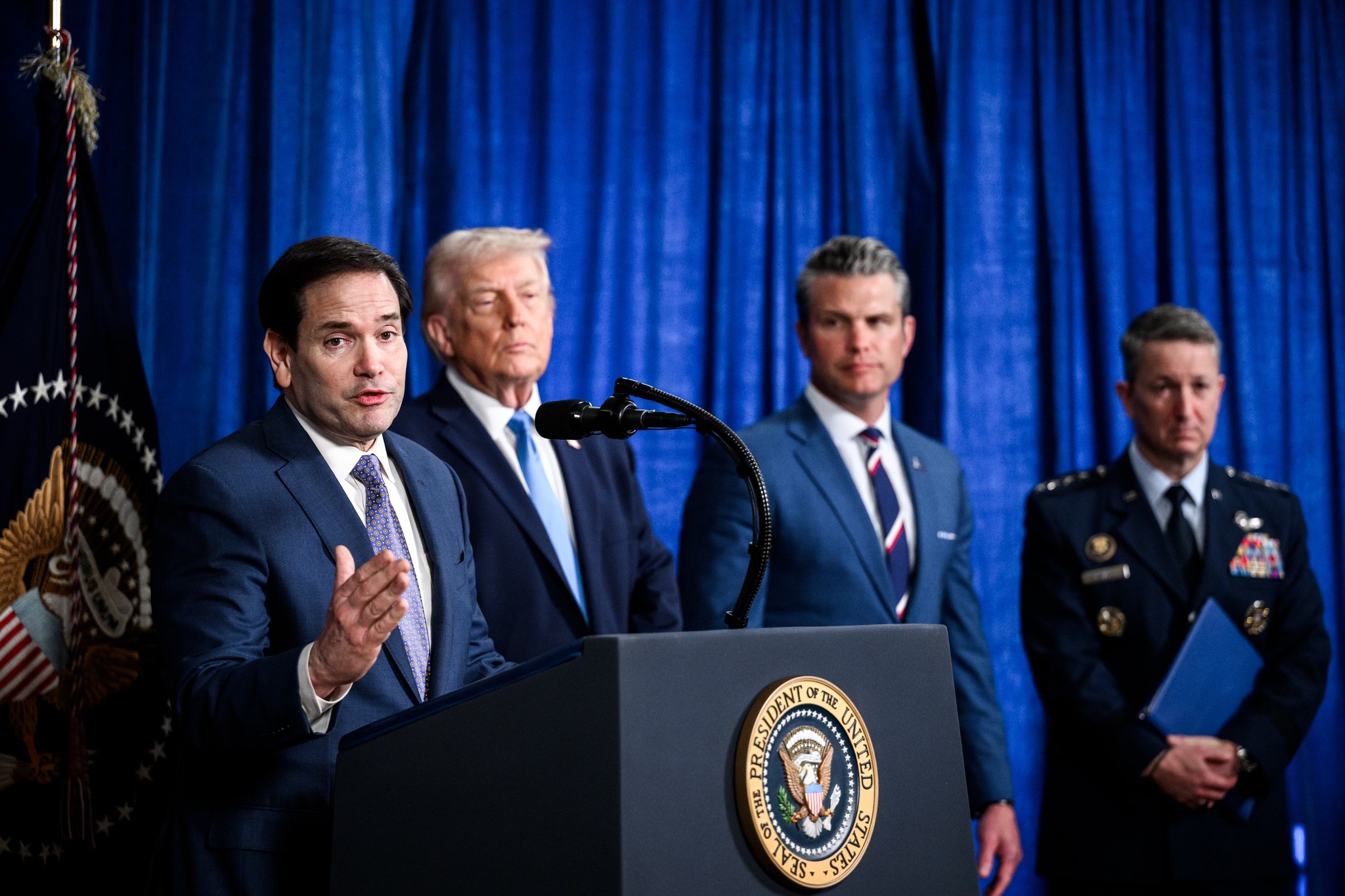
The debate surrounding the arrest of Nicolás Maduro did not end with his removal; it merely entered its next phase. If Selective Outrage and Hard Truths addressed the hypocrisy and moral confusion surrounding President Donald Trump’s decision, the administration’s subsequent messaging—led most forcefully by Secretary of State Marco Rubio—has clarified something even more fundamental: this was not a war against Venezuela, but a confrontation with a hemispheric threat that had been allowed to metastasize for far too long.
In a series of television appearances following the operation, Secretary Rubio laid out the administration’s position with unusual bluntness. “There’s not a war,” he said. “We are at war against drug trafficking organizations — not a war against Venezuela.”
(Watch)
That distinction matters. For years, critics have deliberately blurred the line between targeted security operations and full-scale invasions. Rubio rejected that framing outright, noting that U.S. forces were on the ground for only a brief window—roughly two hours—to apprehend an individual already indicted as a narcoterrorist. There was no occupation, no regime-wide military campaign, and no civilian toll.
(Watch)
Rubio’s broader argument fits squarely into the continuity of Trump’s foreign policy doctrine: the Western Hemisphere is not a neutral playground for hostile powers. “This is the Western Hemisphere. This is where we live,” Rubio said, emphasizing that the United States will not allow its immediate region to become a base of operations for drug cartels, Iranian proxies, or rival states hostile to American interests.
(Watch)
This framing directly rebuts the claim that Venezuela was targeted over oil alone. According to Rubio, the administration’s priorities are explicit: dismantling drug trafficking routes, expelling Iranian and Hezbollah operatives, and preventing the misuse of energy resources to fund adversaries of the United States. “No more drug trafficking. No more Iran or Hezbollah presence. No more using the oil industry to enrich our adversaries,” he said.
(Watch)
Legally, Rubio also addressed one of the most repeated objections—that congressional approval was required. He dismissed it as a category error. This was not an invasion, he explained, nor an extended military engagement. Under long-established executive authority, targeted law-enforcement and counter-narcotics operations do not require prior congressional authorization, though Congress is notified as required.
(Watch)
Perhaps the most revealing part of Rubio’s remarks was his criticism of the foreign policy reflex that treats every intervention as “another Iraq or Afghanistan.” “This is not the Middle East,” he said. “Our mission here is very different. This is the Western Hemisphere.”
(Watch)
That distinction reinforces the central argument of Trump’s approach: proximity matters. What happens in Venezuela directly affects American cities through drugs, gangs, migration pressures, and transnational crime. This is not abstract geopolitics; it is domestic security viewed through a regional lens.
Rubio was equally clear that the administration is focused on outcomes, not rhetoric. The real test, he said, is whether drugs stop flowing, whether Iranian influence is removed, and whether Venezuela ceases to function as a platform for criminal and hostile activity. Until those changes occur, pressure—including oil restrictions, maritime seizures, and sanctions—will remain in place.
(Watch)
One of Rubio’s most pointed observations cut through years of policy inconsistency. Under the previous administration, Maduro carried a multimillion-dollar bounty for his capture. “So we had a reward for his capture,” Rubio noted, “but we weren’t going to enforce it?” The difference, he argued, is simple: President Trump acted.
(Watch)
Finally, Rubio challenged the media’s persistent mischaracterization of Maduro as a legitimate head of state. “He was not the president. He was not the head of state,” Rubio said, underscoring that Maduro’s authority collapsed the moment he stole elections and transformed the Venezuelan state into a criminal cartel.
(Watch)
Taken together, Rubio’s remarks do not represent escalation—they represent clarification. The Trump administration is not seeking conflict with Venezuela, nor dominance for its own sake. It is enforcing a red line long ignored: the Western Hemisphere will not be surrendered to narco-regimes, terrorist proxies, or rival powers exploiting weak states.
President Trump’s Venezuela decision was not impulsive, nor ideological. It was strategic, regional, and rooted in a clear-eyed assessment of threats close to home. Whether critics accept it or not, the administration has made one thing unmistakable: weakness is no longer U.S. policy in its own hemisphere.
No comments yet.