A Reachable Goal: Making Pakistan Polio-Free
By Junaid Qaiser
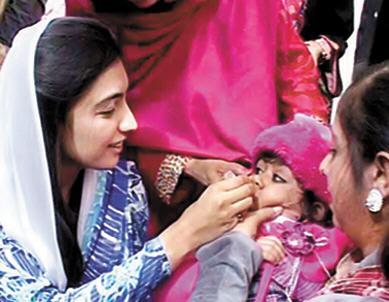
Pakistan’s recent nationwide polio vaccination campaign serves as a powerful reminder that the battle against this debilitating disease goes beyond just scientific know-how or administrative capabilities. At its core, it’s a challenge of collective responsibility. The government can devise strategies, mobilize hundreds of thousands of workers, and coordinate efforts across borders, but true eradication of polio hinges on society as a whole stepping up to share the load.
First Lady Bibi Aseefa Bhutto Zardari’s heartfelt appeal to parents, caregivers, public officials, and community leaders perfectly encapsulates this truth. Her message is both straightforward and impactful: no child should be overlooked. With the campaign aiming to reach over 45.5 million children under five and running until December 21, there’s simply no room for complacency. During winter, when the poliovirus spreads more easily, even one missed household can create a weak link in an otherwise strong national initiative.
The scale of this campaign is truly impressive. Over 408,000 frontline workers are going door to door across Punjab, Sindh, Khyber Pakhtunkhwa, Balochistan, and the northern regions. Special strategies are being implemented in high-risk areas, including extended campaigns and extra catch-up days, while collaboration with Afghanistan’s vaccination efforts highlights a clear understanding that viruses don’t recognize borders.
These actions demonstrate that Pakistan’s polio program has grown, adapted, and learned from past experiences. Experience has shown us that logistics alone won't defeat polio. The virus sticks around not because vaccines are hard to find, but due to a lack of trust and the power of misinformation. That's why community engagement is so crucial—something Karachi Mayor Barrister Murtaza Wahab emphasized at an awareness event in the city. His saying that “a clap requires two hands” perfectly illustrates the issue: without public cooperation, government efforts fall flat.
At the heart of this campaign are Pakistan’s female polio workers, who deserve way more recognition than they usually get. These women are the backbone of the eradication effort, especially in conservative and high-risk areas where they can effectively reach children. They navigate tough conditions, deal with security issues, and face resistance fueled by fear and falsehoods, yet they show up every day, driven by a sense of duty that goes far beyond just a job.
Their contributions were rightly highlighted as Pakistan observed the global 16 Days of Activism Against Gender-Based Violence. In a country where women often face barriers to public participation, the polio program stands out as a strong example of how empowering women can lead to better national outcomes. As Ayesha Raza Farooq, the prime minister’s focal person on polio eradication, has pointed out, Pakistan’s true strength in this battle lies with its female frontline workers. Their bravery, she argues, is key to the country’s chances of becoming polio-free.
The urgency of this moment is hard to overstate. Pakistan is one of only two countries in the world where wild poliovirus is still endemic, with 30 cases reported this year. Each case isn’t just a failure in outreach; it’s a collective moral failing. Polio is completely preventable, and its ongoing presence serves as a stark reminder that national challenges can’t be tackled by institutions alone.
At the end of the day, eradicating polio is a responsibility we all share. Parents need to welcome the conversation, community leaders have to tackle misinformation head-on, religious leaders should amplify the message of science, and the government must keep backing those who are working tirelessly on the front lines.
The weight of this collective responsibility is significant, but it’s something we can’t ignore. If Pakistan is going to put polio in the history books, it won’t be due to just one campaign or a single figure; it will be the result of countless everyday choices made in homes, on the streets, and within communities that finally come together for the greater good.
No comments yet.