
Pakistan’s New Consensus Against Extremism: Reclaiming State Authority
By Junaid Qaiser
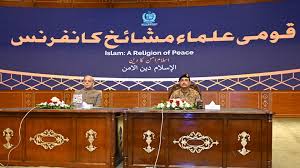
There are moments in a nation’s life when the old vocabulary no longer fits, and a new one begins to take shape. The "National Ulema and Mashaikh Conference" in Islamabad felt like such a moment. For the first time in many years, Pakistan’s civilian and military leadership stood before the country’s clergy with a message that was clear, coordinated, and unusually candid: the era of non-state extremism must end, and the state is reclaiming its authority over matters of faith and security.
Field Marshal Asim Munir’s assertion that only the state has the mandate to declare jihad marked a decisive break from the ambiguities that once allowed militant groups to operate in the shadows. It was a reminder of a painful truth: the country’s drift into extremism did not happen in a vacuum. It grew out of policy missteps, political expediency, and a reluctance to confront groups that cloaked violence in religious language. Those choices weakened Pakistan internally and damaged its standing abroad.
CDF Munir warned that societies which abandon learning and knowledge inevitably fall prey to disorder, and he asked the ulema to help broaden the nation’s intellectual horizon. It was a direct appeal to redirect public thought away from division and towards collective strength. His comments about terrorism being “India’s practice” reflected not only a strategic viewpoint but also an attempt to draw a sharp line between state responsibility and the actions of non-state violent actors.
Prime Minister Shehbaz Sharif, speaking at the same convention, reinforced the same theme from a different angle. For him, extremism is not only a security threat but also an economic one. A country cannot pursue sustainable growth while battling sectarianism and armed factions within its borders. Pakistan’s recent escape from the brink of default has underscored how fragile the national economy remains, and how easily instability could undo hard-won progress. Unity, he argued, is no longer a talking point; it is a precondition for survival.
This alignment between the civilian and military leadership is, in itself, significant. For too long, Pakistan’s internal debates have been fragmented—civilian institutions pulling one way, security institutions another, and religious leaders often operating in separate spheres altogether. But what emerged from this convention was a rare and much-needed consensus: extremism has no place in the country’s future, and the authority of the state must prevail over the narrative of militant groups.
The renewed confidence in the armed forces after the recent Marka-e-Haq victory, acknowledged by both leaders, has also contributed to a sense of institutional coherence. Field Marshal Munir’s praise of the armed forces and his emphasis on open, direct confrontation with enemies—rather than covert tactics—framed Pakistan as a state that fights transparently and within its own moral parameters. His description of the Saudi-Pakistan defence agreement as “historic” further signalled the country’s intention to reposition itself in the Muslim world with clarity rather than confusion.
Yet the heart of this new consensus rests with the ulema. Religious scholars have always played an outsized role in shaping public sentiment. When extremists interpreted scripture to justify violence, it was often because legitimate religious voices were too fragmented or too cautious to push back. Today, Pakistan’s leadership is placing the responsibility squarely on the scholars' shoulders: unite the nation, promote harmony, dismantle sectarianism, and guide ordinary Pakistanis toward a rational and knowledge-based understanding of faith.
If they accept this role with seriousness, Pakistan may finally be able to close one of the most destructive chapters in its recent history. For years, the country battled militants in the mountains and in its cities. Now it must defeat the ideas that sustained them. And that requires a new kind of coherence—one that blends religious authority, state power, civic responsibility, and intellectual renewal.
What emerged in Islamabad was not a slogan but the outline of a new national compact. It is built on a simple premise: Pakistan cannot progress until the state reasserts its authority over religion and security, and until all institutions agree that extremism must be confronted without equivocation.
This is Pakistan’s new consensus against extremism—still taking shape, but clearer than at any point in recent memory. If it holds, it may finally restore the unity, dignity, and strategic direction the country has long sought.
No comments yet.