
Digital Safety for Individuals Take Center Stage at Human Rights Day Event
The event organized by the Legal Aid Society (LAS) in collaboration with the Royal Norwegian Embassy in Islamabad.
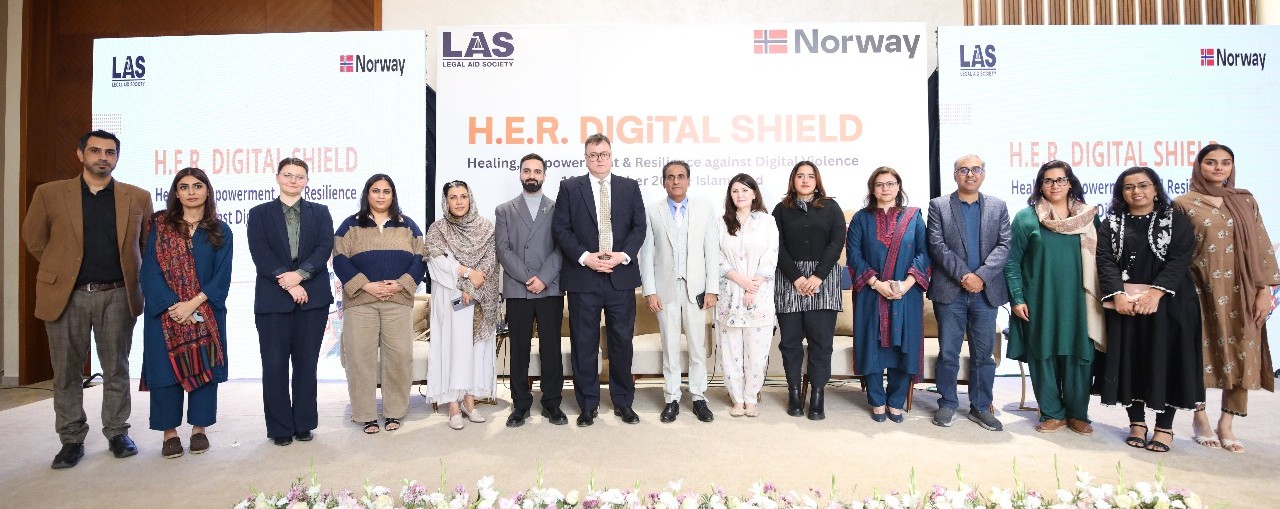
Islamabad – December 10, 2025: Recognizing digital violence as one of the fastest-growing threats to individuals, especially women and girls in Pakistan, a high-level event titled “H.E.R. Digital Shield: Healing, Empowerment, and Resilience Against Digital Violence” was held here today on Wednesday. The gathering marked Human Rights Day and concluded the global campaign of 16 Days of Activism Against Gender-Based Violence.
The event organized by the Legal Aid Society (LAS) in collaboration with the Royal Norwegian Embassy in Islamabad, opened with a strong call for action to address the rising tide of online harassment, cyberstalking, non-consensual sharing of images, and technology-facilitated abuse that increasingly affects women’s participation in public, economic, and political life.
Mr. Abdul Khalique Shaikh, Federal Secretary for Human Rights while sharing his thoughts on the occasion reiterated the Government’s resolve to strengthen digital rights of every individual and to safeguards and ensure that women and girls have equal, safe access to online platforms.
H.H. Mr. Per Albert Ilsaas, The Ambassador of the Royal Norwegian Embassy in Islamabad underscored Norway’s long-standing commitment to promoting gender equality, digital rights, and human dignity. The Ambassador said, “Combating digital violence against every individual requires collaborative policy dialogue, state action, and multi-sector partnerships to ensure safer online ecosystems.”
Earlier, Haya Emaan Zahid, Chief Executive Officer LAS, welcomed participants and emphasized the urgent need to invest in protective mechanisms, stronger laws, and survivor-centric digital safety solutions. She highlighted that the digital space—while offering immense opportunities—has also become a harmful environment for many women and girls.
A series of awareness videos showcasing real-life challenges and consequences of digital violence was presented, followed by a comprehensive panel discussion—moderated by Myra Imran, Independent Journalist—brought together experts including Pari Gul (Islamabad Police), Nargis Raza (National Cyber Crime Investigation Agency), Nadia Tariq Ali (UNDP), and Technical Specialist UNFPA Dilshad Pari. The panel examined investigative gaps, digital evidence challenges, institutional limitations, and the urgent need for survivor protection frameworks.
The second panel, moderated by Maliha Zia, turned the spotlight on technological innovation. Speakers including Anam Baloch (Digital Rights Foundation), Usama Khilji, a representative from Google Pakistan, Sadaf Khan (Media Matters for Democracy), and Asim Ghaffar (Public Interest Law Association of Pakistan) explored emerging tech-driven safety tools, secure digital ecosystem design, and opportunities to counter technology-facilitated violence.

No comments yet.