
Local Government Elections in Pakistan Face Uncertainty Pending Constitutional Amendment
Local Government Elections in Pakistan Face Uncertainty Pending Constitutional Amendment
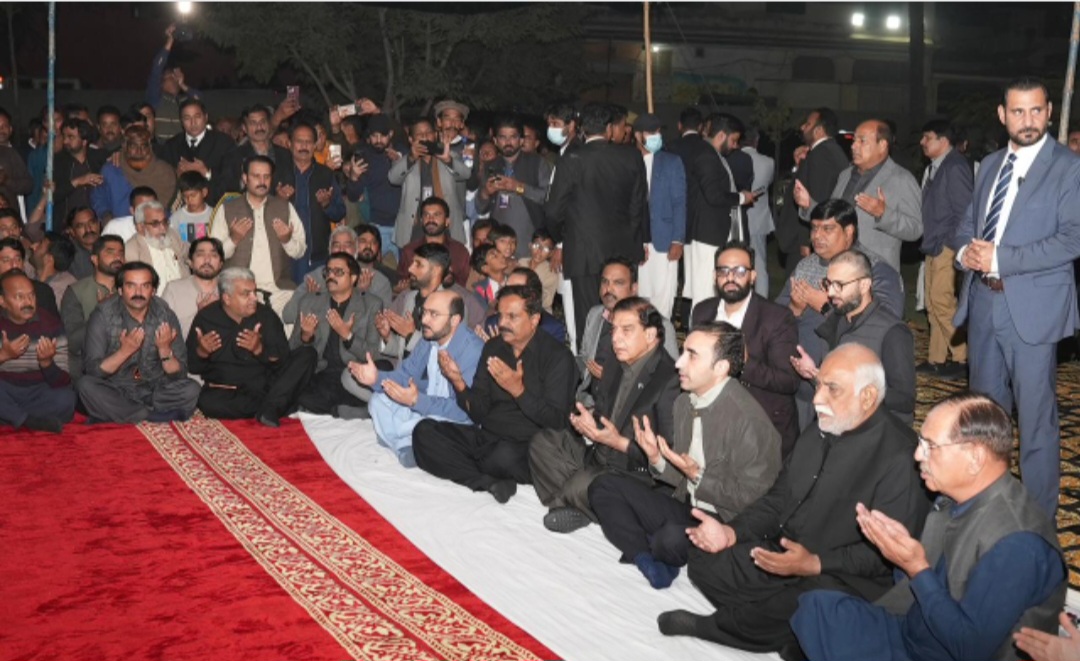
LAHORE: The persistent challenges surrounding local government administration in Pakistan will remain unresolved without comprehensive constitutional amendments, according to local government experts speaking at a recent seminar. The event, organized by the Bhutto Shaheed Foundation at the People's Secretariat in Model Town, brought together prominent political figures and civil society representatives to discuss the future of local governance in the country.
Zahid Islam and Salman Abid, both recognized experts in local government matters, emphasized that while new local government legislation has been enacted, significant ambiguity remains regarding the fundamental nature of upcoming elections. The uncertainty centers on whether future local government elections will be conducted on a party basis or through non-party mechanisms. Under the current legal framework, both party-affiliated candidates and independent contestants are permitted to participate, creating a hybrid system that many experts view as problematic.
The seminar, presided over by Khan Asif Khan, attracted significant participation from senior Pakistan Peoples Party leadership. Among those present were Shahzad Saeed Cheema, the Information Secretary for PPP Central Punjab, along with Faisal Mir, Asif Bashir Bhagat, Bushri Manzoor, Manika, Malik Ali Sanwal, Malik Azhar Awan, Naseer Ahmed, Arif Khan, Aamir Naseer Butt, Farooq Yousaf Gharki, Dr. Zarar Yousaf, Rana Iftikhar, Farrukh Marghub, Wazir Awan, Imran Khokhar Advocate, Khalid Gul, Arif Zafar, Abdullah Malik, Humaira Latif, Nadia Shah, Rao Shujaat, Aamir Sohail, and numerous party workers.
Zahid Islam, who serves as Executive Director of the non-governmental organization Sangat, provided a detailed account of the legislative process surrounding local government reform. He revealed that the Election Commission has issued delimitation notifications four times and announced election schedules on three separate occasions, only to subsequently withdraw them. The Punjab Assembly approved the current bill on October 13, 2025, but according to Islam, the new legislation bears substantial similarity to its predecessor while introducing some structural changes.
Under the revised system, ten departments will operate at the tehsil level, representing a significant administrative reorganization. The new framework eliminates several traditional local government structures, including wards, district councils, and municipal corporations. Instead, the first phase of elections will feature participation by political parties or independent panels. Only nine representatives will be elected during this initial phase through direct adult suffrage voting.
Islam pointed to persistent legal ambiguities that he believes the Governor of Punjab has the authority to resolve. He expressed particular concern about the unclear status of party-based candidacy, suggesting that this deliberate vagueness has been maintained to create confusion in the electoral process. The lack of clarity regarding whether candidates can contest elections using party symbols remains a contentious issue that continues to generate debate among political stakeholders.
Salman Abid, Executive Director of the Idea Think Tank, another prominent civil society organization, approached the issue from a constitutional perspective. He cited Article 140 of the Constitution, which he argued mandates that district government elections should be conducted on a party basis. However, Abid noted that the new legislation effectively eliminates the concept of district government altogether, fundamentally altering the constitutional framework for local governance.
Abid emphasized that most political parties, including the Pakistan Peoples Party, advocate for direct elections at the local level. He characterized indirect elections to union councils as legally questionable and stressed the need for fundamental decisions about governance structure. The critical question, according to Abid, centers on whether provinces should be administered primarily through local government institutions, provincial government machinery, or bureaucratic structures.
The current distribution of administrative responsibilities presents significant challenges to effective local governance. Functions including encroachment removal and solid waste management remain under provincial government control, creating what Abid described as a parallel structure that undermines local autonomy. He advocated for direct mayoral elections rather than the current market-based system used for selecting chairpersons and vice-chairpersons.
Abid highlighted that Punjab has not conducted local government elections for a full decade, representing a significant democratic deficit. He identified numerous shortcomings in the existing local government framework and called for synchronization of electoral terms across federal, provincial, and district levels. Strengthening local government, he argued, requires constitutional amendments and the elimination of parallel administrative structures referenced in Article 140A of the Constitution.
The transition of electoral administration from local authorities to the Election Commission represents another significant change in the local government landscape. Abid warned that operating the system primarily through bureaucratic channels would prevent local government from delivering effective services. He advocated for Pakistan to adopt international best practices in local governance rather than maintaining systems that have proven ineffective domestically.
Senior Pakistan Peoples Party leader Faisal Mir announced that the party intends to challenge the new Local Government Bill in court, pending approval from party leadership. This legal strategy reflects broader concerns within the political establishment about the legislation's constitutional validity and practical implications.
Asif Bashir Bhagat, President of the Pakistan Peoples Party's Gujranwala Division, characterized the new law as malicious legislation designed to weaken political parties. He called for an emergency meeting of the Punjab Executive to address the matter, emphasizing the urgent nature of the concerns raised by party members and civil society organizations.
Additional speakers at the seminar, including Amin Zaki, Iqbal Khan, Khalid Gul, Hamidullah Khan, Tariq Rafique Chaudhry, and Imran Khokhar Advocate, emphasized the critical importance of institutional independence in the electoral process. They argued that credible local government elections cannot be conducted without an independent, impartial, and institutionally strong Election Commission capable of managing the complex process fairly and transparently.
The seminar highlighted the multifaceted challenges facing Pakistan's local government system, from constitutional ambiguities and legislative shortcomings to questions about administrative structure and electoral integrity. As the country moves toward potential local elections, these unresolved issues continue to generate significant concern among political parties, civil society organizations, and governance experts who view strong local government as essential to democratic development and effective public service delivery.
No comments yet.