
PPP Demands Clarity on Wheat Procurement After PASSCO Abolition, Raises Concerns Over Local Government Elections
PPP Demands Clarity on Wheat Procurement After PASSCO Abolition, Raises Concerns Over Local Government Elections
PPP Demands Clarity on Wheat Procurement After PASSCO Abolition, Raises Concerns Over Local Government Elections
ISLAMABAD: The Pakistan Peoples Party (PPP) has demanded an explanation from the Punjab government regarding the mechanism for wheat procurement following the abolition of the Pakistan Agricultural Storage and Services Corporation (PASSCO), while also raising serious concerns about recently enacted local government election laws.
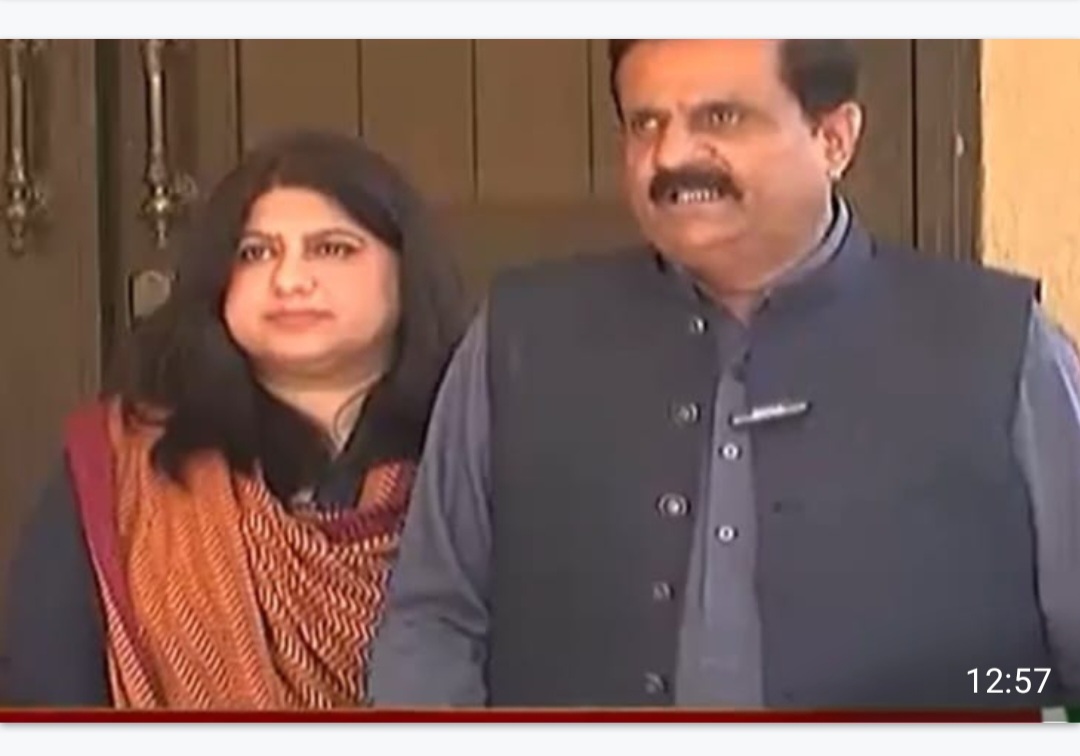
Addressing a press conference at the PPP Central Secretariat in Islamabad alongside Ayesha Nawaz Chaudhry, Pakistan Peoples Party Central Punjab General Secretary Syed Hassan Murtaza questioned who would purchase wheat from farmers and under what framework after PASSCO's dissolution.
"The law made for local elections is a question mark. Much more needs to be done for democracy. Now parliament completes five years, not the governments," Murtaza stated, highlighting the party's concerns about democratic processes.
Murtaza criticized the government's wheat procurement policy, noting that while the support price has been set at Rs 3,500 per maund, the timing benefits middlemen rather than farmers. "Today you have reduced wheat to Rs 3,500 per maund, but the wheat is not with the farmer but with the middleman, so he will also benefit from government procurement," he said.
Speaking from his perspective as a farmer from Punjab, Murtaza emphasized that agriculture remains the sole source of livelihood for many. "PASSCO was not a burden on the government, yet it was abolished," he lamented.
He acknowledged recent reconciliation between the PPP and the government on wheat pricing. "I am grateful to the Prime Minister and the Chief Minister of Punjab that they have accepted the PPP's stand on the support price of wheat. We used to say that farmers are the backbone," Murtaza said.
However, he pointed out that farmers suffered significant losses when government procurement stopped during critical periods. "When the time came for patience, the government stopped purchasing and wheat was sold for Rs 1,800 instead of Rs 3,900 per maund, and the farmer suffered losses," he explained.
While acknowledging that the PPP's demand of Rs 4,000 per maund was not fully met, Murtaza appreciated that the government agreed to Rs 3,500 per maund.
As a coalition partner, Murtaza stressed the need for improved communication between allied parties. "We are allies. You should sit with us and talk so that these differences do not come to light," he urged.
He cited an example of miscommunication regarding security arrangements at Bilawal House in Lahore, where reports of security removal were denied through media rather than direct contact with the PPP.
Hassan Murtaza clarified that the PPP had provided the government with an immediate relief plan during recent floods. "We used to say that the government data was not correct. Millions of victims could not be rescued with so many boats," he stated.
The PPP leader claimed that with the resources available to government institutions, it would have taken six months to rescue flood victims, necessitating immediate financial assistance. "We said to use the data of the Benazir Income Support Program, but there was an uproar over this suggestion," Murtaza revealed.
He alleged that the Punjab Chief Minister was given incorrect statistics during the floods and emphasized that farmers needed urgent financial support. "We asked you to use the data of the Benazir Income Support Program and provide immediate assistance so that they can meet their needs," he said, adding that it remains unclear whether aid is reaching the intended beneficiaries.
Murtaza questioned the adequacy of the Rs 5,000 per acre assistance, pointing out that research centers are not even providing seeds to farmers. "What will the poor farmer do with the limited amount of five thousand per acre?" he asked.
Emphasizing climate change as the most pressing issue, Hassan Murtaza highlighted the severe smog problem in Lahore. "Smog has started in Lahore and it has become difficult to breathe. The air index in Lahore is at 200 points," he stated.
He criticized the Rs 5,000 per acre assistance as inadequate, noting that a single bag of DAP fertilizer costs Rs 15,000, while seed research centers fail to provide proper seed varieties to farmers.
"You should look at the farmer's expenditure per acre and compare the aid to this. The farmer is worried about where to spend it," Murtaza said, speaking from his perspective as a farmer.
The PPP leader argued that Pakistan should not be held responsible for climate change as the country lacks significant industrial emissions. "We should fight our case at the international level. We should not borrow or beg, but reduce our problems which are caused by the West," he asserted.
"Pakistan is bearing the loss of these climate changes. International industries are earning money and Pakistan is suffering the consequences. We should demand justice and convince the ruling world for climate change," Murtaza emphasized, adding that the government needs to improve its communication skills and choose words carefully.
On local government legislation, Hassan Murtaza expressed strong reservations. "The law made for local government elections is questionable. Non-partisan elections are the beginning of pre-poll rigging," he declared.
He explained that had the governor not signed the legislation, the PPP would have objected to obstructing the democratic process. "They have signed the Local Bodies Act despite objections and reservations. We will give our action plan on this act soon," Murtaza announced.
Despite these concerns, he confirmed that the PPP would participate in local elections. "Even if we do not hear the reservations, we will not leave the field open. The PPP will participate in the local elections despite reservations," he stated firmly.
Addressing what he termed as disrespectful language from Punjab government officials, Murtaza said, "Rudeness is present in their subconscious. We are used to it. What should we apologize to them for?"
He urged Punjab government spokespersons to exercise caution in their choice of language and words, referencing issues including the Charter of Democracy (COD), accountability, and other matters.
Murtaza clarified that despite open discussions within the Central Executive Committee (CEC), where everyone presented their positions, the executive committee ultimately decided unanimously. "The PPP does not want to derail the system," he assured.
The press conference underscored growing tensions within the ruling coalition while reaffirming the PPP's commitment to democratic participation and advocacy for farmers' rights and climate justice.
No comments yet.