
Diwali Shines on Pakistan’s Pluralism
By Junaid Qaiser
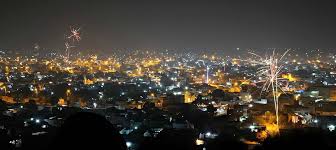
Across Pakistan this week, the flicker of Diwali lamps lit up not only homes and temples but also hearts. From Karachi’s seaside neighbourhoods to the desert towns of Tharparkar, members of the Hindu community celebrated the festival of lights with devotion and joy. The scent of incense filled the air, the sound of laughter echoed through streets, and families came together to exchange sweets, gifts, and good wishes.
Diwali, a celebration of light triumphing over darkness, carries a message that resonates far beyond religion. In Pakistan, it stands as a moment of unity — a reminder that our country’s true strength lies in its diversity and the freedom of every community to celebrate their faith with pride and security.
Temples across Sindh and Punjab were beautifully adorned, their courtyards glowing with rows of clay lamps. Homes were decorated with Rangoli patterns, symbolizing good fortune and positivity. For many, this year’s Diwali was not just a religious event but a celebration of belonging — a reaffirmation of the inclusive vision that Pakistan’s founder, Quaid-e-Azam Muhammad Ali Jinnah, so clearly articulated when he said that people of all faiths are free to go to their temples, mosques, or any other place of worship.
President Asif Ali Zardari echoed that vision in his message, saying Diwali “reminds us of the triumph of light over darkness and good over evil.” He commended the contributions of the Hindu community in education, commerce, and public service, and reaffirmed the constitutional guarantee of equal rights for all citizens. Prime Minister Shehbaz Sharif extended his “heartfelt greetings” as well, urging Pakistanis to draw inspiration from the festival’s message of hope, compassion, and shared prosperity.
Pakistan Peoples Party Chairman Bilawal Bhutto-Zardari, in his message, called Diwali a festival of “light, hope, and renewal,” and reaffirmed his party’s commitment to the inclusive ideals of his mother, Benazir Bhutto, and grandfather, Zulfikar Ali Bhutto. Governor Khyber Pakhtunkhwa Faisal Karim Kundi also extended warm greetings, emphasizing that interfaith harmony and brotherhood form the foundation of a peaceful and strong society.
Such statements, while ceremonial on the surface, carry deep meaning. They reflect an ongoing acknowledgment that Pakistan’s social fabric is enriched by the presence and participation of its minority communities. The celebration of Diwali, openly and with official blessings, sends a message that tolerance and mutual respect are not exceptions — they are essential to who we are.
For too long, Pakistan’s pluralism has been tested by forces of extremism and division. Yet, each act of coexistence — a temple bell ringing beside a mosque’s call to prayer, a Diwali lamp burning beside an Eid lantern — quietly defies those who seek to divide us. These are the moments that keep the idea of Pakistan alive and whole.
Pluralism is not a slogan; it is a daily practice of empathy. It is the recognition that diversity does not weaken a nation — it strengthens it. Every festival celebrated freely, every community made to feel secure in their faith, is a victory for the Pakistan envisioned in 1947: inclusive, humane, and dignified.
As the last lamps of Diwali fade, their light should remain in our collective conscience. It should remind us that progress is impossible without harmony, and peace is unattainable without respect for all faiths.
In celebrating Diwali, Pakistan did more than mark a religious event — it renewed its promise of pluralism. The light of Diwali, after all, is not meant to end with the festival; it is meant to guide us forward as a people bound not by uniformity, but by shared humanity.
No comments yet.