
Glasses and cataract surgery will unlock potential to learn, earn and prosper
By Sabahat Sarwar
Glasses and cataract surgery will unlock potential to learn, earn and prosper
Oct 10, 2025
Increased investment in eye care from governments, philanthropists and organisations will unlock the potential for more people in Pakistan to learn, earn and prosper. New research from IAPB, Seva Foundation and Fred Hollows Foundation estimates that addressing preventable vision impairment by 2030 would return US$709 million to the country’s economy.
It is also estimated that the impact of prioritising vision and eye care could generate the equivalent of 32,313 school years.
This World Sight Day (9 October), international development organisation Sightsavers is calling for further action to reduce the global burden of avoidable vision impairment such as uncorrected refractive errors and cataract.
Vision and eye care is often a ‘missing’ topic in health and development priorities, but at least 1 billion people worldwide – that’s one in eight of us – have an untreated or preventable vision impairment. It is an important element of achieving the United Nations Sustainable Development Goals.
Eye health interventions including cataract surgery and glasses are cost-effective, with an estimated return on investment in low to middle income countries of US$28 for every dollar invested.
Munazza Gillani, Director Pakistan and Middle East at Sightsavers says: “Making eye care a priority will be transformational for people, communities, and nations.
“Good eye health can reduce inequities, get more children in school and enable more adults to work. Access to glasses and cataract surgery could boost learning and economic productivity.”
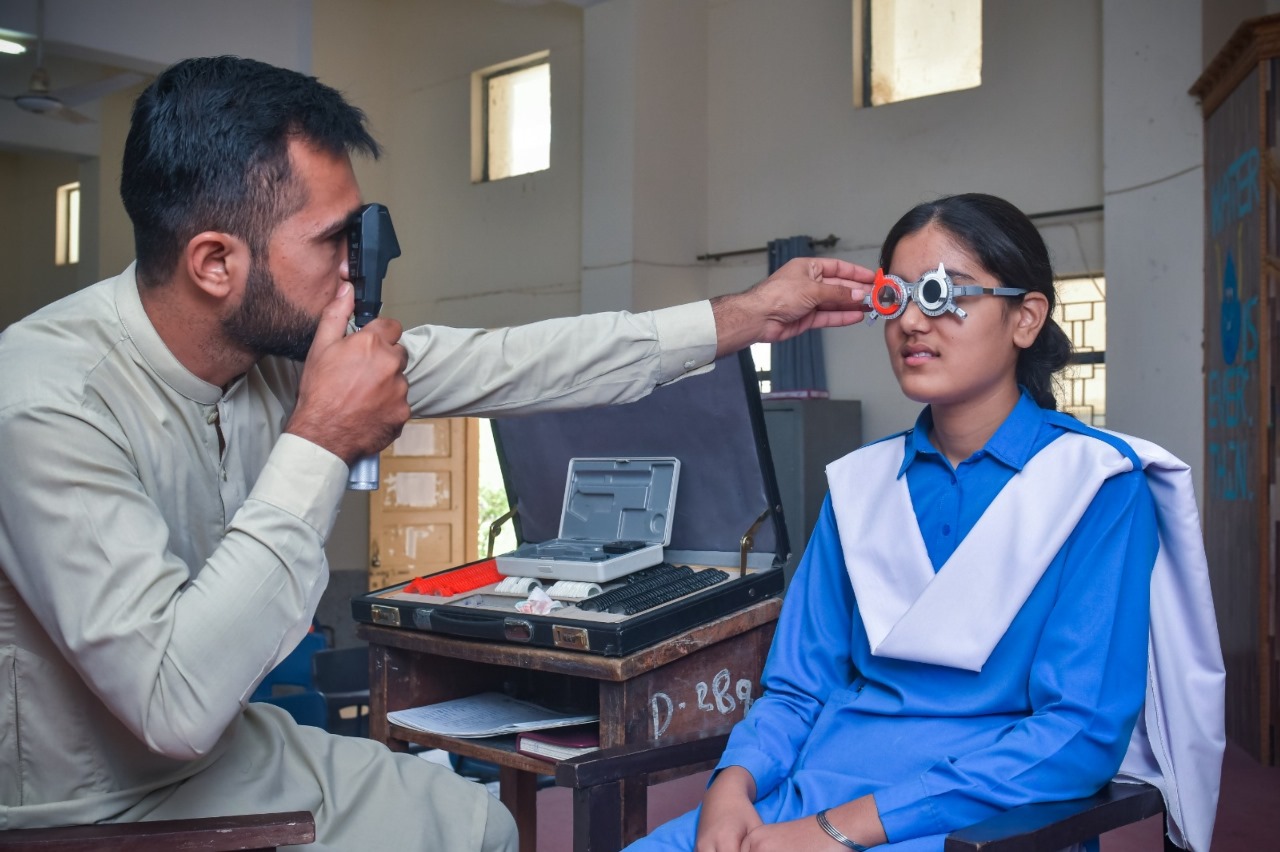
The impact that access to glasses can have is seen through stories such as Faryal from Islamabad. Faryal was unable to see the board in her classroom and could not perform well in exams due to poor eyesight. Faryal says, “I read letters on the board wrong and the Sightsavers team gave me glasses on the spot. Now I am comfortable, and I want to tell students that if you don’t like wearing glasses, then get some that suit you but do not stop wearing them.”
In Pakistan Sightsavers is supporting the government and other partners to enhance vision and eye health services. This includes provision of glasses, cataract surgeries, training teachers to conduct basic vision screening, training ophthalmic technicians, and ophthalmologists and equipping health facilities with infrastructure and technology.
Munazza Gillani adds: “We commend existing efforts from governments, donors, decision-makers, NGOs, and other partners, but big changes are still needed to make avoidable vision impairment truly avoidable. In this regard, refractive error screening and optical services should be included in the primary health care system. Early detection and correction are crucial to preventing avoidable blindness.”
Sightsavers and College of Ophthalmology and Vision Sciences (COAVS) also marked World Sight Day by making the shape of an eye with items or people and sharing this on social media to raise awareness of eye health and its transformative impact.
No comments yet.