
Pakistan Aligns with Global Partners for Gaza Stability
Editorial
Pakistan has joined Indonesia and several other Muslim-majority nations in backing U.S. President Donald Trump’s peace initiative for Gaza, a move widely seen as a constructive step toward ending the ongoing conflict and laying the groundwork for long-term stability in the region.
Prime Minister Shehbaz Sharif, in a statement on X, welcomed Trump’s 20-point plan, expressing confidence in the U.S. president’s ability to help secure an end to hostilities. “I welcome President Trump’s 20-point plan to ensure an end to the war in Gaza. I am also convinced that durable peace between the Palestinian people and Israel would be essential in bringing political stability and economic growth to the region,” he wrote.
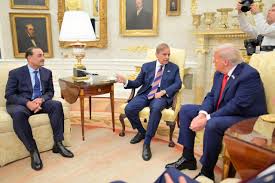
Trump highlighted Sharif’s remarks during a White House press conference alongside Israeli Prime Minister Benjamin Netanyahu, describing his relationship with the Pakistani leader and Pakistan’s army chief, Field Marshal Hafiz Munir, as “strong and constructive.” Both Sharif and Munir visited Washington last week, where they met the U.S. president in what observers describe as an important signal of closer cooperation between the two countries.
Pakistan’s endorsement of the Gaza plan reflects its longstanding commitment to the Palestinian cause, while also demonstrating its willingness to engage constructively with international partners to help bring an end to the violence. Analysts note that Islamabad’s approach balances principled support for Palestinian self-determination with a pragmatic recognition of the need for international consensus.
The plan, which has the backing of eight Muslim nations, calls for a ceasefire, the exchange of hostages and prisoners, phased Israeli withdrawals, and a large-scale reconstruction program for Gaza. Indonesia has already pledged 20,000 troops for a potential UN-backed peace mission. Pakistan, while not yet confirming a troop contribution, has indicated it is weighing its options carefully in consultation with partners.
Despite criticism from some domestic groups wary of closer U.S. ties, the government views participation in the Gaza initiative as an opportunity to amplify Pakistan’s global role and to strengthen its position as a bridge between the Muslim world and the West. Foreign Minister Ishaq Dar has stressed that Pakistan’s involvement will remain consistent with its established principles, ensuring continued support for Palestinian rights.
If implemented successfully, the Gaza peace plan could not only end years of conflict but also open the door to a more secure and prosperous future for Palestinians. Pakistan’s proactive role — underscored by Pakistan Aligns with Global Partners for Gaza Stability
Pakistan has joined Indonesia and several other Muslim-majority nations in backing U.S. President Donald Trump’s peace initiative for Gaza, a move widely seen as a constructive step toward ending the ongoing conflict and laying the groundwork for long-term stability in the region.
Prime Minister Shehbaz Sharif, in a statement on X, welcomed Trump’s 20-point plan, expressing confidence in the U.S. president’s ability to help secure an end to hostilities. “I welcome President Trump’s 20-point plan to ensure an end to the war in Gaza. I am also convinced that durable peace between the Palestinian people and Israel would be essential in bringing political stability and economic growth to the region,” he wrote.
Trump highlighted Sharif’s remarks during a White House press conference alongside Israeli Prime Minister Benjamin Netanyahu, describing his relationship with the Pakistani leader and Pakistan’s army chief, Field Marshal Hafiz Munir, as “strong and constructive.” Both Sharif and Munir visited Washington last week, where they met the U.S. president in what observers describe as an important signal of closer cooperation between the two countries.
Pakistan’s endorsement of the Gaza plan reflects its longstanding commitment to the Palestinian cause, while also demonstrating its willingness to engage constructively with international partners to help bring an end to the violence. Analysts note that Islamabad’s approach balances principled support for Palestinian self-determination with a pragmatic recognition of the need for international consensus.
The plan, which has the backing of eight Muslim nations, calls for a ceasefire, the exchange of hostages and prisoners, phased Israeli withdrawals, and a large-scale reconstruction program for Gaza. Indonesia has already pledged 20,000 troops for a potential UN-backed peace mission. Pakistan, while not yet confirming a troop contribution, has indicated it is weighing its options carefully in consultation with partners.
Despite criticism from some domestic groups wary of closer U.S. ties, the government views participation in the Gaza initiative as an opportunity to amplify Pakistan’s global role and to strengthen its position as a bridge between the Muslim world and the West. Foreign Minister Ishaq Dar has stressed that Pakistan’s involvement will remain consistent with its established principles, ensuring continued support for Palestinian rights.
If implemented successfully, the Gaza peace plan could not only end years of conflict but also open the door to a more secure and prosperous future for Palestinians. Pakistan’s proactive role — underscored by PM Sharif’s diplomacy and Munir’s outreach — signals the country’s readiness to play a central role in shaping a regional order built on peace, reconstruction, and stability.


No comments yet.