
When Universities Shape National Strategy
By Junaid Qaiser
By Junaid Qaiser
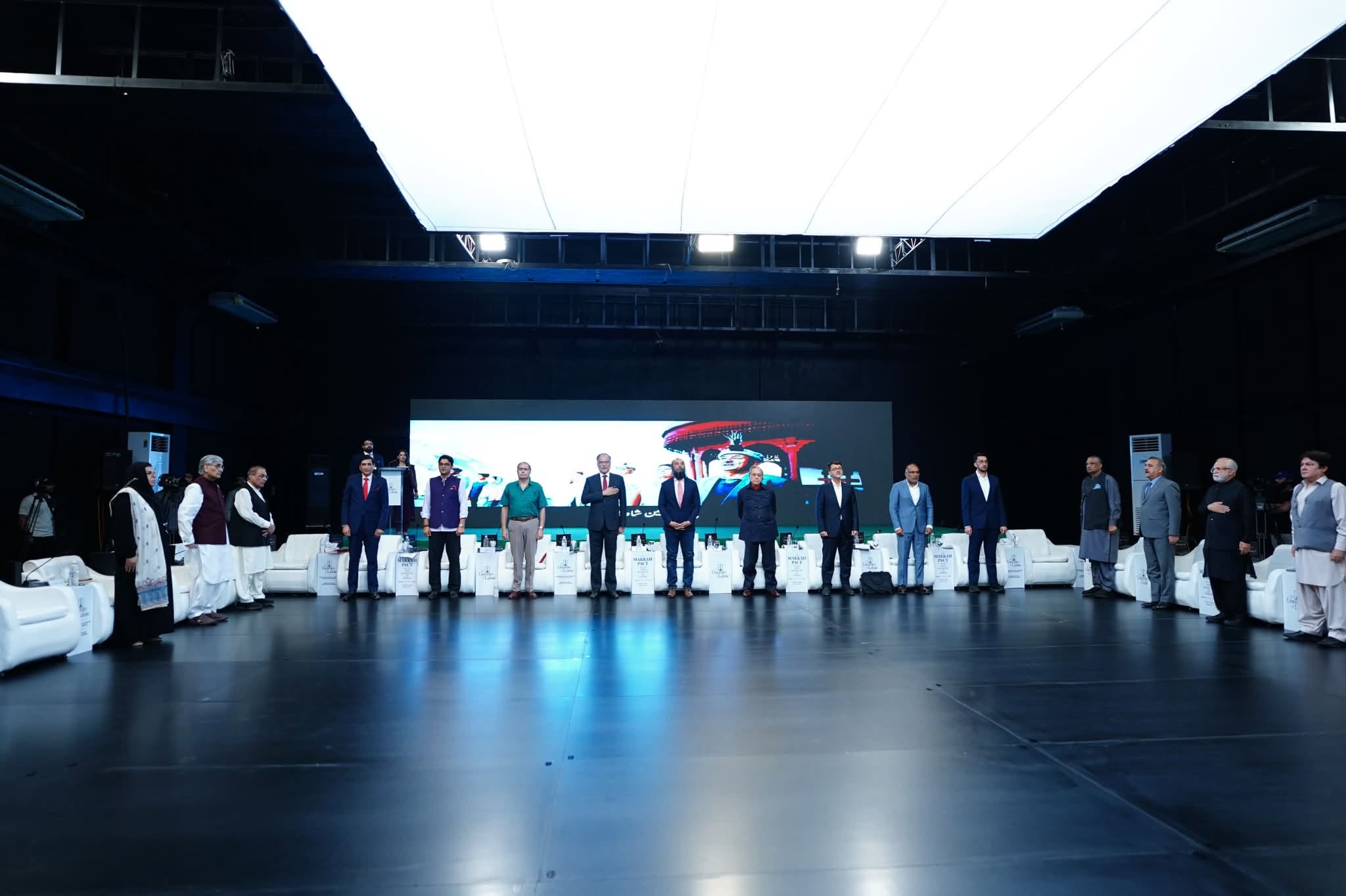
At a time when much of the world is consumed by conflict, uncertainty and shifting geopolitical alliances, it was fitting that one of Pakistan’s most important conversations about the future took place not in a government office or military headquarters, but in a university.
The conference on “The Makkah Pact & the New Geometry of Power” held at the University of Lahore (UoL)demonstrated why universities remain indispensable institutions in any nation’s journey toward progress. While political leaders formulate policy and diplomats negotiate agreements, it is often within academic institutions that ideas are tested, debated and refined. The UoL deserves considerable praise for creating a platform where policymakers, diplomats, military experts, academics, journalists and business leaders could engage in a serious discussion about one of the most consequential strategic developments in the Muslim world.
The credit for this initiative goes in large measure to Chairman Awais Raoof, whose vision for the UoL extends beyond conventional education. Under his leadership, the university has increasingly positioned itself as a venue for national dialogue and intellectual engagement. In a country where public discourse is often dominated by political polarization, creating spaces for thoughtful discussion is itself a valuable contribution.
Equally deserving of recognition is Munir Ahmad Khan and the organizing team, whose efforts brought together an impressive gathering of minds from diverse backgrounds. The event an opportunity to examine how Pakistan should position itself in a rapidly changing international environment.
The Makkah Joint Defense Agreement signed by Pakistan, Saudi Arabia and Türkiye, has attracted significant attention across diplomatic and strategic circles. Much of the discussion surrounding the pact has focused on its security dimensions. Yet one of the most compelling arguments presented at the conference came from Federal Minister for Planning, Development and Special Initiatives Ahsan Iqbal, who challenged participants to think beyond traditional notions of power.
His central message was simple but profound: the future will not be determined solely by military strength. It will be shaped by education, innovation, technology and the ability of nations to transform their human resources into economic power.
For decades, developing countries have often measured strength through conventional indicators such as military capabilities, territorial influence and strategic alliances. While these factors remain important, the twenty-first century is increasingly rewarding countries that invest in knowledge, research and innovation. Economic productivity, technological capability and human capital have become the real foundations of national power.
Ahsan Iqbal argued that the Makkah Joint Defense Agreement should not be viewed merely as a security arrangement. Instead, it should serve as a framework for broader cooperation in education, technology, investment, connectivity and economic development. The combination of Saudi Arabia’s financial resources, Türkiye’s industrial and technological expertise and Pakistan’s youthful population presents opportunities that extend far beyond the realm of defense.
With one of the world’s youngest populations, Pakistan possesses a demographic advantage that many developed countries would envy. Yet demographic advantage alone guarantees nothing. If properly educated, trained and empowered, this young population can become a driver of economic growth and technological advancement. If neglected, it can become a missed opportunity.
This is why Ahsan Iqbal’s description of Pakistan’s next great struggle as a “battle for development” resonated strongly with the audience. The contests that will define the coming decades will be fought through exports, innovation, research, entrepreneurship and technological advancement. Nations that succeed in these fields will shape the future. Those that fall behind will increasingly depend on others.
The minister’s emphasis on AI, biotechnology, robotics, quantum computing and advanced technologies was particularly significant. These are not futuristic concepts reserved for advanced economies. They are rapidly becoming the engines of global competitiveness. Countries that invest in these sectors today will determine the balance of economic and technological power tomorrow.
Universities therefore occupy a strategic position in national development.
Their role extends far beyond awarding degrees. They are institutions where future scientists, engineers, entrepreneurs and policymakers are formed. They are centers of research, innovation and critical thinking. Most importantly, they are places where young people learn to imagine possibilities beyond existing limitations.
The discussions at Lahore also highlighted another important reality. The world is moving toward a more multipolar order. Countries are increasingly seeking strategic autonomy while maintaining productive relations with multiple partners. The Makkah Joint Defense Agreement reflects this evolving reality. It represents an effort by three influential Muslim-majority nations to cooperate in ways that strengthen security, economic resilience and regional stability.
The conference offered a timely reminder that Pakistan’s future will not be secured by military strength alone. It will be secured by classrooms, laboratories, research centers and the young minds being prepared to lead the country through an increasingly competitive century.
In that sense, the most important lesson from Lahore was not simply about a defense agreement signed in Makkah. It was about the recognition that universities have a critical role in shaping national strategy.
And when universities embrace that responsibility, they become far more than institutions of higher learning. They become architects of the future.
No comments yet.