
Pakistan and Kuwait: Building Security, Prosperity and Peace
By Junaid Qaiser
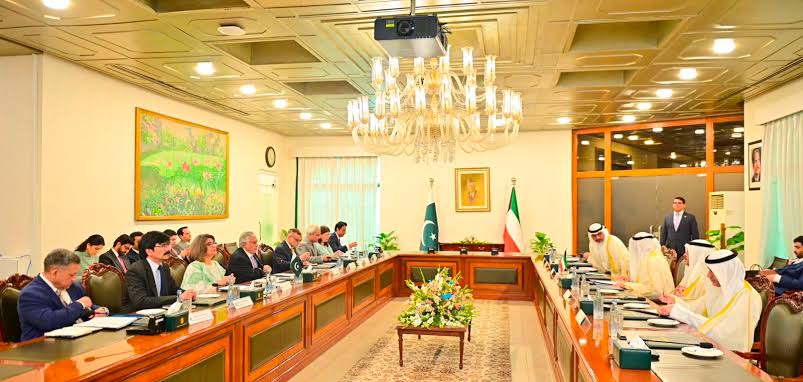
In a world increasingly shaped by uncertainty, shifting alliances, and evolving security challenges, partnerships built on trust and mutual respect have become more valuable than ever. The recent visit of Kuwaiti Foreign Minister Sheikh Jarrah Jaber Al-Ahmad Al-Sabah to Pakistan, coupled with Kuwait’s ratification of the Pakistan-Kuwait Defence Cooperation Agreement, is a reminder that some relationships continue to grow stronger with time.
For decades, Pakistan and Kuwait have enjoyed warm and friendly relations rooted in shared values, mutual trust, and a common desire for regional stability. What began as a traditional diplomatic relationship has gradually evolved into a multifaceted partnership encompassing defense, economic cooperation, trade, energy, and people-to-people connections. The latest developments suggest that both countries are now prepared to take that partnership to an even higher level.
Kuwait’s ratification of the defence cooperation agreement signed in June 2023 marks an important milestone in bilateral relations. The agreement provides a comprehensive framework for cooperation in military training, education, intelligence sharing, logistics, defense technology, research, and joint exercises. More importantly, it establishes institutional mechanisms that will ensure sustained cooperation between the armed forces of both nations for years to come.
This development is significant because security challenges in today’s world are becoming increasingly complex. From regional conflicts and drone warfare to cyber threats and maritime security concerns, countries must work together to address emerging risks. Pakistan and Kuwait understand that cooperation, rather than isolation, is the most effective path toward ensuring national and regional security.
Pakistan’s armed forces have earned international respect through decades of professional service, peacekeeping missions, counterterrorism operations, and military training programs. Kuwait’s decision to deepen defense ties with Pakistan reflects confidence in Pakistan’s capabilities and demonstrates the value both countries place on long-term strategic cooperation.
An important aspect of the visit was the meeting between Kuwait’s Foreign Minister and Chief of Defence Forces and Chief of Army Staff, Field Marshal Asim Munir, at General Headquarters in Rawalpindi. The discussion focused on regional security, matters of mutual interest, and ways to further strengthen bilateral cooperation. Field Marshal Asim Munir reaffirmed Pakistan’s commitment to Kuwait and emphasized that both countries share a common vision for regional peace and prosperity. The Kuwaiti foreign minister, in turn, praised Pakistan’s steadfast support and acknowledged its constructive role in promoting stability during a period of heightened tensions in the Middle East. The meeting underscored the strategic trust that exists between the military establishments of both countries and highlighted the growing importance of their security partnership.
However, the Pakistan-Kuwait relationship is about far more than defense cooperation.
One of the most encouraging outcomes of the visit was the emphasis placed on economic engagement. During meetings with Prime Minister Shehbaz Sharif and Deputy Prime Minister and Foreign Minister Ishaq Dar, both sides discussed expanding cooperation in trade, investment, energy, agriculture, information technology, maritime affairs, education, health, and human resource development.
This reflects a broader understanding that security and economic prosperity are deeply interconnected. Nations that invest in economic partnerships create stronger foundations for stability, development, and long-term peace. Pakistan’s growing economy, strategic location, and youthful workforce offer significant opportunities for Kuwaiti investors, while Kuwait’s financial strength and expertise in the energy sector can contribute to Pakistan’s economic ambitions.
The decision to establish joint working groups in key sectors is particularly noteworthy. Such mechanisms can help transform diplomatic goodwill into practical outcomes by ensuring that agreements are followed by implementation. Too often, high-level visits generate positive headlines but fail to produce lasting results. The creation of structured channels for cooperation increases the likelihood that both countries will achieve meaningful progress in areas of shared interest.
Another important aspect of the visit was the recognition of Pakistan’s diplomatic role in the region. Kuwaiti leaders openly acknowledged Pakistan’s efforts to promote dialogue and support peaceful solutions to regional conflicts. This recognition reflects Islamabad’s growing reputation as a country that seeks engagement rather than confrontation.
Prime Minister Shehbaz Sharif’s reaffirmation that Pakistan is acting as an “honest and sincere mediator and facilitator” in regional peace efforts highlights an important element of Pakistan’s foreign policy. Rather than choosing sides in regional disputes, Pakistan has increasingly sought to encourage dialogue, de-escalation, and diplomatic engagement. In a region often defined by conflict and mistrust, this approach serves not only Pakistan’s interests but also the broader cause of peace.
The strong solidarity expressed by Pakistan following attacks on Kuwait and other Gulf countries further demonstrates the depth of the relationship. Friends stand together during difficult times, and Pakistan’s support for Kuwait reflects a longstanding commitment that extends beyond formal diplomatic statements.
The Pakistani community in Kuwait also remains a vital bridge between the two nations. Thousands of Pakistanis continue to contribute to Kuwait’s economic and social development, while strengthening people-to-people ties that form the foundation of any enduring partnership. Their contributions have helped transform bilateral relations from a government-level relationship into a genuine bond between societies.
What makes the current moment particularly significant is that Pakistan and Kuwait are strengthening cooperation across multiple dimensions simultaneously. Defense cooperation is being expanded. Economic engagement is gaining momentum. Diplomatic coordination is increasing. Cultural and people-to-people ties remain strong. Together, these elements form the foundation of a truly comprehensive partnership.
The title of this partnership can best be summarized in three words: security, prosperity, and peace.
Security because both countries recognize the importance of working together to address regional challenges and protect shared interests.
Prosperity because economic cooperation, trade, investment, and innovation can create opportunities that benefit future generations.
Peace because both nations understand that lasting stability can only be achieved through dialogue, cooperation, and mutual respect.
As Kuwait’s foreign minister concluded his visit and returned home, the message from Islamabad was clear: Pakistan values its relationship with Kuwait and is committed to expanding it across every area of mutual benefit. The goodwill demonstrated during the visit, combined with the ratification of the defense agreement and plans for enhanced economic cooperation, offers a glimpse of what the future may hold.
In an era when global politics is often characterized by uncertainty and division, the Pakistan-Kuwait relationship stands as an example of how trust, shared interests, and consistent engagement can produce meaningful results. If both countries continue on this path, they will not only strengthen their own partnership but also contribute to a more stable, prosperous, and peaceful region.

No comments yet.